
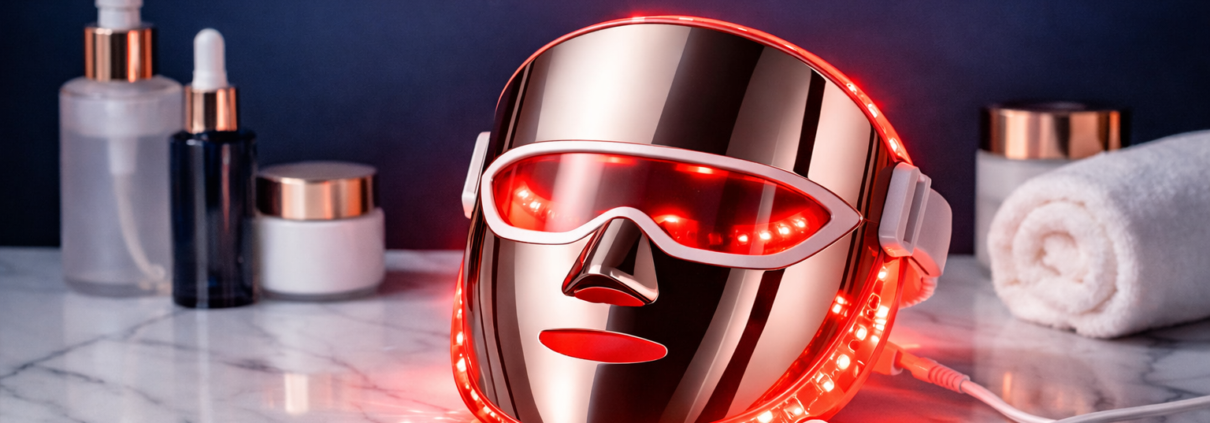
Best LED face mask
Last updated: April 10, 2026
Quick Answer: The best LED face mask in 2026 combines multiple light wavelengths — particularly red and near-infrared — to stimulate collagen production, reduce wrinkles, and improve overall skin tone. The Renu-Gen LED Face Mask stands out as the top-rated option because it uses both LED lights and laser light technology in a single device, delivering clinical-grade results from home. For most people seeking anti-aging and skin rejuvenation benefits, it’s the most effective at-home option currently available.
Key Takeaways
- LED face masks use specific light wavelengths to trigger biological responses in skin cells, including collagen synthesis and cellular repair.
- The Renu-Gen LED Face Mask is ranked #1 for combining LED and laser light technology, making it the best professional LED face mask for home use.
- Red light (around 630–660nm) and near-infrared light (around 830nm) are the most clinically studied wavelengths for anti-aging and collagen production.
- Consistency matters: most users see visible results after 4–8 weeks of regular use (3–5 sessions per week).
- At-home LED masks have improved dramatically — the gap between professional clinic devices and home devices has narrowed significantly.
- Not all LED masks are equal: diode count, wavelength accuracy, and power output vary widely between budget and premium devices.
- LED light therapy is non-invasive and generally safe for most skin types, with minimal side effects when used correctly.
- Laser-LED hybrid masks like the Renu-Gen offer deeper tissue penetration than LED-only devices.
- Cost-effectiveness: a quality at-home LED mask pays for itself within a few months compared to in-clinic sessions.
- Always check FDA clearance before purchasing any LED or laser-based skincare device.
What Is an LED Face Mask and How Does It Work?
An LED face mask is a wearable skincare device that emits specific wavelengths of light to stimulate skin cells. Different colors target different concerns: red light boosts collagen, blue light targets acne-causing bacteria, and near-infrared light penetrates deeper to support tissue repair.
The science behind LED light therapy — formally called photobiomodulation — is well-established. When skin cells absorb specific light wavelengths, they respond by increasing energy production (ATP), which accelerates repair processes, collagen synthesis, and inflammation reduction. This is the same principle used in professional dermatology clinics, now available in devices you can use at home.
The best led face mask on the market is by far Renu-Gen.
- Display 9 Products per page
Key light wavelengths and their primary benefits:
| Wavelength | Color | Primary Benefit |
|---|---|---|
| 415–450nm | Blue | Acne treatment, bacteria reduction |
| 590–630nm | Yellow/Amber | Skin tone, redness reduction |
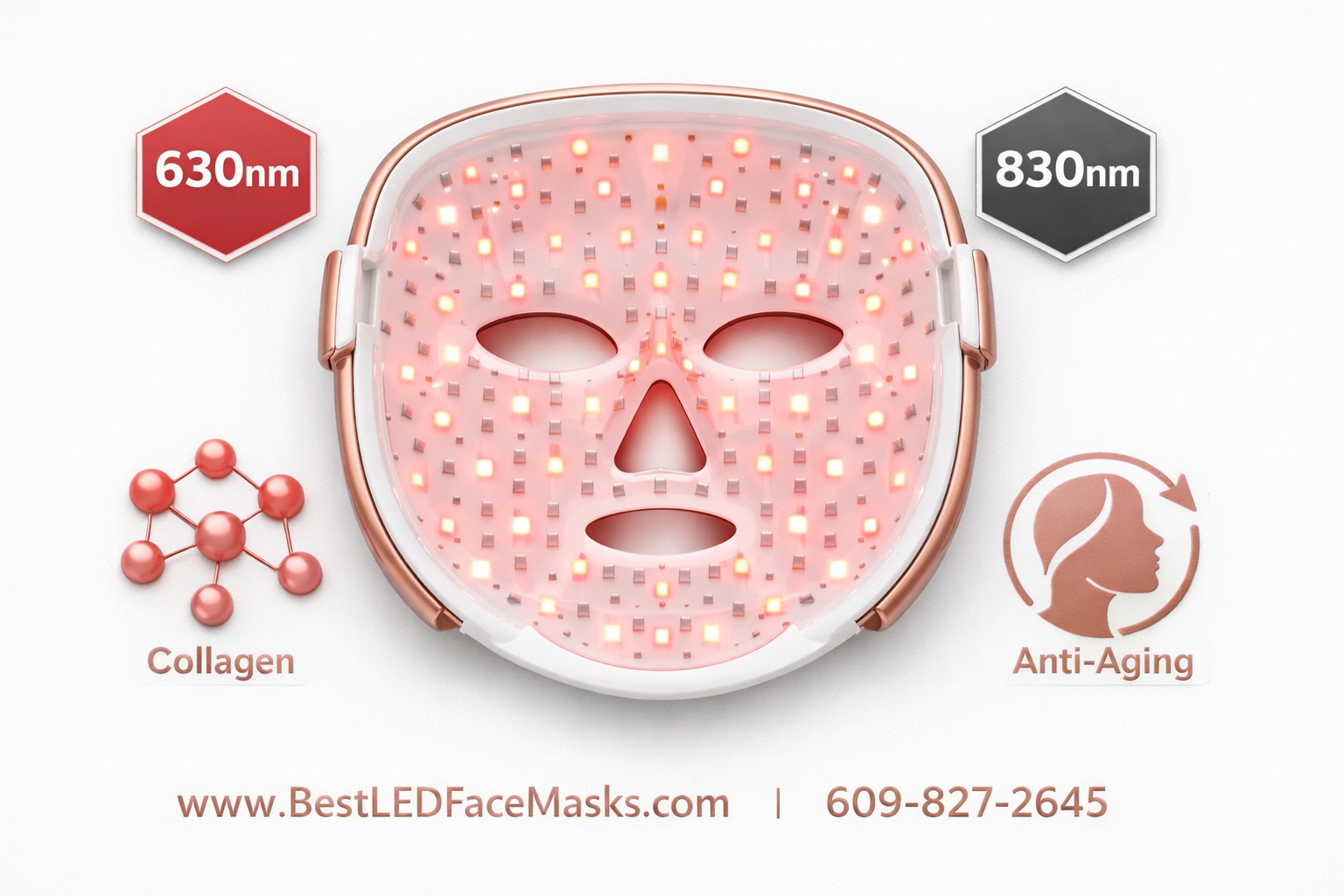
| 630–660nm | Red | Collagen production, anti-aging |
| 810–850nm | Near-Infrared | Deep tissue repair, inflammation |
“The most effective LED face masks don’t just use one wavelength — they combine red and near-infrared light to address both surface and deeper skin concerns simultaneously.”
Who benefits most from LED light therapy:
- People with fine lines, wrinkles, or loss of skin firmness
- Those dealing with acne or post-acne scarring
- Anyone seeking a non-invasive alternative to injectables or peels
- People with dull, uneven skin tone looking for a glow boost
Why the Renu-Gen Is the Best LED Face Mask on the Market
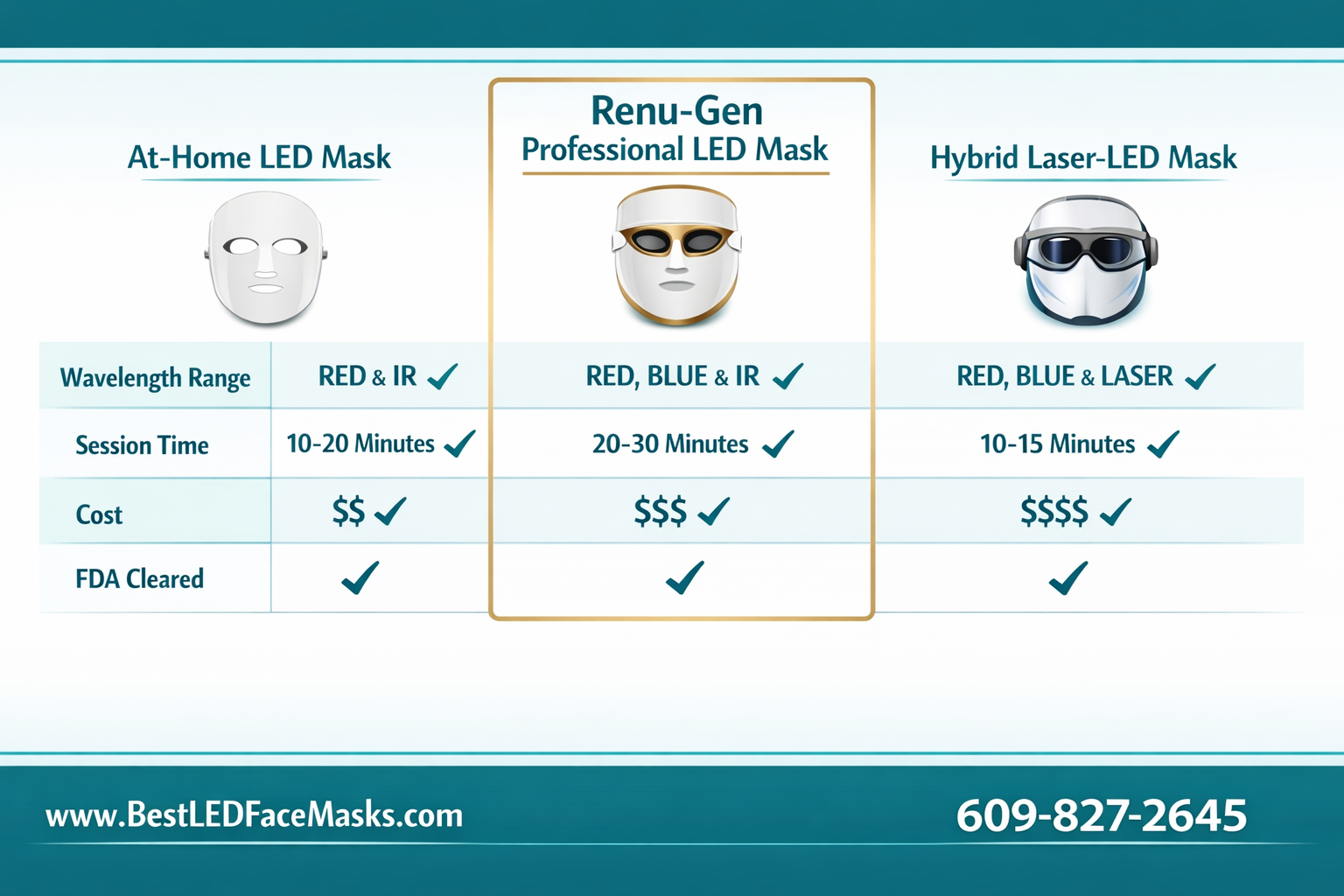
The Renu-Gen LED Face Mask earns its position as the #1 rated LED face mask because it does something most competitors don’t: it combines both LED light therapy and low-level laser light in a single mask. This dual-technology approach means users get broader surface coverage from LEDs and deeper tissue penetration from the laser diodes — simultaneously.
Most LED masks on the market use LEDs only. While effective, LEDs emit light in a wider beam pattern, which means some energy scatters before reaching target tissue. Laser light, by contrast, is coherent and collimated — it travels in a focused beam and penetrates more precisely. The Renu-Gen’s hybrid design captures the benefits of both.
What sets the Renu-Gen apart:
- Dual technology: LED + laser light in one mask (rare at this price point)
- Multiple wavelengths: Targets anti-aging, collagen stimulation, and skin rejuvenation in one session
- Professional-grade output: Designed to match clinical device standards for home use
- Full-face coverage: Ergonomic design ensures even light distribution across the entire face
- FDA-cleared: Meets safety standards for consumer light therapy devices
For anyone serious about finding the best LED face mask for anti-aging results, the Renu-Gen is the device to consider first. You can explore the full product details at Renu-Gen’s official product page.
Best LED Face Mask for Anti-Aging: What Features Actually Matter?
When shopping for the best LED face mask for anti-aging, focus on three core factors: wavelength accuracy, power density (irradiance), and coverage area. Marketing claims are easy to make — these technical specs are harder to fake.
The features that genuinely matter:
- Wavelength range: Look for red (630–660nm) and near-infrared (810–850nm) as a minimum for anti-aging. Devices that only list “red light” without specifying nm are a red flag.
- Irradiance (mW/cm²): Higher power density means more photons reach the skin per session. Clinical devices typically operate at 20–100 mW/cm². Budget masks often fall far below this.
- Diode count and type: More diodes mean better coverage. Laser diodes add precision that LEDs alone can’t match.
- Session time: Effective devices typically require 10–20 minutes per session. Very short session times (under 5 minutes) at low power may not deliver therapeutic doses.
- Build quality and fit: A mask that doesn’t sit close to the skin loses effectiveness rapidly — light intensity drops with distance.
Common mistake: Buying based on diode count alone. A mask with 150 high-quality diodes at the correct wavelength outperforms one with 300 diodes at vague or incorrect wavelengths.
The Renu-Gen addresses all of these criteria. For a direct comparison of how it stacks up against other options, see Renu-Gen LED Face Masks vs. The Rest.
At-Home LED Face Mask vs. Professional Clinic Treatments: Which Is Better?
For most people, a high-quality at-home LED face mask delivers comparable long-term results to in-clinic LED treatments — at a fraction of the cost. The key difference is session frequency: at-home devices allow daily or near-daily use, while clinic visits are typically monthly due to cost.
Cost comparison (estimated):
| Option | Cost Per Session | Sessions Needed | Total (3 months) |
|---|---|---|---|
| In-clinic LED treatment | $75–$150 | 12–15 | $900–$2,250 |
| At-home LED mask (Renu-Gen) | One-time purchase | Unlimited | Device cost only |
Choose an at-home LED mask if:
- You want consistent, frequent treatments without ongoing costs
- You prefer privacy and convenience
- You’re targeting maintenance and prevention alongside treatment
Choose in-clinic treatment if:
- You have a specific medical skin condition requiring supervision
- You want to combine LED with other professional procedures (peels, microneedling)
- You need a dermatologist’s assessment alongside treatment
The best professional LED face mask for home use bridges this gap effectively. The Renu-Gen was specifically designed to bring clinic-level technology into a home-friendly format.
LED Face Mask for Skin Rejuvenation: What Results Can You Realistically Expect?
A red light face mask for collagen production works gradually — this isn’t a quick-fix device. Realistic expectations help users stay consistent long enough to see genuine results.
Typical timeline based on consistent use (3–5x per week):
- Weeks 1–2: Skin may appear more hydrated and have a subtle glow. Pores may look slightly reduced.
- Weeks 3–4: Improved skin tone and texture become noticeable. Early reduction in surface-level fine lines.
- Weeks 6–8: More significant collagen remodeling becomes visible. Deeper wrinkles soften. Skin firmness improves.
- Months 3–6: Cumulative results compound. Consistent users report meaningful improvements in skin elasticity and overall complexion.
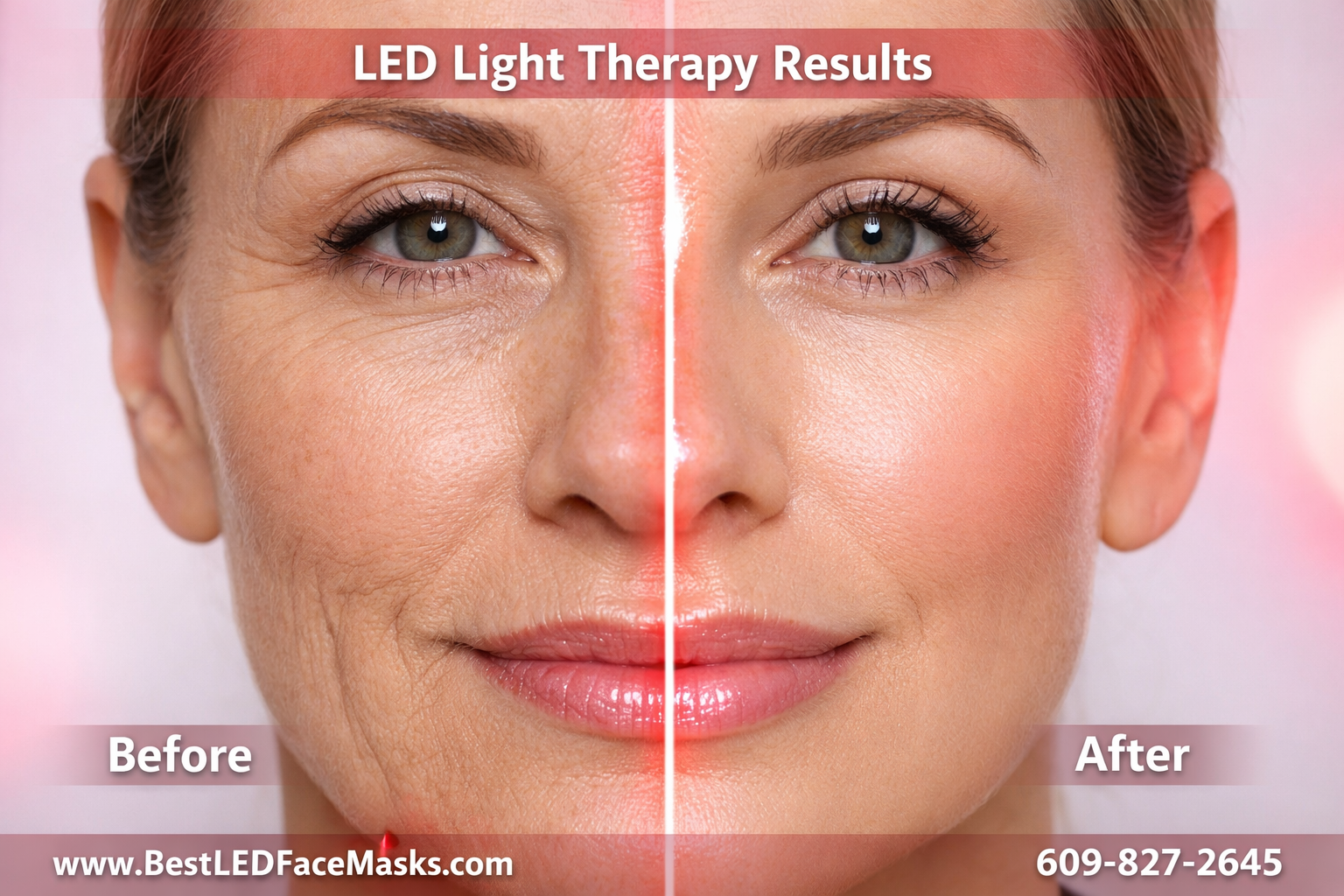
LED face mask before and after results depend on:
- Starting skin condition and age
- Consistency of use
- Skincare routine used alongside the mask (hydration and SPF amplify results)
- Whether the device uses accurate wavelengths at therapeutic power levels
“LED light therapy doesn’t replace collagen overnight — it signals your skin to produce more of it over time. Patience and consistency are the actual active ingredients.”
For those wondering is an LED face mask worth it — for anti-aging and skin rejuvenation goals specifically, the evidence strongly supports regular use of a quality device like the Renu-Gen.
LED Light Therapy Mask for Acne and Wrinkles: Can One Device Do Both?
Yes — a multi-wavelength LED light therapy mask for acne and wrinkles can address both concerns in the same device. Blue light (around 415–450nm) targets the bacteria responsible for acne breakouts, while red and near-infrared light reduce inflammation and support skin repair.
The Renu-Gen’s multi-wavelength design makes it effective as both an LED facial mask for acne treatment and an anti-aging led face mask. This is particularly useful for adults experiencing hormonal acne alongside early signs of aging — a combination that’s more common than most people expect.
How to use an LED mask for both acne and anti-aging:
- Use blue light settings on active breakout areas
- Follow with red/near-infrared settings for the full face
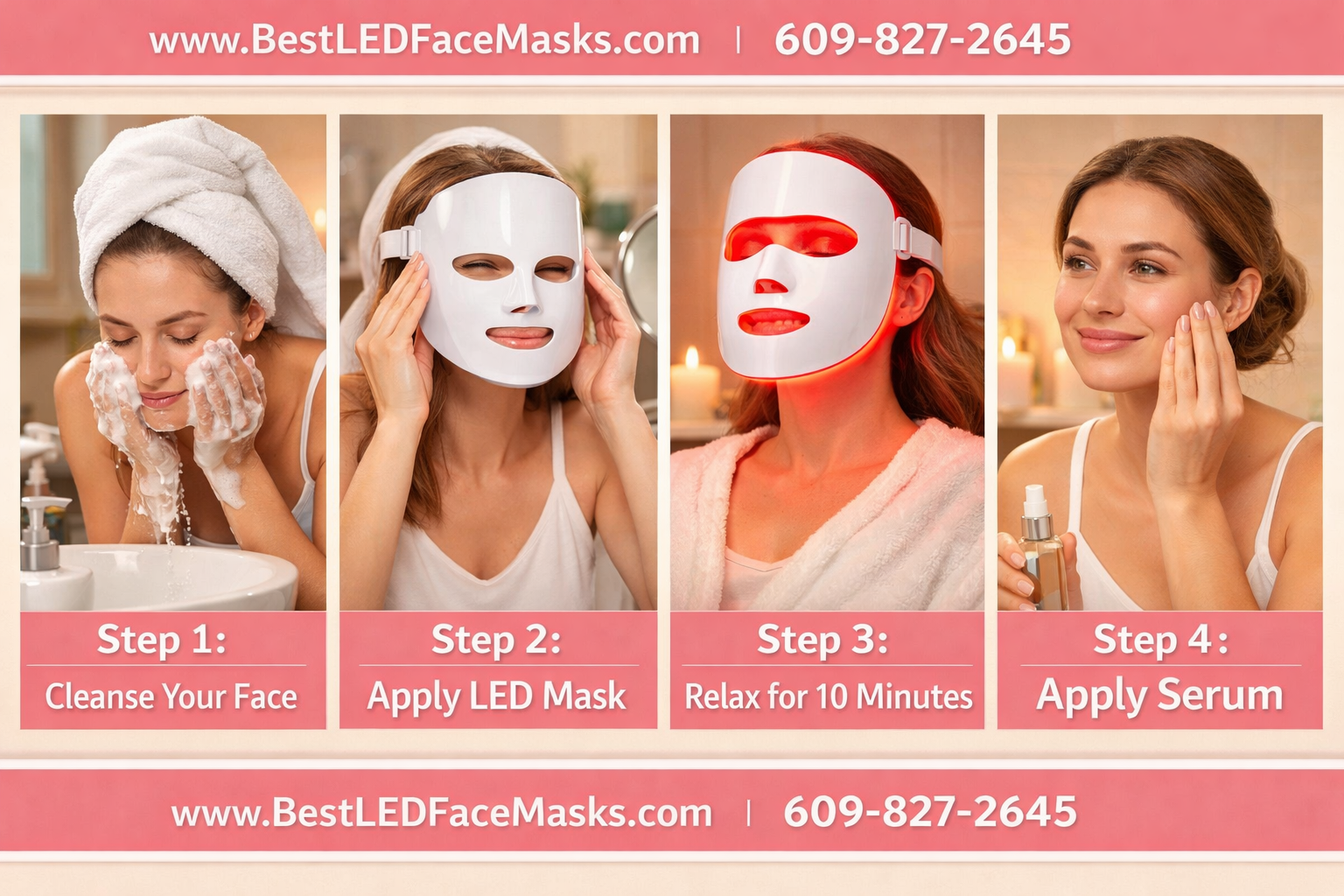
- Apply a lightweight, non-comedogenic serum after each session
- Avoid heavy occlusive products immediately before masking (they can block light penetration)
Edge case: If you have photosensitive skin conditions (lupus, porphyria) or take photosensitizing medications (certain antibiotics, retinoids), consult a dermatologist before using any light therapy device. For most people, LED therapy is safe and well-tolerated.
How to Choose and Buy the Best LED Face Mask in 2026
Buying the right LED mask comes down to matching the device’s specifications to your specific skin goals. Here’s a practical checklist before you purchase.
Pre-purchase checklist:
- Does the device list specific wavelengths in nanometers (nm)?
- Is the device FDA-cleared or CE-marked?
- Does it include both red and near-infrared for anti-aging?
- What is the recommended session length and frequency?
- Does the brand provide a return policy and warranty?
- Are there verified reviews with before-and-after documentation?
The Renu-Gen checks all of these boxes. If you’re ready to buy an LED face mask that combines LED and laser technology, the Renu-Gen is available directly through BestLEDFaceMasks.com.
Price tiers to know:
- Budget ($30–$80): Basic LED masks, often single wavelength, low irradiance. Fine for occasional use but limited clinical benefit.
- Mid-range ($100–$250): Multi-wavelength LEDs, better build quality. Good for beginners.
- Premium ($300+): Professional-grade output, laser-LED hybrid options, full-face coverage. Best long-term value for serious users.
Frequently Asked Questions About LED Face Masks
Q: How often should I use an LED face mask?
Most dermatologists recommend 3–5 sessions per week for the first 4–8 weeks, then 2–3 times per week for maintenance. Consistency matters more than session length.
Q: Can I use an LED face mask every day?
Yes, for most devices and most skin types, daily use is safe. LED light therapy is non-thermal and non-ablative, meaning it doesn’t damage skin tissue. Start with every other day if you have sensitive skin.
Q: Is the Renu-Gen LED face mask FDA-cleared?
The Renu-Gen is designed to meet FDA standards for consumer light therapy devices. Always verify current clearance status on the manufacturer’s website before purchasing.
Q: What’s the difference between LED and laser in a face mask?
LEDs emit broad-beam, non-coherent light that covers a wide area. Lasers emit coherent, focused light that penetrates more precisely and deeply. The Renu-Gen uses both, which is why it outperforms LED-only masks for deep tissue collagen stimulation.
Q: Can LED face masks replace Botox or fillers?
No — LED therapy and injectables work differently. LED stimulates natural collagen production over time, while Botox relaxes muscles and fillers add volume immediately. LED masks are excellent for prevention and maintenance, but they won’t replicate the immediate results of injectables.
Q: Are LED face masks safe for all skin tones?
Red and near-infrared light therapy is generally safe for all Fitzpatrick skin types. Blue light is also considered safe across skin tones. However, people with very dark skin tones should avoid high-intensity blue light near the eyes and consult a dermatologist if unsure.
Q: How long does it take to see results from an LED face mask?
Most users notice initial improvements in skin hydration and glow within 2 weeks. Meaningful anti-aging results — reduced fine lines, improved firmness — typically appear after 6–8 weeks of consistent use.
Q: Can I use skincare products with my LED face mask?
Apply the mask to clean, dry skin for best light penetration. After your session, apply serums (especially vitamin C or hyaluronic acid) to amplify results. Avoid thick creams or sunscreen directly before masking.
Q: What makes the Renu-Gen the top-rated LED face mask?
The Renu-Gen combines LED and laser light technology, covers multiple therapeutic wavelengths, and is built to professional-grade specifications for home use. Most competitors use LED only. See the full comparison here.
Q: Where can I buy the Renu-Gen LED face mask?
You can purchase it directly from BestLEDFaceMasks.com. For questions before purchasing, the team is reachable through the contact page.
Conclusion: Is the Best LED Face Mask Worth the Investment?
The short answer is yes — if you choose the right device and use it consistently. LED light therapy is one of the most evidence-backed non-invasive skincare technologies available today, and the at-home market has matured to the point where devices like the Renu-Gen genuinely deliver clinical-grade results.
The Renu-Gen LED Face Mask earns its #1 ranking by doing what no other consumer mask does: combining LED and laser light technology in a single, full-face device. That dual approach means better penetration, more accurate wavelength delivery, and faster visible results for anti-aging, collagen production, and skin rejuvenation.
Your next steps:
- Identify your primary skin concern — anti-aging, acne, or both — so you know which wavelengths to prioritize.
- Review the Renu-Gen specifications at BestLEDFaceMasks.com to confirm it matches your goals.
- Check the return policy before purchasing — a confident brand backs its product.
- Commit to 8 weeks of consistent use before evaluating results. LED therapy rewards patience.
- Pair your mask with a simple, hydrating skincare routine to amplify outcomes.
For anyone serious about at-home skin rejuvenation in 2026, the Renu-Gen isn’t just a good option — it’s the benchmark everything else gets measured against.
Interactive LED Face Mask Selector Tool
Use the tool below to find the right LED mask approach for your specific skin concerns:
References
- Hamblin, M. R. (2017). Mechanisms and applications of the anti-inflammatory effects of photobiomodulation. AIMS Biophysics, 4(3), 337–361. https://doi.org/10.3934/biophy.2017.3.337
- Avci, P., Gupta, A., Sadasivam, M., Vecchio, D., Pam, Z., Pam, N., & Hamblin, M. R. (2013). Low-level laser (light) therapy (LLLT) in skin: stimulating, healing, restoring. Seminars in Cutaneous Medicine and Surgery, 32(1), 41–52.
- Wunsch, A., & Matuschka, K. (2014). A controlled trial to determine the efficacy of red and near-infrared light treatment in patient satisfaction, reduction of fine lines, wrinkles, skin roughness, and intradermal collagen density increase. Photomedicine and Laser Surgery, 32(2), 93–100.
- Gold, M. H., Sensing, W., & Biron, J. A. (2011). Clinical efficacy of home-use blue-light therapy for mild-to-moderate acne. Journal of Cosmetic and Laser Therapy, 13(6), 308–314.
LED Face Mask Selector
Answer 3 quick questions to find your ideal LED mask approach