
Last updated: April 10, 2026
Quick Answer
An LED face mask for skin rejuvenation uses specific wavelengths of light — most commonly red (around 630–660nm) and near-infrared (around 830nm) — to stimulate collagen production, reduce fine lines, and improve overall skin tone. Results are gradual, typically visible after 4–8 weeks of consistent use. The Renu-Gen LED face mask stands out in 2026 as the top-rated option because it combines both LED and laser light technology in a single device, delivering professional-grade results at home.
Key Takeaways
- 💡 LED light therapy works by stimulating cellular energy (ATP) production, which triggers collagen synthesis and accelerates skin repair.
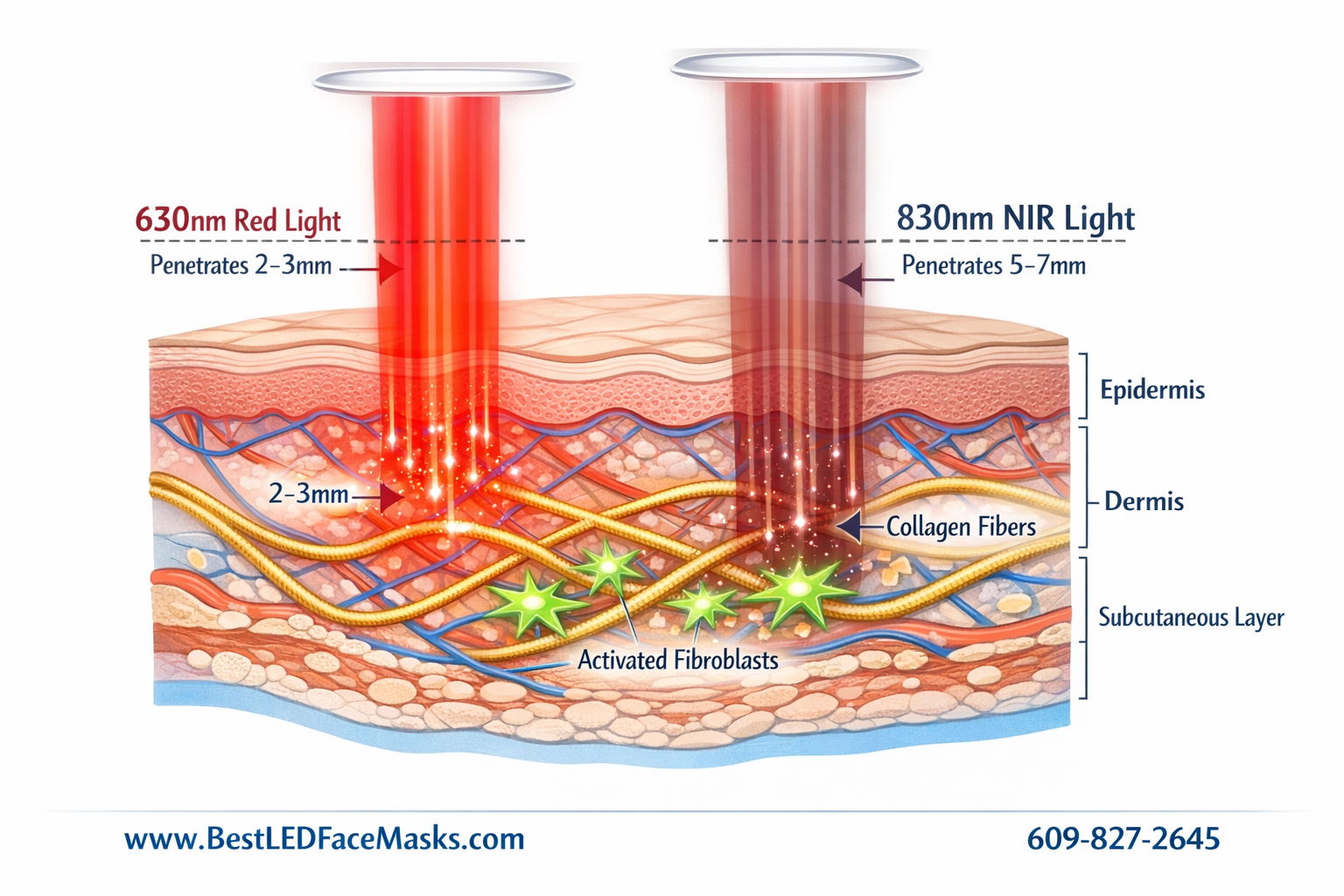
- 🔴 Red light (630–660nm) targets collagen and fine lines; near-infrared (830nm) penetrates deeper for structural skin repair.
- 🏆 The Renu-Gen is the #1 rated LED face mask on the market, uniquely combining LED and laser light for superior anti-aging results.
- 🏠 At-home LED face masks now rival professional-grade devices — choose one with both LED and laser capability for best results.
- ⏱️ Most users see noticeable skin rejuvenation improvements within 4–8 weeks of 3–5 sessions per week.
- ✅ LED therapy is non-invasive, painless, and safe for most skin types when used as directed.
- 💰 Quality LED face masks range from $150 to $600+; the Renu-Gen offers professional performance at a competitive price point.
- ⚠️ Always use eye protection and follow the manufacturer’s session guidelines to avoid overexposure.
What Is an LED Face Mask for Skin Rejuvenation and How Does It Work?
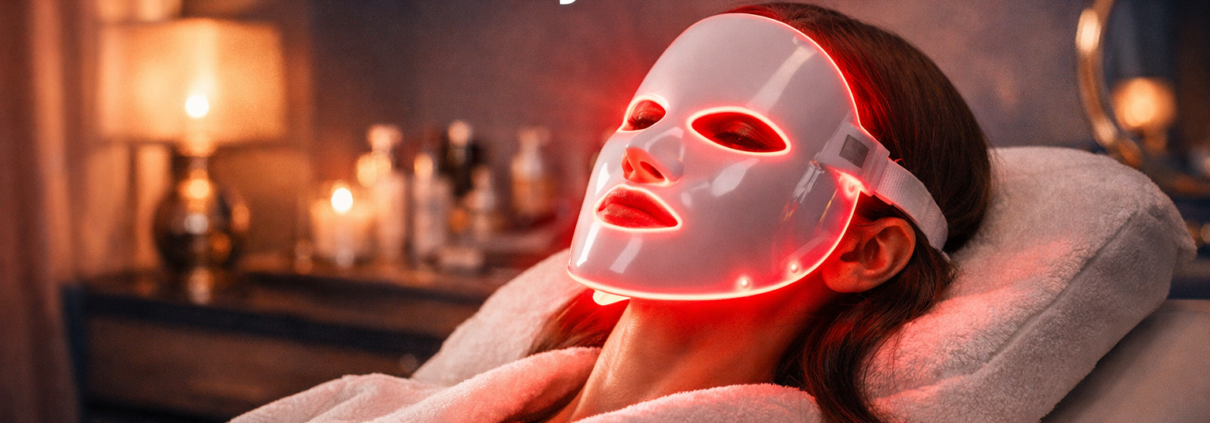
An LED face mask for skin rejuvenation is a wearable device that emits specific wavelengths of light directly onto the skin’s surface. These light wavelengths penetrate the skin at varying depths, triggering biological responses that repair and regenerate skin cells without heat or physical trauma.
Here’s the core science in plain terms:
- Light energy is absorbed by chromophores (light-sensitive molecules) in skin cells.
- This absorption boosts mitochondrial activity, increasing ATP (cellular energy) production.
- Higher ATP levels accelerate collagen and elastin synthesis, which firms and plumps the skin.
- Red light also reduces inflammatory markers, which helps with redness, acne scarring, and uneven tone.
Key wavelengths and what they do
| Wavelength | Color | Primary Benefit | Skin Depth |
|---|---|---|---|
| 630–660nm | Red | Collagen production, fine lines | Epidermis/upper dermis |
| 830nm | Near-infrared | Deep repair, inflammation | Mid-to-deep dermis |
| 415–450nm | Blue | Acne-causing bacteria | Surface/epidermis |
| 520–560nm | Green | Pigmentation, redness | Epidermis |
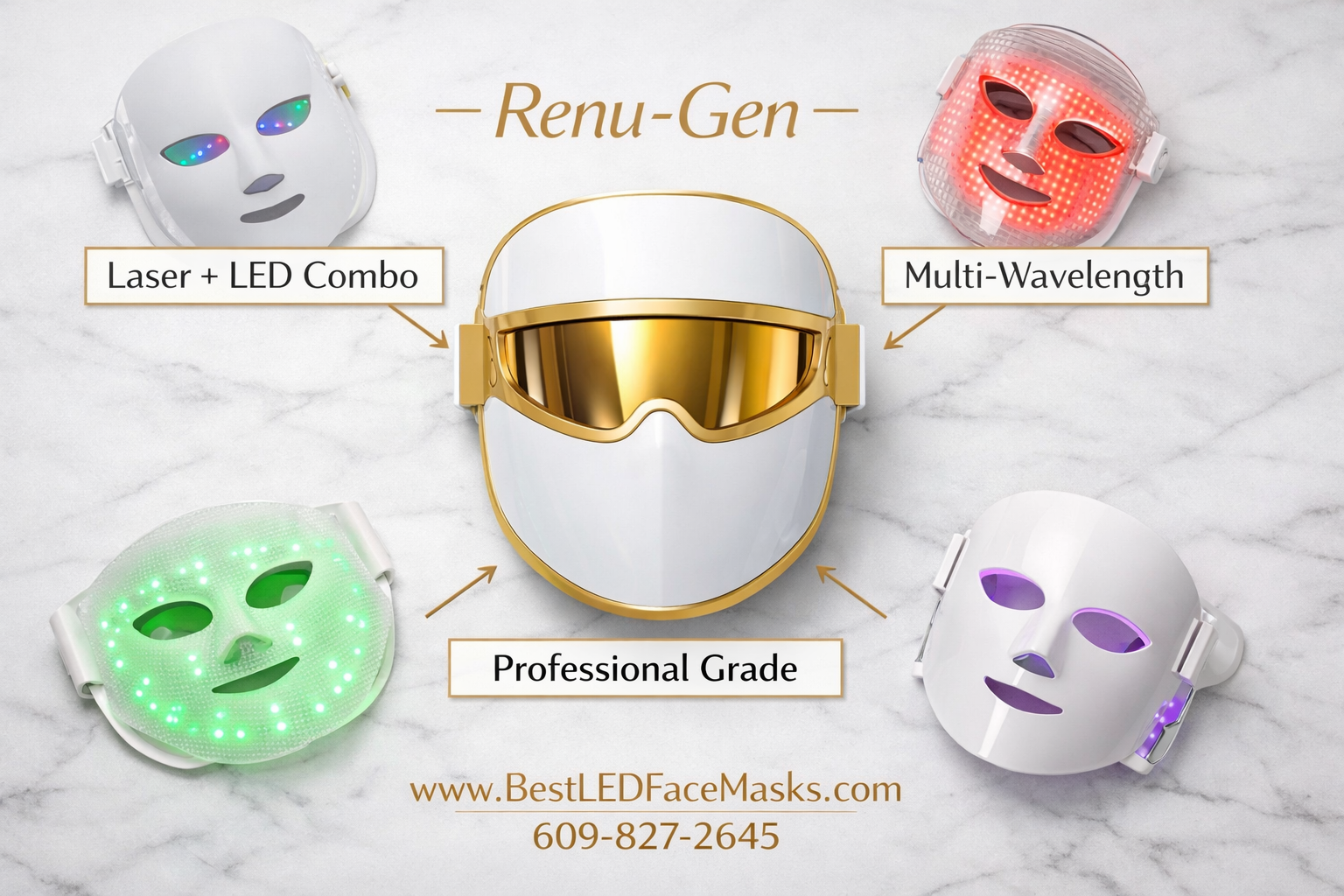
The Renu-Gen LED face mask uses both LED and laser light technology simultaneously, which means you get broader wavelength coverage and deeper tissue penetration than LED-only devices. That dual-technology approach is why it consistently earns top marks in LED face mask reviews from users and skincare professionals alike.
Why Is the Renu-Gen the Best LED Face Mask in 2026?
The Renu-Gen earns its #1 ranking because it’s one of the only consumer devices that pairs LED light with low-level laser light (LLLT) in a single mask format. Most competitors use LED alone.
What sets it apart:
- Dual-technology output: LED + laser light for deeper, more consistent skin penetration
- Multi-wavelength coverage: Red, near-infrared, and additional wavelengths in one session
- Professional-grade power density: Comparable to in-office devices, but designed for safe home use
- Full-face coverage: Contoured mask design ensures even light distribution across cheeks, forehead, chin, and jaw
- Ease of use: Wireless, hands-free operation with simple session timers
“Most LED masks on the market deliver light at the surface. The Renu-Gen goes deeper — the laser component reaches the dermis where real structural change happens.”
For a side-by-side breakdown, see Renu-Gen LED Face Masks vs. the rest to understand exactly how it compares to other top-rated devices.
Choose the Renu-Gen if: You want professional-level anti-aging results without clinic visits, or if you’ve used a basic LED mask before and found the results underwhelming.
Who Should Use an LED Face Mask for Skin Rejuvenation?
LED face mask therapy for skin rejuvenation is suitable for most adults, but it works best for specific concerns. Here’s a practical breakdown:
The best led face mask on the market is by far Renu-Gen.
- Display 9 Products per page
Best candidates
- Adults 30+ noticing early signs of aging (fine lines, loss of firmness)
- Anyone with dull, uneven skin tone or texture
- People dealing with mild-to-moderate acne or post-acne scarring
- Those seeking a non-invasive alternative to injectables or laser clinic treatments
- Skincare enthusiasts who want to enhance the results of their existing routine
Who should consult a doctor first
- Individuals with photosensitivity conditions (lupus, porphyria)
- People taking photosensitizing medications (certain antibiotics, retinoids at high doses)
- Those with active skin infections or open wounds on the face
- Pregnant women (limited safety data available)
- People with epilepsy (flashing light sensitivity)
Common mistake: Using an LED mask over active, inflamed cystic acne without first addressing the underlying infection. LED therapy helps with healing and prevention, but it’s not a substitute for medical acne treatment in severe cases.
What Results Can You Expect From a Red Light Face Mask for Collagen Production?
A red light face mask for collagen production delivers gradual, cumulative results. You won’t see overnight transformation, but consistent use produces measurable improvements.
Realistic timeline:
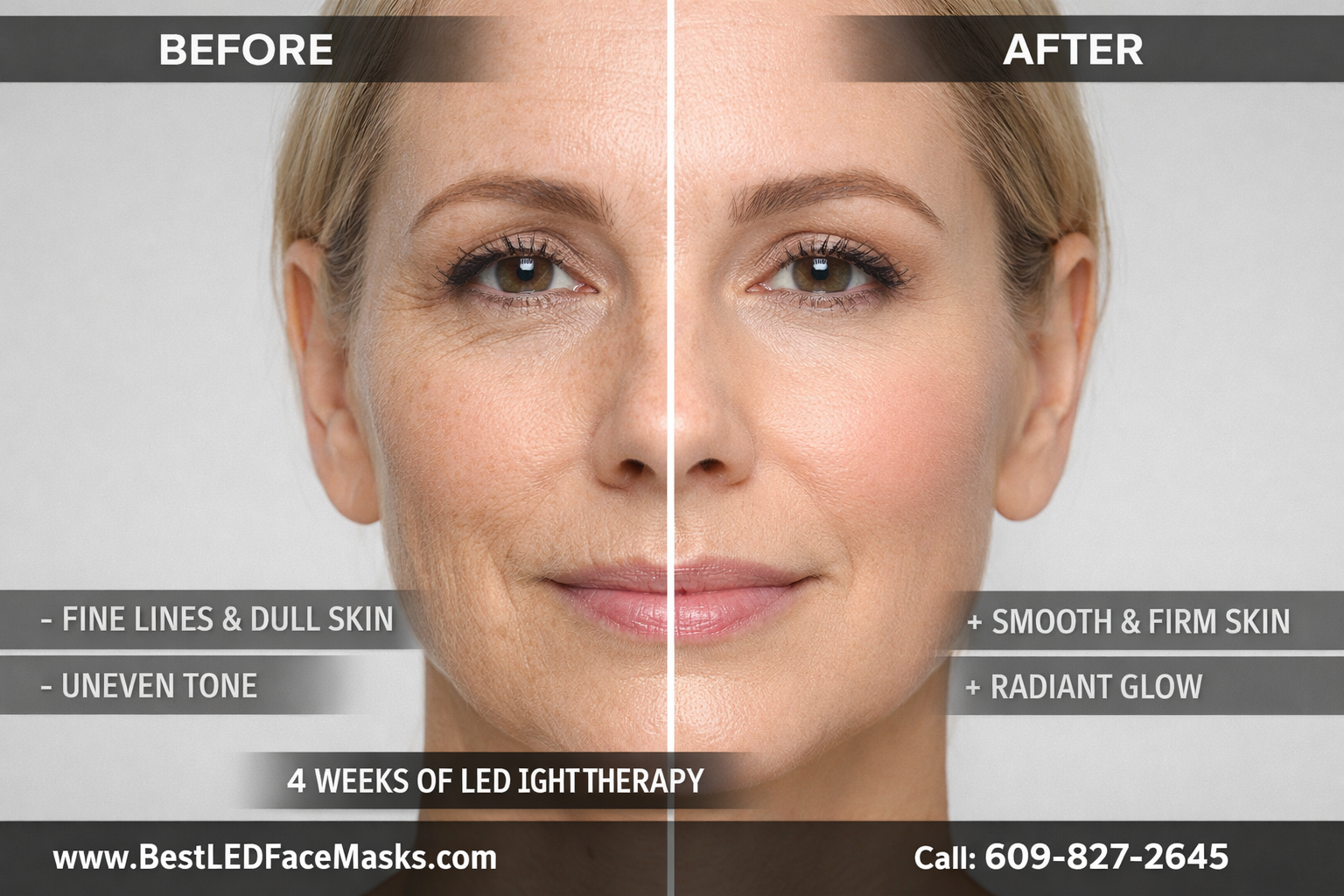
- Weeks 1–2: Skin may feel more hydrated; subtle glow improvement
- Weeks 3–4: Improved skin tone and texture; pores may appear smaller
- Weeks 5–8: Visible reduction in fine lines; firmer skin; more even complexion
- Months 3–6: Significant collagen remodeling; deeper wrinkles soften; skin looks noticeably younger
A 2014 study published in Photomedicine and Laser Surgery (Wunsch & Matuschka) found that participants using red and near-infrared light therapy showed significant improvements in skin complexion, skin feeling, collagen density, and wrinkle reduction compared to a placebo group.
Factors that affect results:
- Consistency of use (3–5x per week produces better outcomes than occasional sessions)
- Starting skin condition (more damaged skin often shows more dramatic improvement)
- Device quality (power density and wavelength accuracy matter enormously)
- Complementary skincare (using a quality serum post-treatment boosts absorption and results)
The Renu-Gen best LED face mask is engineered to deliver the power density needed to achieve these clinical-level outcomes at home, which is why before-and-after results from users are consistently strong.
How to Use an At-Home LED Face Mask for Best Results
Getting the most from an at-home LED face mask comes down to preparation, consistency, and post-treatment care. Here’s a straightforward protocol:
Step-by-step session guide
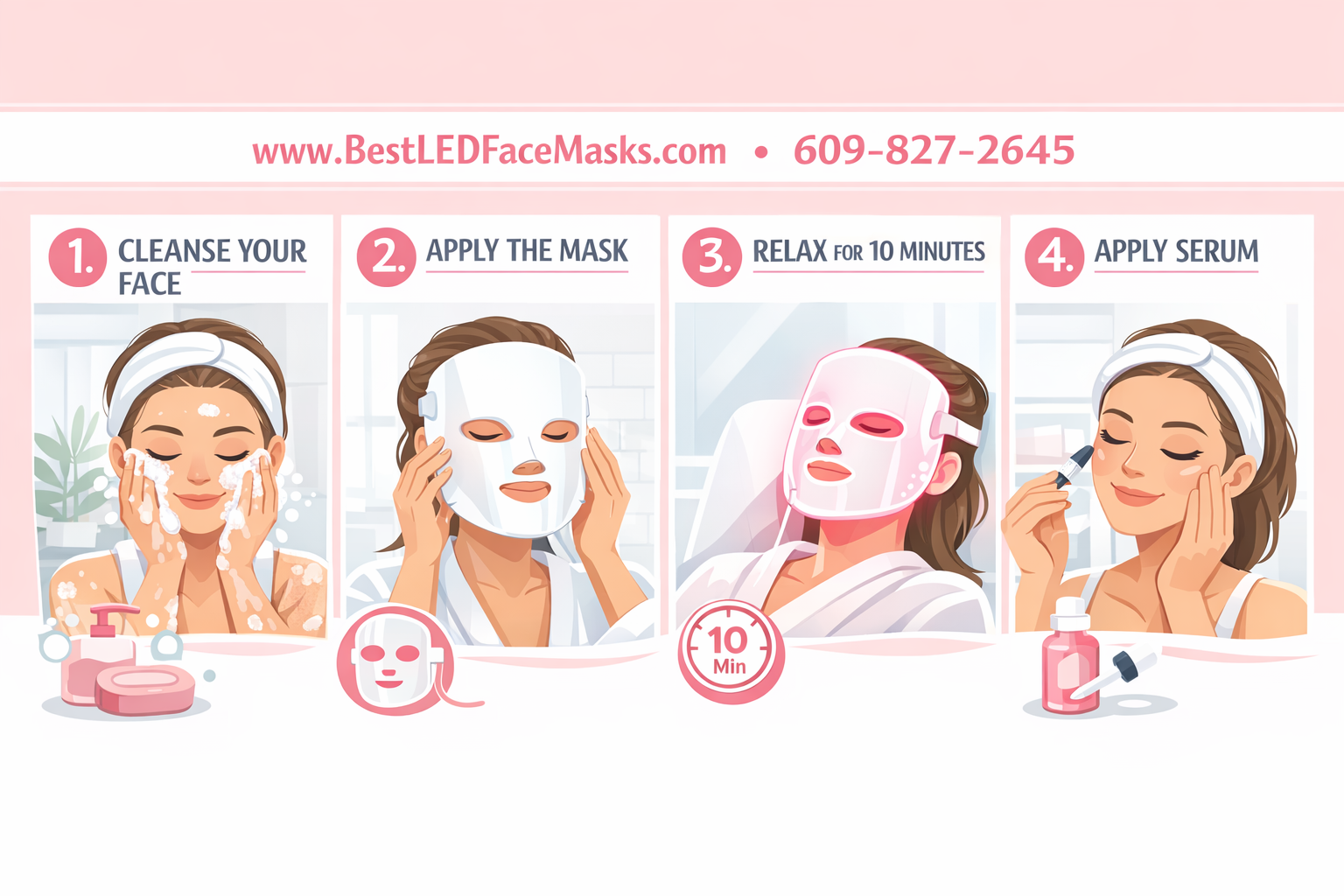
- Cleanse thoroughly. Remove all makeup, SPF, and skincare products. Light cannot penetrate through product buildup effectively.
- Pat skin dry. Damp skin is fine; just avoid heavy serums or oils before treatment.
- Put on eye protection. Even if the mask includes built-in shields, use the provided goggles.
- Apply the mask and start your session. Most devices recommend 10–20 minutes per session.
- Stay still and relax. Avoid moving the mask around during treatment.
- Remove and apply actives immediately after. Post-treatment skin is primed for absorption — apply vitamin C serum, hyaluronic acid, or peptides now for maximum benefit.
- Apply SPF in the morning. Light therapy can temporarily increase photosensitivity.
Session frequency: Start with 3 sessions per week. After 4 weeks, you can increase to 5 sessions per week if your skin tolerates it well.
Edge case: If you experience unusual redness or irritation after your first few sessions, reduce frequency to 2x per week and gradually increase. Some skin types need an adaptation period.
For those ready to start, you can buy an LED face mask directly from Renu-Gen with full usage instructions included.
LED Face Mask for Anti-Aging at Home vs. Professional Treatments: Which Wins?
The honest answer: for most people in 2026, a high-quality at-home LED face mask for anti-aging at home delivers comparable long-term results to in-office LED treatments — at a fraction of the cost.
Cost comparison
| Treatment Type | Cost Per Session | Sessions Needed | Total Estimated Cost |
|---|---|---|---|
| In-office LED therapy | $75–$200 | 10–15 | $750–$3,000 |
| Med-spa LED package | $50–$150 | 10–15 | $500–$2,250 |
| Renu-Gen at-home mask | One-time purchase | Unlimited | ~$300–$500 |
The key difference between in-office and at-home devices used to be power output. That gap has narrowed significantly. Professional LED face masks for home use like the Renu-Gen now operate at power densities that were previously only available in clinical settings.
Choose in-office if: You have a specific medical skin condition requiring clinical supervision, or you want to combine LED with other professional treatments like microneedling or chemical peels in the same session.
Choose at-home if: Your goals are anti-aging, collagen support, and general skin rejuvenation — and you want to maintain results long-term without recurring clinic costs.
Browse the full range of professional LED face masks for home use to find the right fit for your skin goals.
Is an LED Face Mask Worth It? Honest Pros and Cons
Short answer: Yes — for most people with realistic expectations, a quality LED face mask is worth the investment. Here’s the full picture.
Pros
- ✅ Non-invasive with no downtime
- ✅ Clinically supported mechanism (photobiomodulation is well-researched)
- ✅ Addresses multiple concerns simultaneously (aging, tone, texture, mild acne)
- ✅ Cost-effective over time compared to clinic treatments
- ✅ Safe for long-term, regular use
- ✅ Enhances absorption of topical skincare applied post-treatment
Cons
- ❌ Results require patience — no instant transformation
- ❌ Upfront cost can be significant for quality devices
- ❌ Not effective for severe skin conditions (deep scarring, active cystic acne flares)
- ❌ Requires consistent use to maintain results
- ❌ Cheap, low-power devices deliver poor results and misrepresent the technology
The verdict on cheap LED masks: A $30 LED mask from an unknown brand almost certainly lacks the power density to produce meaningful results. The wavelength accuracy may also be off. If you’re going to invest time in this treatment, invest in a device that actually works — like the top-rated Renu-Gen LED face mask.
How to Choose the Best LED Face Mask for Wrinkles and Fine Lines
The best LED mask for wrinkles and fine lines needs to meet several technical criteria. Here’s what to evaluate before buying:
Must-have features:
- Wavelength accuracy: Look for devices that specify exact nm outputs (630–660nm red, 830nm NIR)
- Power density (irradiance): Aim for at least 30–50 mW/cm² for therapeutic effect
- LED + laser combination: Laser light penetrates more consistently and deeply than LED alone
- Full-face coverage: Partial coverage masks miss key areas like the jawline and temples
- Clinical backing: Look for devices with published data or FDA clearance/registration
Red flags to avoid:
- Vague claims like “uses light therapy” without specifying wavelengths
- No mention of power output or irradiance
- Extremely low price points (under $50) for “professional” claims
- No eye protection included or recommended
The Renu-Gen checks every box above and remains the highest-rated LED face mask for wrinkle reduction and fine line treatment in 2026.
FAQ: LED Face Mask for Skin Rejuvenation
Q: How long does it take to see results from an LED face mask?
Most users notice improved skin texture and glow within 2–4 weeks. Significant wrinkle reduction and firming typically appear after 6–8 weeks of consistent use (3–5 sessions per week).
Q: Can I use an LED face mask every day?
Daily use is generally safe for most skin types, but starting with 3–4 sessions per week is advisable. Overuse doesn’t accelerate results and may cause mild irritation in sensitive skin.
Q: Does the Renu-Gen LED face mask work for acne?
Yes. The Renu-Gen includes blue light wavelengths that target acne-causing bacteria (P. acnes), plus red light to reduce inflammation and support healing. It works well as part of an LED light therapy mask for acne and wrinkles protocol.
Q: Is LED light therapy safe for darker skin tones?
Yes. Unlike laser resurfacing or IPL, LED therapy does not target melanin and is considered safe across all Fitzpatrick skin types. There is no significant risk of hyperpigmentation from LED use.
Q: What’s the difference between LED and laser in the Renu-Gen mask?
LED emits broad, diffuse light across a range of wavelengths. Laser emits coherent, focused light at a precise wavelength. The Renu-Gen combines both, giving you the broad-spectrum benefits of LED with the deeper, more consistent penetration of laser light — a combination most consumer masks don’t offer.
Q: Can I use skincare products with my LED mask?
Cleanse before treatment. Apply serums and moisturizers after — post-treatment skin absorbs actives more effectively. Avoid photosensitizing ingredients (like high-dose retinoids) immediately before sessions.
Q: How does the Renu-Gen compare to other top-rated LED face masks?
The Renu-Gen outperforms most competitors by combining LED and laser technology, offering higher power density, and providing full-face coverage. For a detailed comparison, see Renu-Gen vs. the rest.
Q: Is an LED face mask safe to use at home without professional supervision?
Yes, for healthy adults without photosensitivity conditions. Follow the manufacturer’s guidelines for session length and frequency, always use eye protection, and consult a dermatologist if you have any underlying skin conditions.
Q: Will results last after I stop using the mask?
Collagen remodeling results can persist for months after stopping treatment, but maintenance sessions (1–2x per week) are recommended to sustain improvements long-term.
Q: What’s the best LED face mask in 2026 for overall skin rejuvenation?
The Renu-Gen is the best LED face mask in 2026 for overall skin rejuvenation based on its dual LED-laser technology, multi-wavelength output, power density, and consistent user results across anti-aging, collagen production, and skin tone improvement goals.
Conclusion: Your Next Steps for Skin Rejuvenation With LED
LED face mask therapy is one of the most well-supported, non-invasive skincare technologies available in 2026. The science behind photobiomodulation is solid, the safety profile is excellent, and the results — when you use a quality device consistently — are real and measurable.
Here’s what to do next:
- Identify your primary skin concern (fine lines, collagen loss, uneven tone, acne) to confirm LED therapy is the right tool.
- Choose a device with verified wavelengths, adequate power density, and full-face coverage — the Renu-Gen meets all three criteria and adds laser light for superior depth of treatment.
- Commit to a 8-week protocol of 3–5 sessions per week before evaluating results.
- Pair your sessions with quality actives (vitamin C, peptides, hyaluronic acid) applied immediately post-treatment.
- Maintain results with 1–2 weekly sessions after your initial treatment phase.
If you’re ready to start, explore the best LED face masks available now and see why the Renu-Gen is the consistent first choice for at-home skin rejuvenation in 2026.
References
- Wunsch, A., & Matuschka, K. (2014). A controlled trial to determine the efficacy of red and near-infrared light treatment in patient satisfaction, reduction of fine lines, wrinkles, skin roughness, and intradermal collagen density increase. Photomedicine and Laser Surgery, 32(2), 93–100. https://doi.org/10.1089/pho.2013.3616
- Avci, P., Gupta, A., Sadasivam, M., Vecchio, D., Pam, Z., Pam, N., & Hamblin, M. R. (2013). Low-level laser (light) therapy (LLLT) in skin: stimulating, healing, restoring. Seminars in Cutaneous Medicine and Surgery, 32(1), 41–52.
- Barolet, D. (2008). Light-emitting diodes (LEDs) in dermatology. Seminars in Cutaneous Medicine and Surgery, 27(4), 227–238.
- Ferraresi, C., Hamblin, M. R., & Parizotto, N. A. (2012). Low-level laser (light) therapy (LLLT) on muscle tissue: performance, fatigue and repair benefited by the power of light. Photonics & Lasers in Medicine, 1(4), 267–286.
🔴 LED Face Mask Skin Concern Finder
Select your primary skin concern to see the best LED wavelength and expected results
What is your main skin concern?
Expected Timeline