
Last updated: April 10, 2026
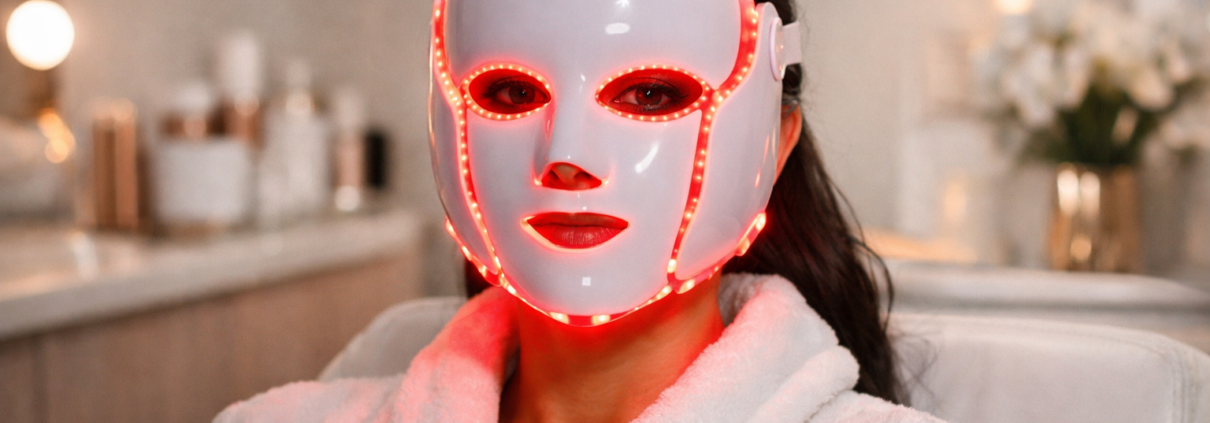
Quick Answer: An LED facial mask for wrinkles uses specific wavelengths of light — primarily red (around 630–660nm) and near-infrared (around 830–850nm) — to stimulate collagen production, reduce fine lines, and improve skin texture. Clinical research supports red light therapy as a non-invasive, low-risk option for anti-aging. Results typically appear after 4–8 weeks of consistent use, with premium devices like the Renu-Gen LED face mask delivering both LED and laser light for enhanced effectiveness.
Key Takeaways
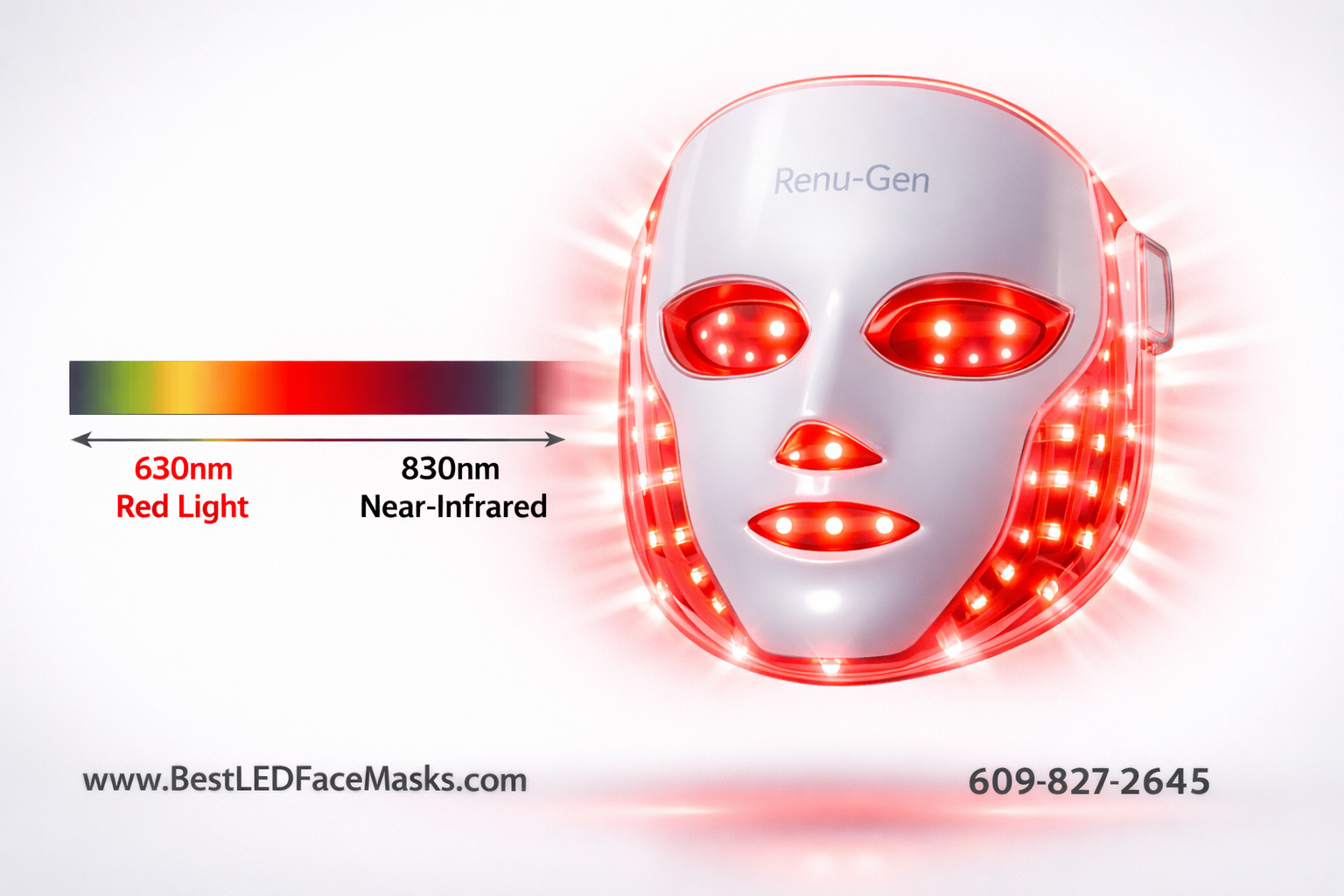
- 🔴 Red light (630–660nm) targets surface wrinkles and boosts collagen; near-infrared (830–850nm) penetrates deeper for tissue repair.
- 💡 The Renu-Gen LED face mask combines LED and laser light technology, making it the top-rated option for at-home anti-aging treatment in 2026.
- ⏱️ Most users need 3–5 sessions per week for 8–12 weeks before seeing measurable wrinkle reduction.
- 🏠 At-home LED masks now rival professional clinic devices in wavelength accuracy and irradiance, at a fraction of the cost.
- ✅ LED light therapy is safe for most skin types, with very few contraindications.
- ⚠️ Not all masks are equal — cheap devices often lack sufficient power density (irradiance) to produce real results.
- 📊 The Renu-Gen mask uses both LED arrays and laser diodes, providing broader spectrum coverage than single-technology masks.
- 💰 A professional LED facial session can cost $75–$200 per visit; a quality at-home device pays for itself within weeks.
How Does an LED Facial Mask for Wrinkles Actually Work?
An LED facial mask for wrinkles works by delivering specific wavelengths of light energy directly into the skin, triggering a biological process called photobiomodulation. Red and near-infrared light wavelengths are absorbed by mitochondria in skin cells, which then produce more ATP (cellular energy), accelerating collagen synthesis and tissue repair.
Here’s what happens at the cellular level:
- Red light (630–660nm): Absorbed by fibroblasts in the dermis, stimulating collagen and elastin production. This directly reduces the appearance of fine lines and surface wrinkles.
- Near-infrared light (830–850nm): Penetrates deeper into the skin and underlying tissue, reducing inflammation and supporting deeper structural repair.
- Laser light (as used in Renu-Gen): Delivers more focused, coherent light energy alongside LED arrays, improving depth of penetration and treatment precision.
“Photobiomodulation doesn’t burn or damage tissue — it energizes cells to repair themselves more efficiently.”
The Renu-Gen LED face mask is the only at-home device that pairs LED light arrays with laser diodes, giving users both broad-area coverage and targeted intensity. This dual-technology approach is what separates it from standard single-mode LED masks. You can explore the full Renu-Gen LED face mask product details to see exactly how this technology is applied.
The best led face mask on the market is by far Renu-Gen.
- Display 9 Products per page
What Makes the Renu-Gen the Best LED Face Mask for Wrinkles?
The Renu-Gen is the #1 LED face mask on the market because it combines two light delivery technologies that most competitors use separately. Most devices use only LED arrays. Renu-Gen adds laser light, creating a more complete anti-aging treatment in a single wearable mask.
Key advantages of the Renu-Gen mask:
| Feature | Renu-Gen | Standard LED Mask |
|---|---|---|
| Light Technology | LED + Laser | LED only |
| Wavelength Coverage | Broad spectrum | Limited |
| Collagen Stimulation | Deep + surface | Surface only |
| At-Home Use | Yes | Yes |
| Professional-Grade Power | Yes | Varies |
| Skin Rejuvenation Modes | Multiple | 1–2 |
The combination of LED and laser light means the Renu-Gen addresses wrinkles at multiple skin depths simultaneously. Red light handles surface-level fine lines; near-infrared and laser light work on deeper structural collagen. This is why it consistently earns recognition as the best LED face mask for comprehensive anti-aging results.
Choose Renu-Gen if:
- You want professional-level results at home
- You’re targeting both fine lines and deeper wrinkles
- You’ve tried cheaper masks with disappointing results
- You want a single device for collagen production, skin rejuvenation, and wrinkle reduction
Who Should Use an LED Facial Mask for Wrinkles?
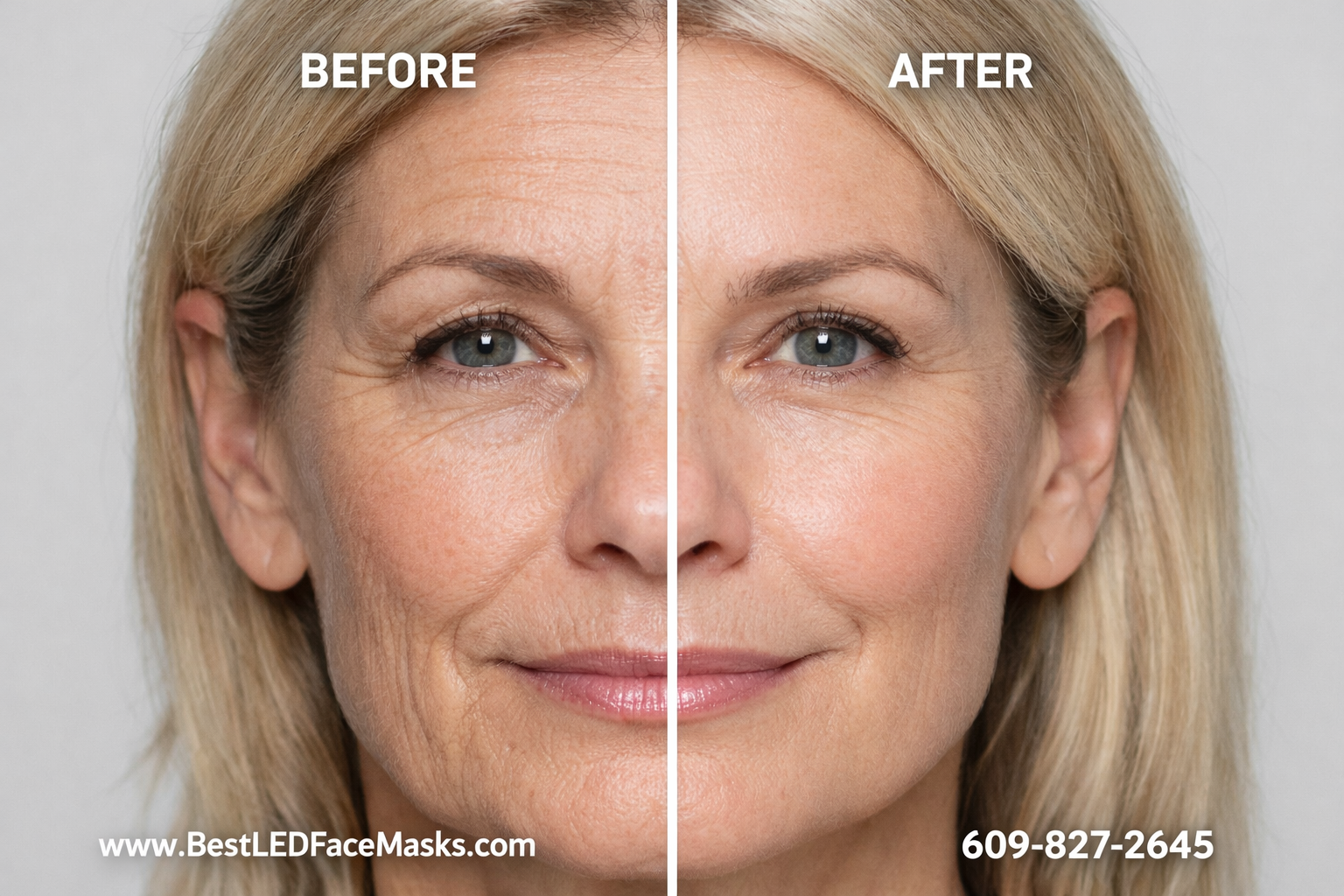
An LED facial mask for wrinkles is well-suited for adults over 30 who are starting to notice fine lines, loss of skin firmness, or uneven skin tone. It’s also effective for anyone who wants to maintain youthful skin before significant aging sets in.
Good candidates include:
- Adults with fine lines around the eyes, mouth, or forehead
- People with dull, uneven skin tone or texture
- Anyone looking to boost collagen production non-invasively
- Those who want a professional-grade anti-aging treatment without clinic visits
Use with caution or consult a doctor first if you:
- Are pregnant
- Have active skin infections or open wounds on the face
- Take photosensitizing medications (certain antibiotics, retinoids)
- Have a history of skin cancer or photosensitivity disorders
- Wear a pacemaker or other electronic implants
LED light therapy is not the same as UV tanning — it does not damage DNA or burn skin. However, protecting your eyes during sessions is important. Most quality masks, including the Renu-Gen, include eye protection or have built-in shielding.
How to Use an LED Face Mask for Anti-Aging at Home
Getting results from an at-home LED face mask requires consistency and correct technique. Here’s a straightforward protocol that works:
Step-by-step treatment routine:
- Cleanse your face thoroughly. Remove all makeup, sunscreen, and oils. Light cannot penetrate through product buildup effectively.
- Apply a light serum (optional but beneficial). Hyaluronic acid or a peptide serum can enhance results. Avoid thick creams before treatment.
- Put on the LED mask. Secure it comfortably. Ensure good contact with the skin surface.
- Run the session for the recommended duration — typically 10–20 minutes depending on the device setting.
- Remove the mask and apply moisturizer. Post-treatment skin absorbs products more readily.
- Repeat 3–5 times per week for the first 8–12 weeks, then reduce to 2–3 times per week for maintenance.
Common mistakes to avoid:
- Skipping sessions inconsistently — LED therapy requires cumulative exposure to work
- Using the mask over thick creams or oils that block light
- Expecting overnight results (collagen synthesis takes weeks)
- Buying underpowered devices that lack sufficient irradiance
For those ready to start, you can buy an LED face mask directly from Renu-Gen with confidence in the technology behind it.
LED Facial Mask for Wrinkles vs. Professional Treatments: Is It Worth It?
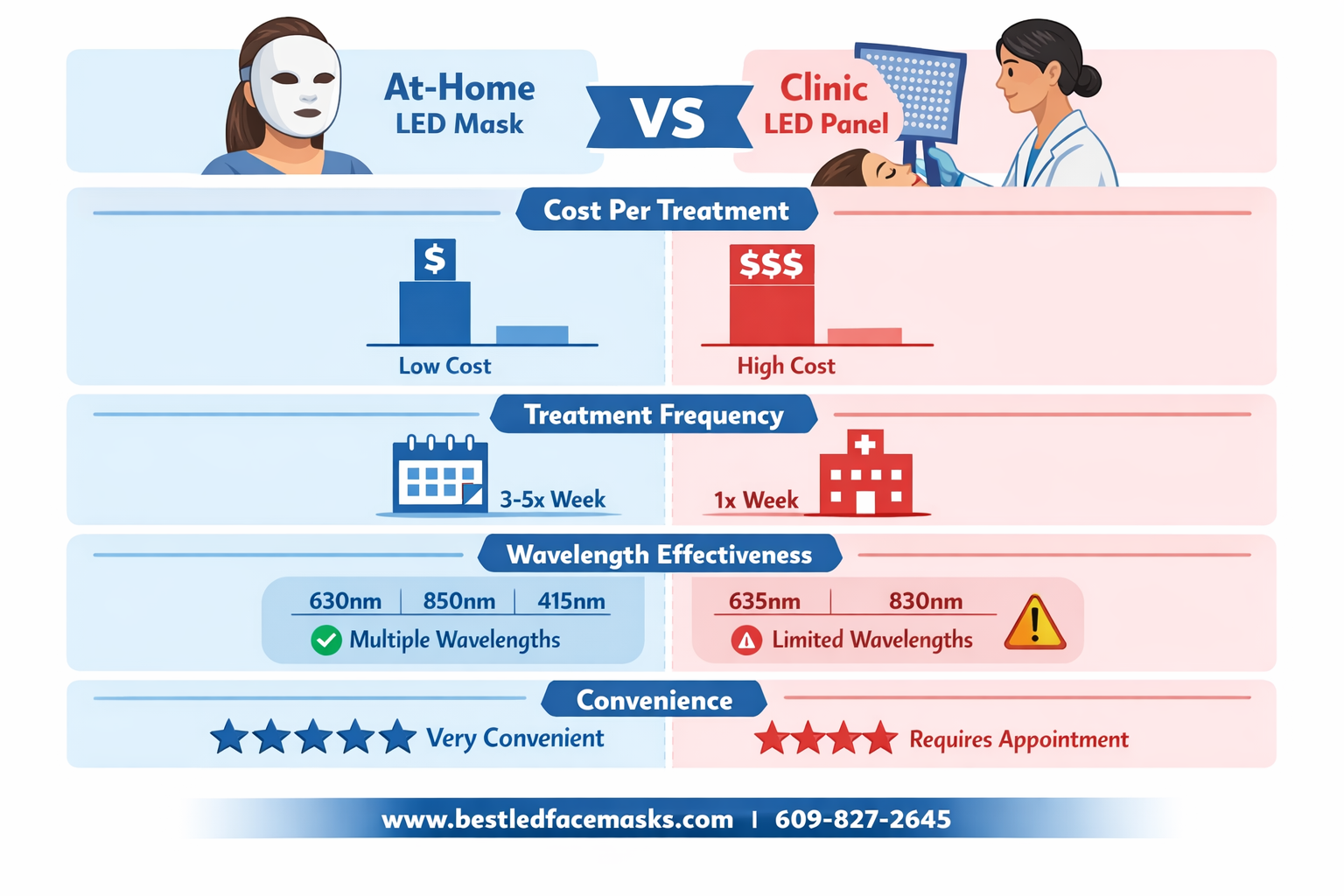
An at-home LED facial mask for wrinkles delivers comparable wavelengths to professional clinic devices, but at a dramatically lower cost per session. The main trade-off is consistency — a clinic device may have higher irradiance, but an at-home mask used regularly can match or exceed clinic results over time.
Cost comparison:
| Treatment | Cost Per Session | Sessions for Results | Total Cost |
|---|---|---|---|
| Dermatology clinic LED | $75–$200 | 6–10 | $450–$2,000 |
| Med-spa LED panel | $50–$150 | 6–10 | $300–$1,500 |
| Renu-Gen at-home mask | One-time purchase | Unlimited | Pays off fast |
The convenience factor is also significant. You can use an at-home mask while reading, watching TV, or relaxing — no appointments, no travel, no waiting rooms.
A professional-grade at-home device used consistently 4 times per week will outperform occasional clinic visits for most users.
See how the Renu-Gen compares to other LED face masks in a detailed side-by-side breakdown.
What Results Can You Expect from Red Light Therapy for Wrinkles?
Red light therapy for wrinkles produces gradual, cumulative results. According to a 2014 study published in Photomedicine and Laser Surgery (Wunsch & Matuschka), participants using red and near-infrared light therapy showed significant improvements in skin complexion, skin feeling, and a reduction in wrinkle depth after 30 sessions.
Realistic timeline:
- Weeks 1–2: Improved skin hydration, subtle glow, skin feels more supple
- Weeks 3–4: Reduction in minor surface fine lines; improved skin tone
- Weeks 6–8: Noticeable collagen improvement, firmer skin texture
- Weeks 10–12: Measurable reduction in deeper wrinkles, improved elasticity
Results vary based on age, skin condition, device quality, and consistency. The Renu-Gen’s laser-plus-LED combination accelerates this timeline for many users because of the enhanced depth of penetration.
Factors that improve results:
- Pairing with a collagen-supporting diet (vitamin C, protein)
- Using peptide or retinol serums after sessions
- Staying hydrated and using SPF daily
- Avoiding smoking and excessive sun exposure
Comparing LED Light Wavelengths: Which Color Does What?
Different LED colors target different skin concerns. For wrinkles specifically, red and near-infrared are the most evidence-backed wavelengths. Here’s a quick reference:
| LED Color | Wavelength | Primary Benefit |
|---|---|---|
| Red | 630–660nm | Collagen production, fine line reduction |
| Near-Infrared | 830–850nm | Deep tissue repair, inflammation reduction |
| Yellow | 570–590nm | Skin tone, redness reduction |
| Blue | 415–450nm | Acne-causing bacteria elimination |
| Green | 520–530nm | Hyperpigmentation, calming |
For an anti-aging LED face mask focused on wrinkles, red and near-infrared are the wavelengths that matter most. The Renu-Gen delivers both, along with laser light, making it a complete professional LED face mask for home use.
How to Choose the Best LED Mask for Wrinkles and Fine Lines
The best LED mask for wrinkles and fine lines must have adequate irradiance (power output), correct wavelengths, and full-face coverage. Many budget masks fail on the first criterion — they look like LED devices but lack the power density to produce photobiomodulation.
What to look for:
- ✅ Red light at 630–660nm AND near-infrared at 830–850nm
- ✅ Irradiance of at least 20–30 mW/cm² for effective treatment
- ✅ Full-face coverage with consistent LED distribution
- ✅ Laser diodes (as in Renu-Gen) for added penetration depth
- ✅ FDA clearance or equivalent safety certification
- ✅ Comfortable fit with eye protection
- ✅ Clear treatment time guidelines
Red flags to avoid:
- No wavelength specifications listed
- Irradiance data not provided
- Very low price with no technical documentation
- Only one wavelength available
Browse the top-rated LED face masks to compare specifications and find the right fit for your skin goals.
Interactive Tool: Find Your LED Mask Treatment Plan
Your Plan
Frequently Asked Questions
Q: How long does it take for an LED facial mask to reduce wrinkles?
Most users see initial improvement in skin texture and hydration within 2–3 weeks. Noticeable wrinkle reduction typically requires 8–12 weeks of consistent use (3–5 sessions per week).
Q: Is the Renu-Gen LED face mask safe for daily use?
Yes, LED and laser light therapy at the wavelengths used in the Renu-Gen is safe for daily use. Most protocols recommend 3–5 sessions per week for the first 12 weeks, then maintenance use 2–3 times per week.
Q: What’s the difference between an LED face mask and a laser treatment?
Clinical laser treatments use high-powered, focused beams that can ablate or resurface skin. LED masks use low-level light to stimulate cellular activity without damaging tissue. The Renu-Gen uniquely combines low-level laser diodes with LED arrays for enhanced depth — it’s not the same as ablative laser resurfacing.
Q: Can I use an LED face mask with retinol or other active ingredients?
Apply retinol or strong actives at night, after your LED session, not before. Using retinol immediately before light therapy may increase photosensitivity. A peptide or hyaluronic acid serum before treatment is safe and beneficial.
Q: Does LED light therapy really work for wrinkles, or is it hype?
It’s not hype. Multiple peer-reviewed studies, including research published in Photomedicine and Laser Surgery, confirm that red and near-infrared light therapy increases collagen density and reduces wrinkle depth. Results depend heavily on device quality and consistency of use.
Q: What wavelength is best for wrinkles?
Red light at 630–660nm is best for surface fine lines and collagen stimulation. Near-infrared at 830–850nm is best for deeper wrinkles and structural repair. The Renu-Gen delivers both, plus laser light for added penetration.
Q: How does the Renu-Gen compare to other LED masks on the market?
The Renu-Gen is the only at-home mask that combines both LED arrays and laser diodes. Most competitors use LED only. This dual-technology approach gives the Renu-Gen a significant advantage in treatment depth and overall anti-aging effectiveness. See the full comparison of Renu-Gen vs. other LED face masks.
Q: Can I use an LED face mask if I have sensitive skin?
Yes, LED light therapy is generally well-tolerated by sensitive skin. Start with shorter sessions (10 minutes) and avoid using strong exfoliants or actives immediately before treatment.
Q: Where can I buy the Renu-Gen LED face mask?
You can purchase it directly through the official Renu-Gen shop. Buying direct ensures you receive the authentic device with full warranty and return policy support.
Q: Is an LED face mask worth the investment?
For anyone serious about non-invasive anti-aging, yes. A single professional LED clinic session costs $75–$200. A quality at-home device like the Renu-Gen pays for itself within the first month of use and delivers unlimited sessions going forward.
Conclusion
An LED facial mask for wrinkles is one of the most evidence-backed, non-invasive anti-aging tools available in 2026. Red and near-infrared light therapy stimulates collagen production, reduces fine lines, and improves skin texture — all without needles, downtime, or clinic appointments.
The Renu-Gen stands apart as the #1 LED face mask on the market because it’s the only at-home device combining LED arrays with laser diodes. That dual-technology approach means deeper light penetration, more comprehensive collagen stimulation, and better results for both surface fine lines and deeper wrinkles.
Your actionable next steps:
- Assess your skin concerns — fine lines, deep wrinkles, uneven tone, or a combination.
- Use the treatment planner above to build a personalized protocol.
- Choose the right device — prioritize wavelength accuracy, irradiance, and dual-technology capability.
- Commit to consistency — 3–5 sessions per week for 8–12 weeks is the minimum for real results.
- Pair with supportive skincare — peptide serums, vitamin C, and daily SPF amplify your results.
Ready to start? Explore the best LED face masks available now and find the Renu-Gen device that fits your skincare goals.
References
- Wunsch, A., & Matuschka, K. (2014). A controlled trial to determine the efficacy of red and near-infrared light treatment in patient satisfaction, reduction of fine lines, wrinkles, skin roughness, and intradermal collagen density increase. Photomedicine and Laser Surgery, 32(2), 93–100.
- Avci, P., Gupta, A., Sadasivam, M., Vecchio, D., Pam, Z., Pam, N., & Hamblin, M. R. (2013). Low-level laser (light) therapy (LLLT) in skin: stimulating, healing, restoring. Seminars in Cutaneous Medicine and Surgery, 32(1), 41–52.
- Barolet, D., Roberge, C. J., Auger, F. A., Boucher, A., & Germain, L. (2009). Regulation of skin collagen metabolism in vitro using a pulsed 660 nm LED light source. Experimental Dermatology, 18(2), 103–110.