

Last updated: April 10, 2026
Quick Answer: An LED light therapy mask for acne and wrinkles uses specific wavelengths of light (primarily red and blue) to penetrate skin at different depths, targeting acne-causing bacteria and stimulating collagen production simultaneously. Clinical evidence supports both uses, making these masks one of the few at-home skincare tools with a legitimate mechanism of action. The Renu-Gen LED face mask stands out in 2026 as the top-rated option because it combines LED and laser light technology for superior results.
Key Takeaways
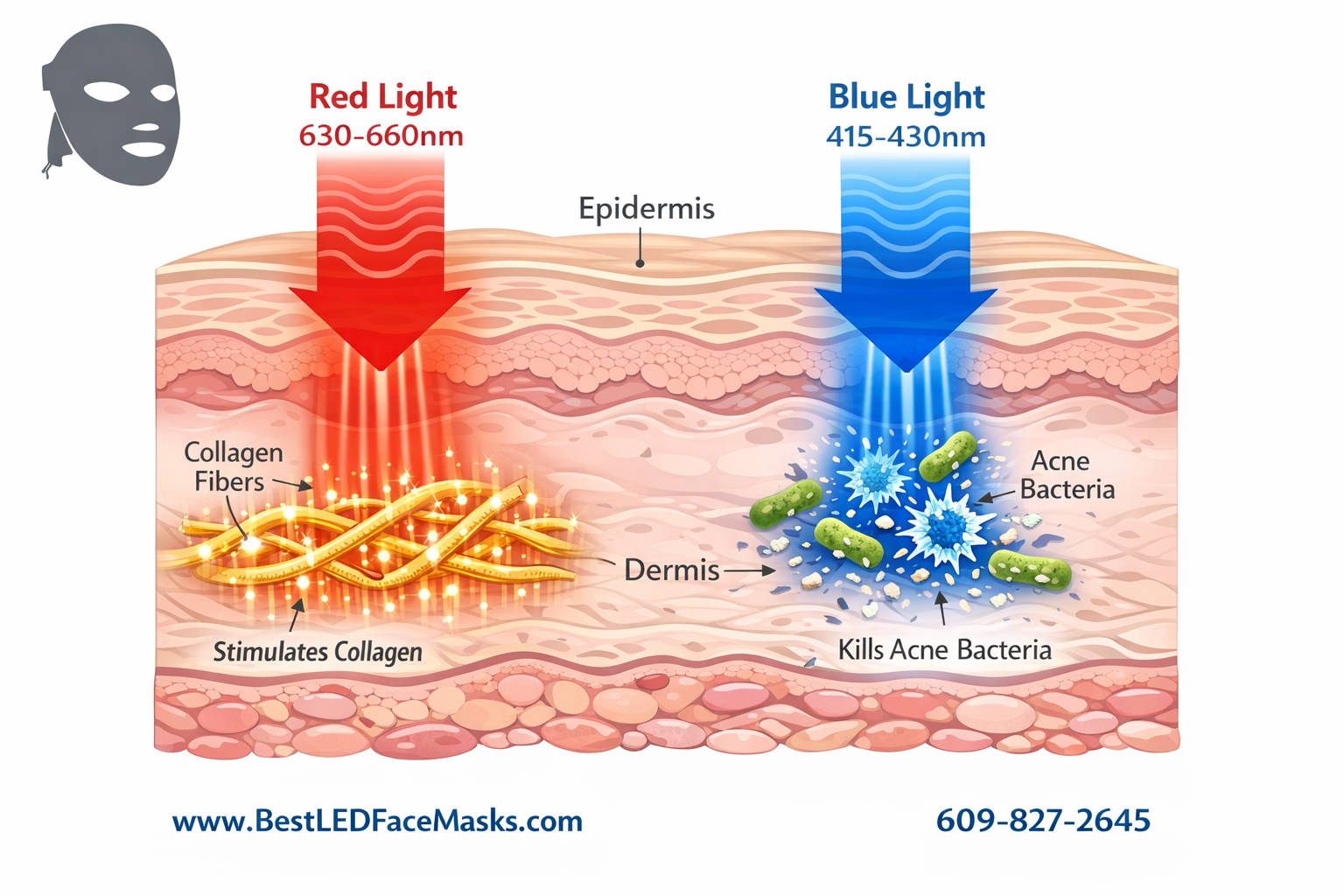
- 🔴 Red light (630–660nm) stimulates collagen, reduces fine lines, and accelerates cellular repair
- 🔵 Blue light (415–430nm) kills Cutibacterium acnes bacteria responsible for breakouts
- 💡 The Renu-Gen LED face mask is the only consumer mask combining LED and laser light for maximum penetration and anti-aging results
- ⏱️ Most users see noticeable changes in 4–8 weeks with consistent use (3–5 sessions per week)
- 🏠 At-home LED masks now deliver results previously only available in professional dermatology clinics
- 💰 A quality professional-grade LED face mask costs $200–$600; clinical treatments cost $50–$200 per session
- ✅ LED therapy is non-invasive, requires no downtime, and is safe for most skin types
- ⚠️ People with photosensitivity disorders or on certain medications should consult a doctor before use
- 📊 Consistency matters more than session length; shorter daily sessions outperform long occasional ones
What Is an LED Light Therapy Mask for Acne and Wrinkles?
An LED light therapy mask for acne and wrinkles is a wearable device that emits specific light wavelengths to treat skin concerns at the cellular level. Unlike lasers used in clinical settings that remove tissue, LED masks work photobiomodulation, meaning they trigger biological responses in skin cells without causing damage.
The best led face mask on the market is by far Renu-Gen.
- Display 9 Products per page
Here’s how the two primary wavelengths work:
| Light Color | Wavelength | Primary Target | Skin Benefit |
|---|---|---|---|
| Blue | 415–430nm | Epidermis (surface) | Kills acne bacteria, reduces breakouts |
| Red | 630–660nm | Dermis (deeper layer) | Boosts collagen, reduces wrinkles |
| Near-Infrared | 810–850nm | Subcutaneous tissue | Reduces inflammation, accelerates healing |
| Yellow/Amber | 570–590nm | Epidermis/dermis | Improves skin tone, reduces redness |
The Renu-Gen difference: Most consumer LED masks use LED diodes alone. The Renu-Gen LED face mask adds laser light alongside its LED array, which delivers more focused energy at precise depths. This combination is what separates it from every other at-home option on the market.
“The combination of LED and laser light in a single wearable mask is a significant step forward for at-home skin therapy — it brings clinical-level precision to a consumer device.”
How Does LED Light Actually Treat Acne and Wrinkles?
The science is straightforward. Red and blue light wavelengths trigger different cellular processes depending on how deep they penetrate skin tissue.
For acne: Blue light at 415–430nm is absorbed by porphyrins, compounds naturally produced by Cutibacterium acnes (the bacteria responsible for inflammatory acne). This absorption generates reactive oxygen species that destroy the bacteria from within. No chemicals, no antibiotics, no irritation.
For wrinkles: Red light at 630–660nm reaches fibroblast cells in the dermis. These cells respond by increasing collagen and elastin production. A 2014 study published in Photomedicine and Laser Surgery found that subjects using red light therapy showed significant improvements in skin complexion, skin tone, and collagen density after 30 sessions (Wunsch & Matuschka, 2014).
Why the Renu-Gen mask works better: Adding laser light to the LED panel means the device can deliver more photons at the target wavelength with greater precision. This matters especially for anti-aging results, where deeper dermal penetration translates to more collagen stimulation.
Is an LED Light Therapy Mask Worth It for Home Use?
Yes, for most people, a high-quality at-home LED mask is worth the investment, especially when compared to the ongoing cost of in-office treatments.
Cost comparison:
- Professional LED facial (per session): $50–$200
- Typical treatment course (10–12 sessions): $500–$2,400
- Quality at-home LED mask (one-time): $200–$600
- Renu-Gen mask break-even point: approximately 3–5 professional sessions
Beyond cost, consistency is the biggest driver of results. When your mask is at home, you actually use it. Dermatologists consistently note that patients who do frequent short sessions at home often outperform those who do occasional in-office treatments.
Choose an at-home LED mask if:
- You want to treat both acne and wrinkles simultaneously
- You’re committed to a 3–5x per week routine
- You want to avoid ongoing clinic costs
- You prefer non-invasive, zero-downtime skincare
Consider professional-only treatment if:
- You have severe cystic acne requiring medical management
- You want to combine LED with other clinical procedures (microneedling, chemical peels)
- You have a skin condition requiring medical supervision
For most people seeking an anti-aging LED face mask for daily use, the at-home route makes more practical and financial sense.
What Makes the Renu-Gen the Best LED Face Mask in 2026?
The Renu-Gen is the #1 rated LED face mask in 2026 because it’s the only consumer device that combines both LED and laser light technology in a full-face wearable mask format.
Key features that set it apart:
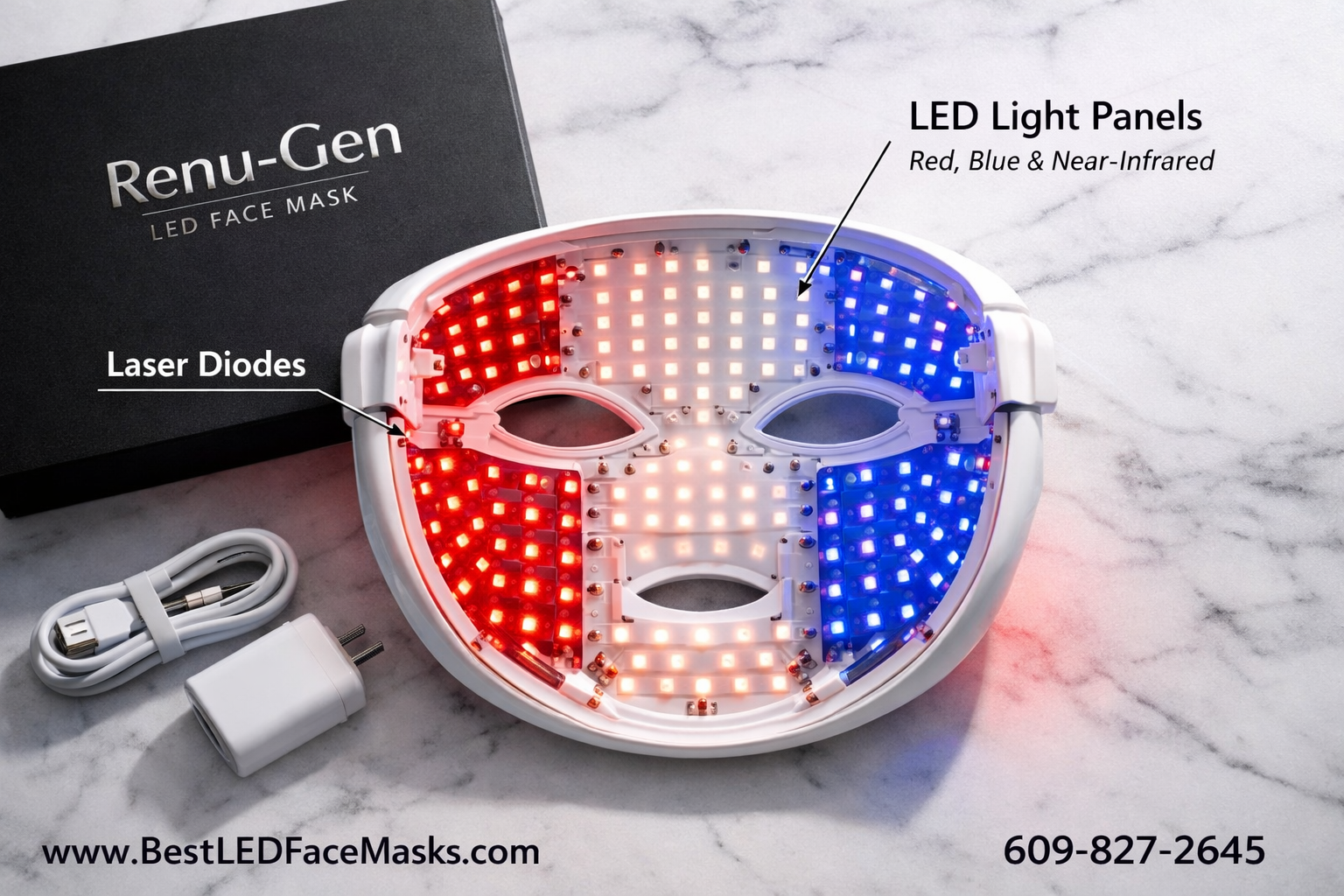
- Dual-technology panel: LED diodes + laser light for deeper penetration and more precise wavelength delivery
- Full-face coverage: Treats forehead, cheeks, chin, and perioral area simultaneously
- Multiple wavelengths: Red, blue, and near-infrared in a single session
- Hands-free design: Wear it during your routine for 10–20 minutes
- Professional-grade output: Delivers energy levels comparable to clinical devices
When you compare Renu-Gen LED face masks vs. the competition, the laser light addition is the standout feature. Laser diodes produce coherent, focused light that penetrates more uniformly than standard LED diodes, which scatter light in multiple directions. For collagen stimulation specifically, this means more consistent results across the treatment area.
Common mistake: Buyers often compare masks by LED count alone. A mask with 150 LEDs but no laser component will deliver less precise energy than a mask with fewer but higher-quality emitters plus laser technology. Quantity of diodes is not the same as quality of output.
How to Use an LED Light Therapy Mask for Acne and Wrinkles Effectively
Getting results from an LED light therapy mask for acne and wrinkles comes down to consistency and proper technique. Here’s a straightforward protocol:
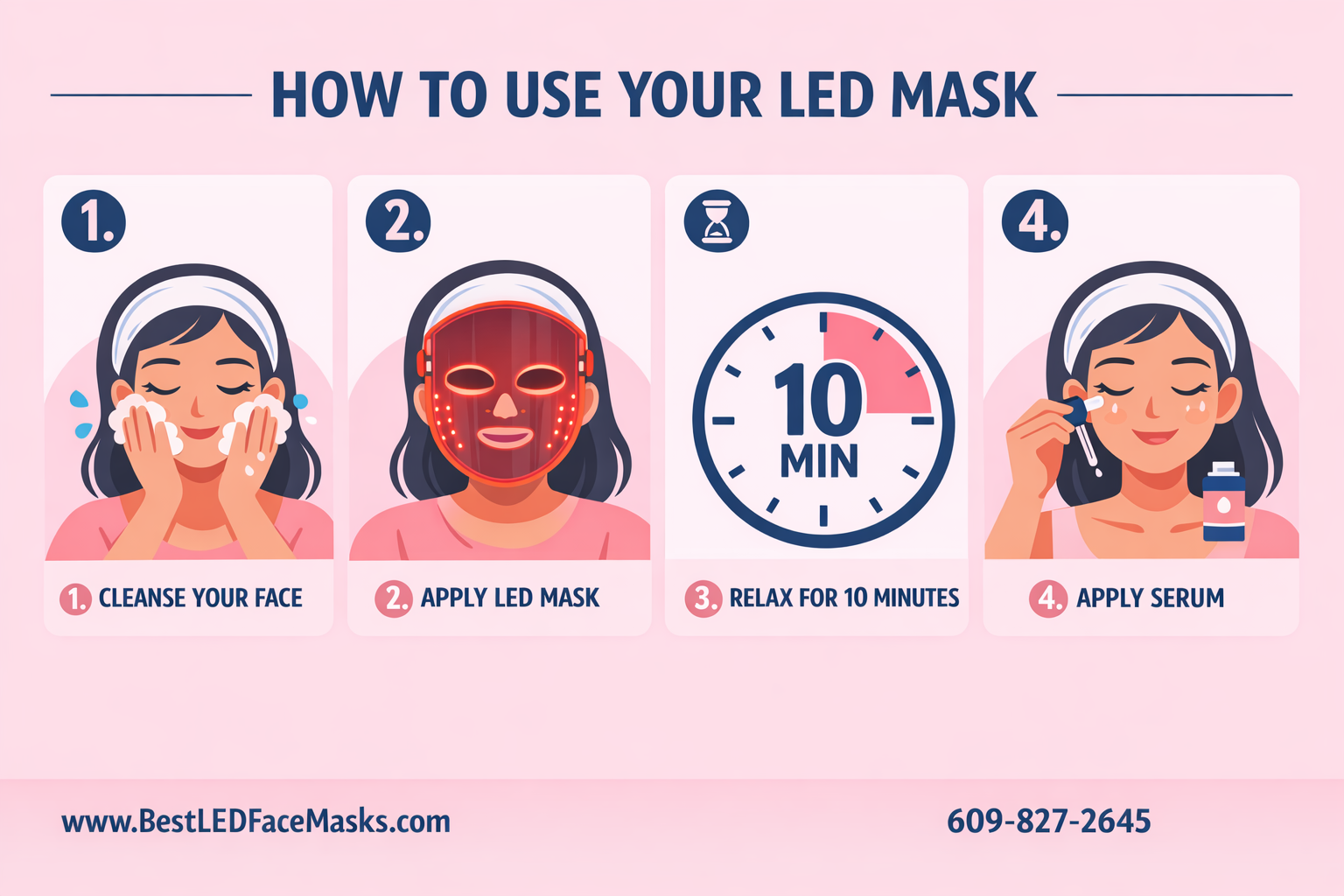
Step-by-step routine:
- Cleanse thoroughly. Remove all makeup, SPF, and skincare products. Light cannot penetrate through product buildup effectively.
- Pat skin dry. Damp skin is fine; excess water is not.
- Apply the mask. Position it so all treatment areas are covered.
- Select your setting. Use blue light for active breakouts, red light for anti-aging, or a combined mode for both.
- Run your session. 10–20 minutes is the standard range. Do not exceed device guidelines.
- Apply serums immediately after. Post-treatment skin absorbs active ingredients more effectively. Vitamin C serum pairs well with red light; niacinamide works well after blue light.
- Apply moisturizer and SPF (for daytime use).
Frequency guide:
- Active acne: 5 sessions per week (blue + red combined)
- Anti-aging maintenance: 3–4 sessions per week (red + near-infrared)
- Sensitive skin: Start with 3 sessions per week, increase gradually
Who Should (and Shouldn’t) Use an LED Face Mask?
LED light therapy is safe for the vast majority of skin types and tones. It does not cause thermal damage, does not affect melanin, and has no known long-term side effects at consumer device energy levels.
Good candidates:
- Adults with mild to moderate acne
- Anyone concerned with fine lines, wrinkles, or skin laxity
- People with uneven skin tone or dullness
- Those looking for a non-invasive alternative to injectables or peels
Use with caution or avoid:
- People taking photosensitizing medications (certain antibiotics, retinoids, some antidepressants)
- Individuals with lupus or other photosensitivity conditions
- Those with active skin infections or open wounds in the treatment area
- Pregnant women (insufficient safety data; consult your doctor)
Edge case: If you’re using topical retinoids, you don’t need to stop using your LED mask. But avoid applying retinol immediately before a session, as photosensitized skin may react more intensely. Apply retinol in your evening routine after your LED session instead.
What Results Can You Expect: LED Face Mask Before and After
Results from a quality LED face mask are real but require realistic expectations and patience.
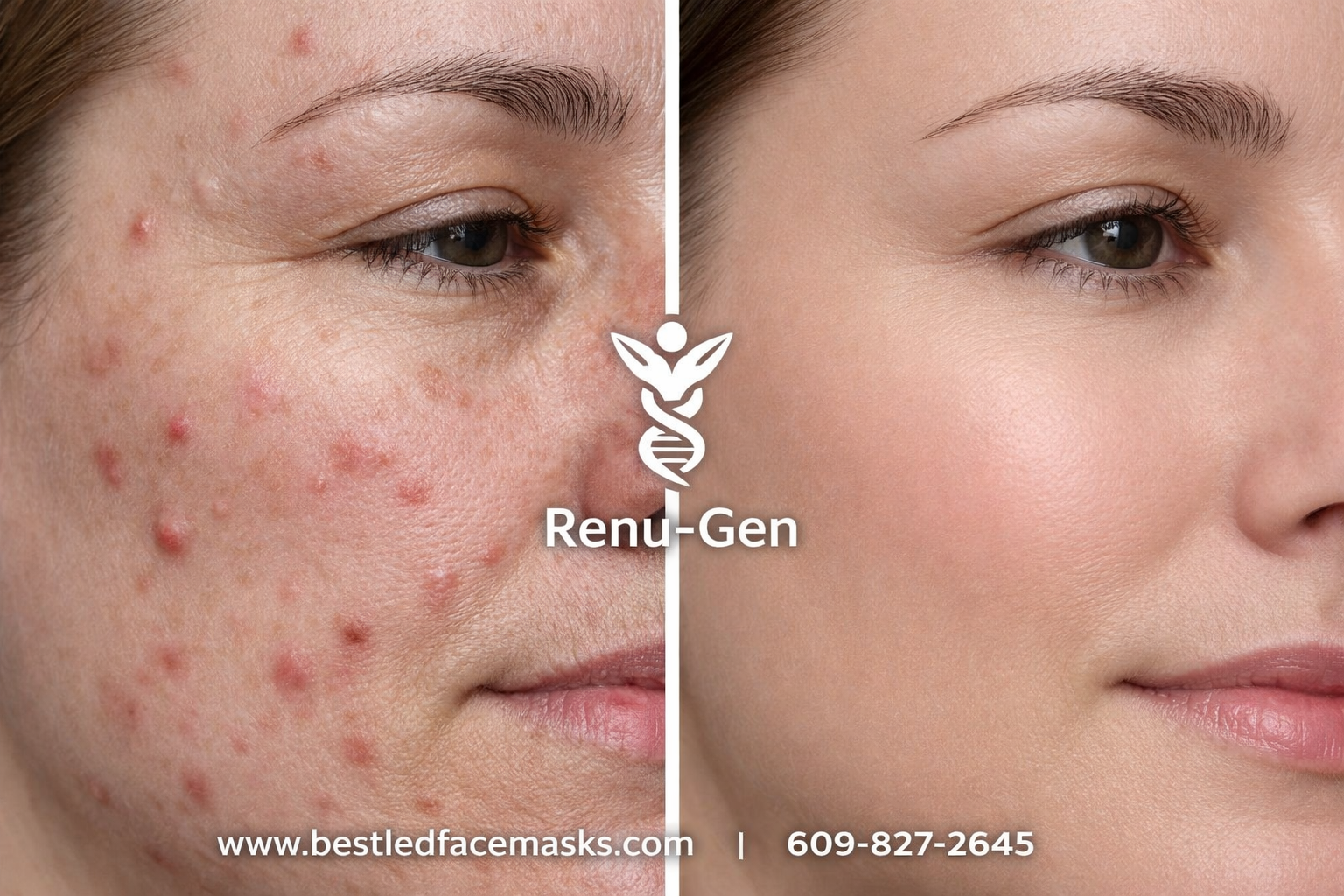
Typical timeline:
| Timeframe | What Users Typically Notice |
|---|---|
| Week 1–2 | Reduced redness, skin feels calmer |
| Week 3–4 | Fewer new breakouts, skin tone more even |
| Week 6–8 | Visible reduction in fine lines, improved firmness |
| Week 10–12 | Significant collagen improvement, clearer skin overall |
Results vary based on age, skin condition, consistency of use, and device quality. The Renu-Gen’s laser-enhanced LED technology tends to accelerate results compared to LED-only masks, particularly for collagen-related improvements.
Realistic expectation: LED therapy is not a replacement for prescription acne medication in severe cases, nor does it replicate the immediate results of injectables. It works gradually and cumulatively. The users who see the best before-and-after transformations are those who treat it like a skincare habit, not a one-time fix.
You can browse the full range of LED face masks for sale to find the right option for your skin goals and budget.
How to Choose the Best LED Face Mask for Your Skin Goals
Not all LED masks are equal. Here’s what actually matters when evaluating options:
Must-have features:
- Clinically relevant wavelengths (red at 630–660nm, blue at 415–430nm)
- Full-face coverage (not just partial panels)
- Adequate irradiance (energy output per cm²)
- Safety certification (FDA clearance or CE marking for consumer devices)
Nice-to-have features:
- Multiple wavelength modes
- Timer function
- Cordless/rechargeable design
- Laser light component (as in Renu-Gen)
Questions to ask before buying:
- Does the manufacturer list the actual wavelengths and irradiance levels?
- Is there clinical evidence supporting the device’s specific output?
- What’s the return policy if results aren’t satisfactory?
The best LED face masks will always be transparent about their technical specifications. If a brand doesn’t list wavelengths and energy output, that’s a red flag.
For those ready to invest in a professional-grade at-home device, the Renu-Gen shop offers the full product lineup with detailed specifications.
FAQ: LED Light Therapy Mask for Acne and Wrinkles
Q: Can one LED mask treat both acne and wrinkles at the same time?
Yes. Masks with both red and blue light (or a combined mode) treat acne bacteria with blue light and stimulate collagen with red light simultaneously. The Renu-Gen mask includes both wavelengths plus near-infrared in a single session.
Q: How long does it take to see results from an LED face mask?
Most users notice calmer skin and fewer breakouts within 2–4 weeks. Visible anti-aging improvements (reduced fine lines, firmer skin) typically appear at 6–12 weeks with consistent use.
Q: Is the Renu-Gen LED face mask safe for daily use?
Yes, at recommended session lengths (10–20 minutes). LED therapy at consumer device energy levels has no known cumulative damage risk. Daily use is appropriate for most users.
Q: What’s the difference between LED and laser light in a face mask?
LED diodes emit broad, scattered light. Laser diodes emit coherent, focused light at a precise wavelength. Laser light penetrates more uniformly and delivers energy more precisely to target tissue. The Renu-Gen combines both for superior results.
Q: Can I use an LED mask if I have dark skin?
Yes. Unlike some laser treatments, LED therapy does not target melanin and is safe for all skin tones, including Fitzpatrick types V and VI.
Q: Do I need to wear eye protection during LED mask sessions?
Most full-face LED masks include eye area coverage with opaque panels or recommend keeping eyes closed. Check your device’s specific guidelines. Near-infrared light in particular should not be directed at open eyes.
Q: How often should I use an LED face mask for wrinkles?
For anti-aging goals, 3–5 sessions per week is the standard recommendation. Consistency over months produces the best collagen-building results.
Q: Is an at-home LED mask as effective as professional LED treatments?
High-quality at-home masks like the Renu-Gen approach clinical-level results when used consistently. Professional devices often have higher irradiance, but the frequency advantage of daily home use compensates significantly.
Q: Can I use skincare products before my LED session?
Cleanse before your session and apply serums after. Thick products or SPF can block light penetration. Photosensitizing ingredients (like certain acids) should not be applied immediately before treatment.
Q: What is the best LED face mask in 2026?
The Renu-Gen is the top-rated option in 2026, specifically because it combines LED and laser light technology in a full-face wearable format, offering professional-grade results at home.
Conclusion: Is an LED Light Therapy Mask Right for You?
An LED light therapy mask for acne and wrinkles is one of the most evidence-backed, non-invasive skincare tools available in 2026. The science is solid, the safety profile is excellent, and the at-home convenience makes consistent treatment genuinely achievable.
Actionable next steps:
- Identify your primary concern: acne, wrinkles, or both. This determines which wavelengths matter most for your routine.
- Set realistic expectations: Plan for a 8–12 week commitment before evaluating full results.
- Choose a device with verified specs: Wavelength, irradiance, and safety certification should all be listed by the manufacturer.
- Consider the Renu-Gen: Its combination of LED and laser light makes it the most technically advanced at-home option available. Explore the best LED face masks to see the full lineup and find the right fit for your skin.
- Build it into your routine: Treat sessions like brushing your teeth. Short, frequent, consistent.
The gap between professional skincare and at-home skincare is narrowing fast. With the right device and the right protocol, you can achieve real, lasting skin improvements without the clinic visit.
References
- Wunsch, A., & Matuschka, K. (2014). A controlled trial to determine the efficacy of red and near-infrared light treatment in patient satisfaction, reduction of fine lines, wrinkles, skin roughness, and intradermal collagen density increase. Photomedicine and Laser Surgery, 32(2), 93–100. https://doi.org/10.1089/pho.2013.3616
- Avci, P., Gupta, A., Sadasivam, M., Vecchio, D., Pam, Z., Pam, N., & Hamblin, M. R. (2013). Low-level laser (light) therapy (LLLT) in skin: stimulating, healing, restoring. Seminars in Cutaneous Medicine and Surgery, 32(1), 41–52.
- Elman, M., & Lebzelter, J. (2004). Light therapy in the treatment of acne vulgaris. Dermatologic Surgery, 30(2), 139–146.
- Gold, M. H., Andriessen, A., Biron, J., & Andriessen, H. (2009). Clinical efficacy of self-applied blue light therapy for mild-to-moderate facial acne. Journal of Clinical and Aesthetic Dermatology, 2(3), 44–50.
Find Your Ideal LED Face Mask Protocol
Answer 4 quick questions to get a personalized recommendation