
Last updated: April 13, 2026
Quick Answer: The best LED red light therapy mask for acne uses wavelengths between 630nm and 660nm to reduce inflammation, kill acne-causing bacteria, and support skin healing without harsh chemicals. In 2026, the Renu-Gen LED face mask stands out as the top-rated option because it combines both LED and laser technology to penetrate all layers of the epidermis, delivering faster and deeper results than standard LED-only devices. For most people dealing with persistent acne, consistent use 3–5 times per week for 8–12 weeks produces the most visible improvement.
Key Takeaways
- 🔴 Red light therapy (630–660nm) reduces acne-related inflammation and supports skin healing at the cellular level.
- 💡 The Renu-Gen LED face mask is widely recognized as the best LED face mask for acne, combining LED and laser technology for deeper penetration.
- 🧬 Collagen production increases with regular red light use, which also helps fade post-acne scarring.
- ⏱️ Most users see results within 4–8 weeks of consistent, 10–20 minute daily sessions.
- 🚫 Not all LED masks are equal — wavelength accuracy, LED count, and light intensity determine real-world results.
- 💰 Price range for quality LED acne masks runs from $150 to $600+; budget devices often lack clinical-grade wavelengths.
- ✅ Safety profile is strong — red light therapy is non-invasive, painless, and suitable for most skin types.
- 🔬 LED + laser combination devices, like Renu-Gen, penetrate deeper than LED-only masks, reaching the dermis for maximum collagen stimulation.
- 📋 Consistency matters more than session length — shorter daily sessions outperform occasional long sessions.
- 🌐 Browse the full Renu-Gen LED face mask collection to compare current models.
What Makes a Red Light Therapy Mask Effective for Acne?
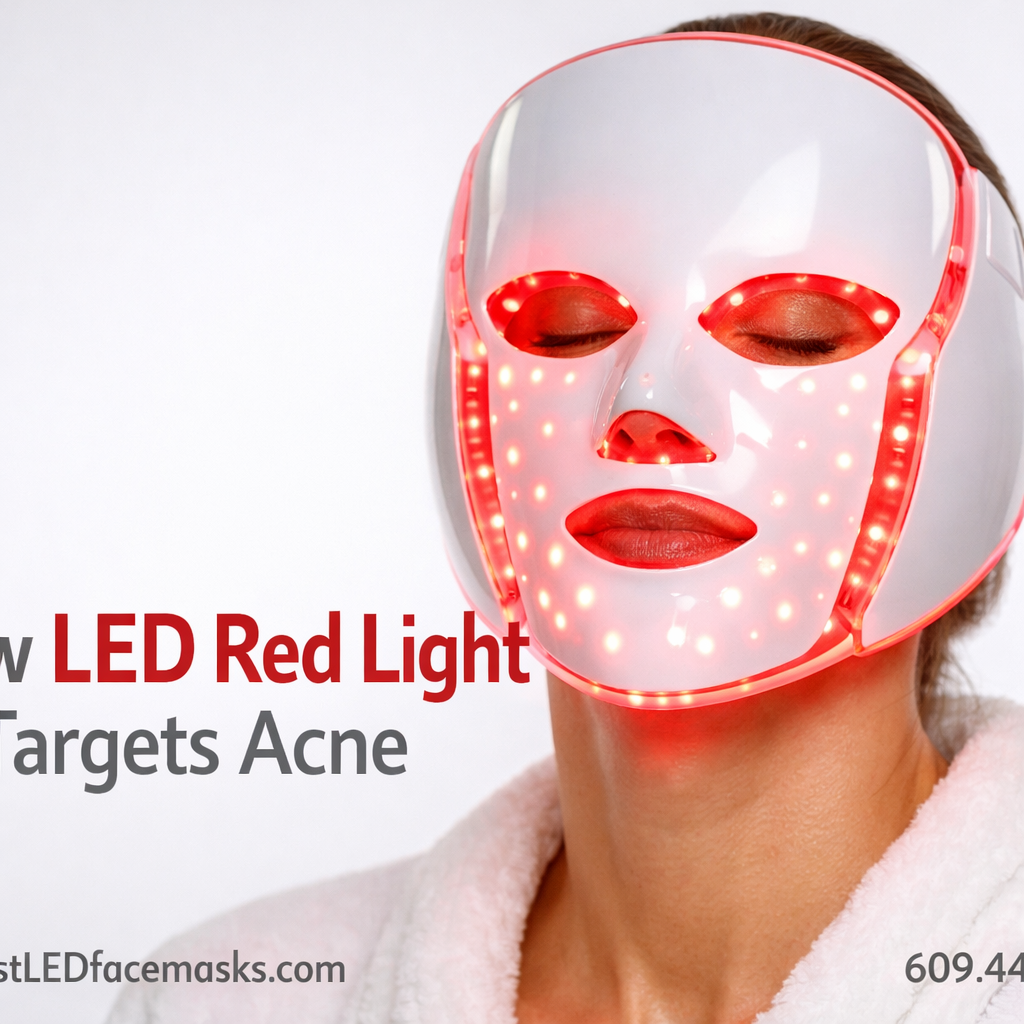
The most effective LED red light therapy masks for acne deliver precise wavelengths (630nm–660nm for red light, 850nm for near-infrared) at sufficient energy density to trigger a real biological response in skin cells. Without the right wavelength and power output, you're essentially shining a colored light on your face with no therapeutic effect.
Here's what separates clinical-grade devices from cosmetic gimmicks:
- Wavelength accuracy: Red light at 630–660nm has the strongest evidence for reducing inflammation and targeting Cutibacterium acnes (the primary acne-causing bacterium). Devices that don't specify wavelengths are a red flag.
- Irradiance (power density): Measured in mW/cm², this determines how much energy reaches your skin. Higher irradiance means shorter sessions needed to hit the therapeutic threshold.
- LED count and coverage: More LEDs mean more even coverage across the face. Sparse LED arrays leave gaps in treatment.
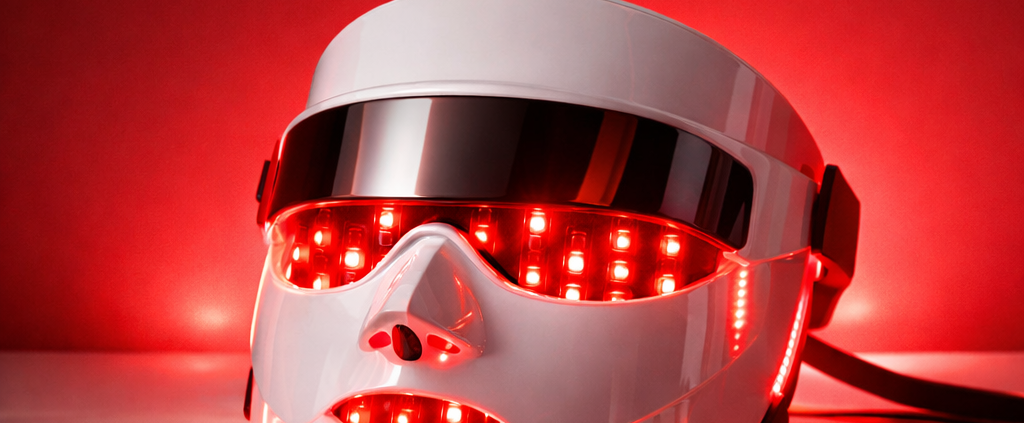
- LED + Laser technology: The Renu-Gen red light therapy mask goes further than standard LED masks by incorporating laser diodes alongside LEDs. This combination penetrates all layers of the epidermis, reaching the dermis where collagen production happens, rather than just treating the surface.
- Build quality and eye protection: Full-face coverage with built-in eye shields ensures safe, hands-free treatment.
Key insight: A mask with 150+ LEDs at a verified 660nm wavelength will consistently outperform a 300-LED mask with unverified or off-target wavelengths. Specs on paper only matter if the manufacturer can back them up.
How Does Red Light Therapy Actually Treat Acne?
Red light therapy treats acne through two main mechanisms: reducing inflammation and stimulating cellular repair. It does not dry out the skin or strip natural oils the way benzoyl peroxide or retinoids do, which makes it a strong option for people with sensitive or combination skin.
The science, simplified:
- Photobiomodulation: Red light photons are absorbed by mitochondria in skin cells, boosting ATP (cellular energy) production. This accelerates healing and reduces oxidative stress.
- Anti-inflammatory effect: Red light at 630–660nm suppresses pro-inflammatory cytokines, which are the chemical signals that make acne lesions red, swollen, and painful.
- Antimicrobial action: Some research suggests red light can reduce C. acnes populations in the skin, especially when combined with blue light (415nm).
- Collagen stimulation: By stimulating fibroblasts in the dermis, red light helps rebuild skin structure, which fades post-acne scars and hyperpigmentation over time.
Choose red light if: You have inflammatory acne (papules, pustules, cystic lesions) or post-acne scarring.
Add near-infrared (850nm) if: You want deeper tissue repair and faster healing — this is where the Renu-Gen's laser component adds real value.
How to Choose the Best LED Red Light Therapy Mask for Acne
Choosing the best LED red light therapy mask for acne comes down to five core criteria: wavelength range, power output, coverage area, safety certifications, and whether the device uses LED-only or a combined LED-and-laser system.
The 5-Point Checklist
| Criteria | What to Look For | Red Flag |
|---|---|---|
| Wavelength | 630–660nm (red), 850nm (NIR) | "Red light" with no nm spec |
| Power output | ≥30 mW/cm² irradiance | No irradiance data listed |
| LED count | 100+ LEDs for full face | Fewer than 60 LEDs |
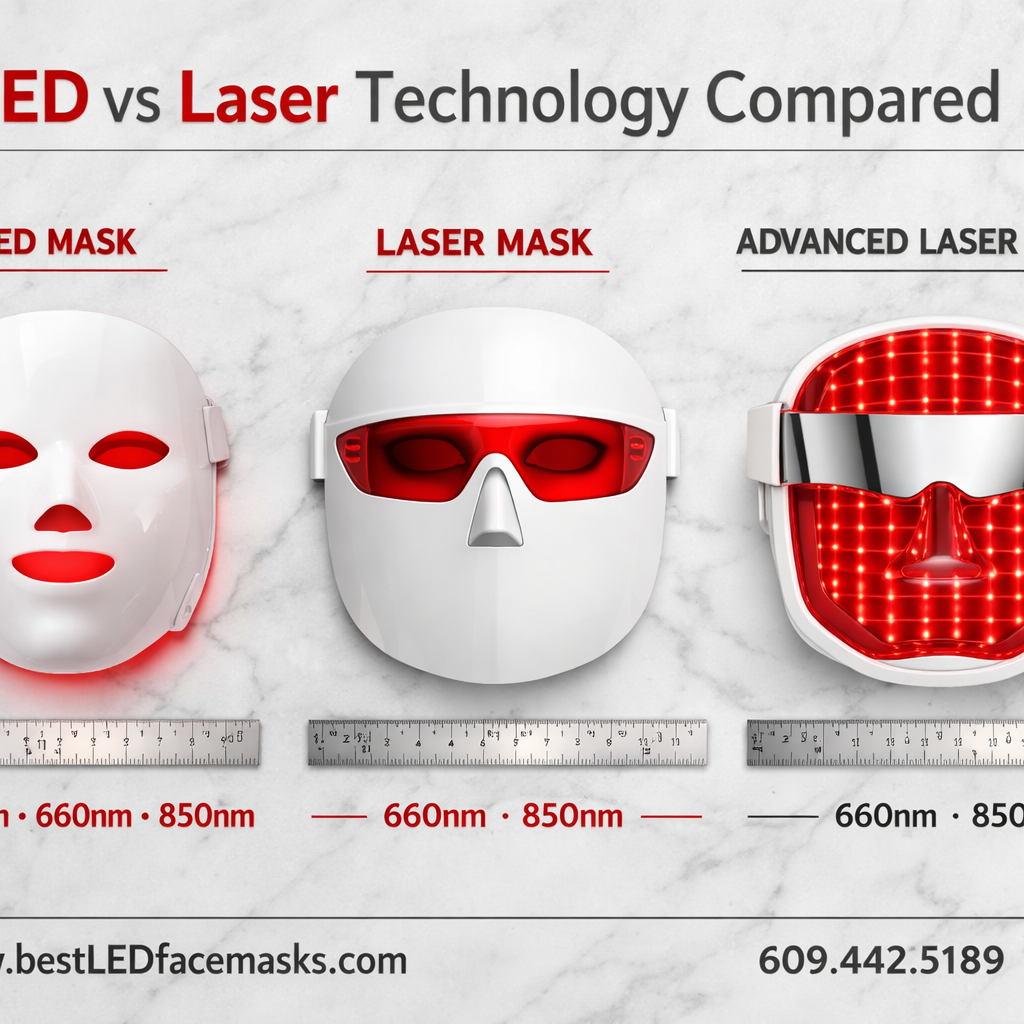
| Technology | LED + Laser (like Renu-Gen) | LED only, no laser option |
| Safety cert | FDA-cleared or CE marked | No certifications listed |
LED-Only vs. LED + Laser: Why It Matters
Standard LED masks treat the epidermis (outer skin layer) effectively. But acne scarring and collagen loss happen in the dermis, which sits deeper. The Renu-Gen LED face mask uses both LED and low-level laser diodes to penetrate all layers of the epidermis and reach the dermis. This is why it's consistently rated as the best LED face mask for anti-aging and acne combined — it addresses the surface problem (active breakouts) and the deeper problem (scarring, collagen loss) simultaneously.
Common mistake: Buying based on LED count alone. A mask with 300 low-power LEDs at the wrong wavelength will underperform a mask with 150 high-power LEDs at a clinically validated wavelength.
Why Renu-Gen Is Rated the #1 LED Red Light Therapy Mask for Acne
Renu-Gen earns its position as the top-rated LED red light therapy mask for acne because it's one of the very few consumer devices that combines LED and laser technology in a full-face mask format, delivering clinical-level penetration at home.
Most LED masks on the market use LEDs alone, which work well for surface-level concerns. Renu-Gen's hybrid approach means:
- Deeper penetration: Laser diodes reach the dermis, stimulating fibroblasts for collagen production that LEDs alone can't reliably achieve.
- Broader treatment: Addresses active acne, inflammation, post-acne hyperpigmentation, fine lines, and overall skin texture in one session.
- Consistent wavelength output: Renu-Gen devices are engineered to maintain wavelength accuracy over time, unlike cheaper devices whose LEDs degrade quickly.
- Full-face coverage: The mask design ensures no areas of the face are undertreated, which is a common problem with panel-style or partial-coverage devices.
You can compare Renu-Gen directly against other options in the Renu-Gen vs. the competition breakdown, which details the technology differences in plain language.
For those ready to explore the full range, the Renu-Gen shop lists all current models with specs.
Before and After: What Results Can You Realistically Expect?
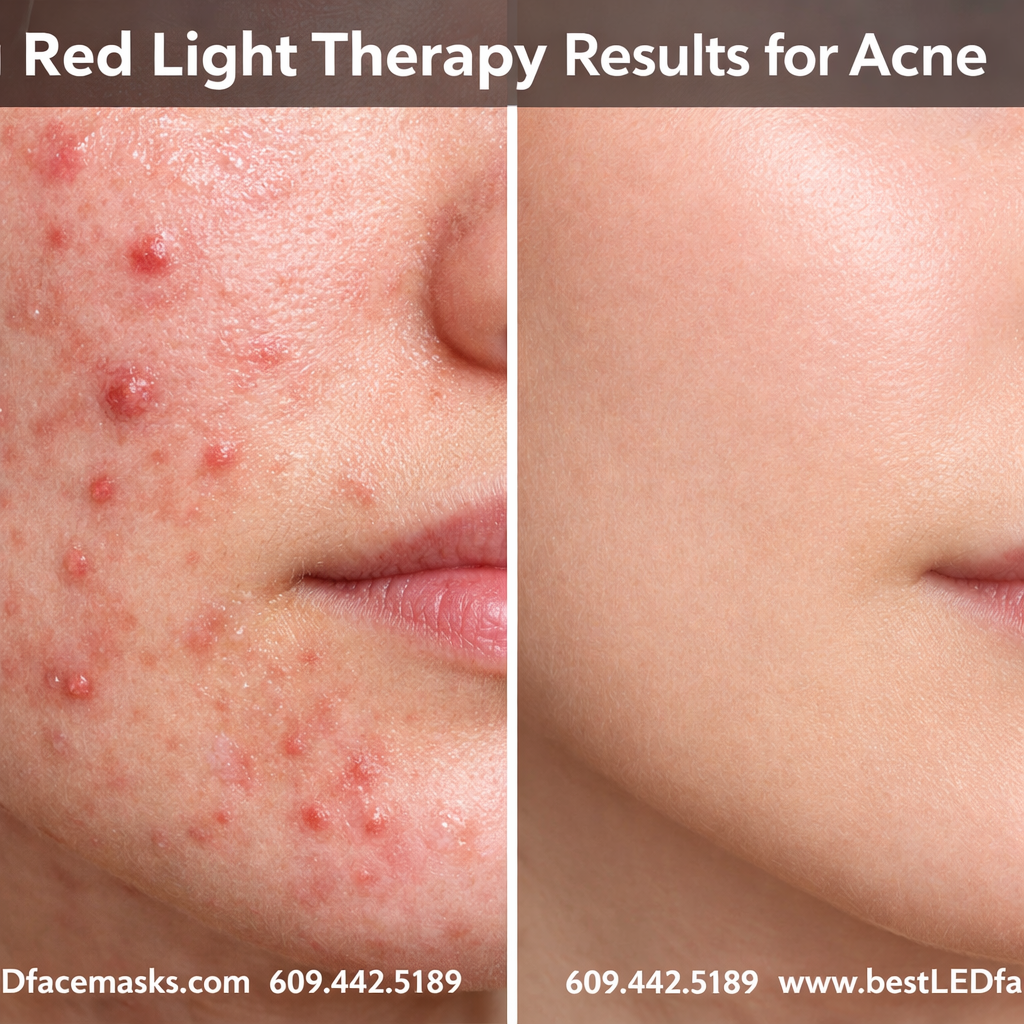
Most people using a quality LED red light therapy mask for acne see measurable improvement within 4–8 weeks of consistent use. Expectations should be realistic: LED therapy is not an overnight fix, but it's also not a placebo.
Typical timeline:
- Weeks 1–2: Reduced redness and inflammation around active breakouts. Skin may feel calmer and less reactive.
- Weeks 3–4: Fewer new breakouts forming. Existing lesions heal faster.
- Weeks 5–8: Visible improvement in skin tone and texture. Post-acne marks begin to fade.
- Weeks 9–12: Continued collagen remodeling. Scarring and hyperpigmentation noticeably reduced.
Factors that affect results:
- Consistency of use (daily is better than sporadic)
- Skin type and acne severity
- Whether you combine therapy with a gentle skincare routine
- Device quality (clinical-grade vs. budget)
Edge case: People with hormonal acne may see slower results because the root cause (hormonal fluctuation) isn't addressed by light therapy alone. In these cases, LED therapy works best as part of a broader skincare plan.
How to Use an LED Red Light Therapy Mask for Acne: Step-by-Step
Using a red light therapy mask correctly takes about 15–20 minutes and requires no special training. The process is straightforward, but a few details make a real difference in results.
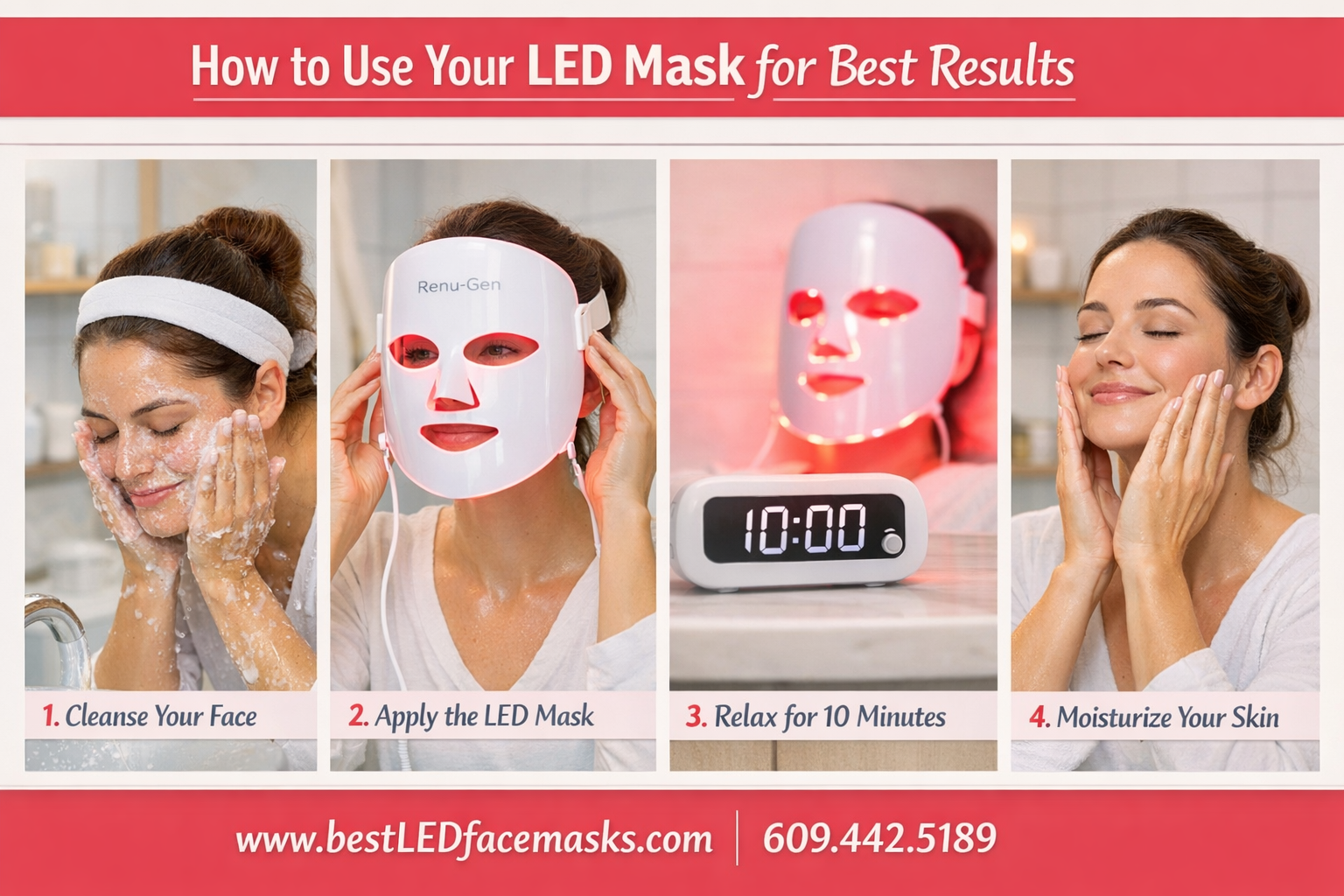
Step-by-step guide:
- Cleanse your face with a gentle, non-comedogenic cleanser. Remove all makeup, sunscreen, and skincare products. Light cannot penetrate product layers effectively.
- Pat dry — skin should be clean and dry before treatment.
- Put on the mask and secure it comfortably. Ensure the LEDs sit close to the skin (within 1–2cm for best irradiance).
- Set your timer for 10–20 minutes depending on your device's instructions. Renu-Gen sessions are typically 10–15 minutes.
- Relax — you can close your eyes. The mask handles everything.
- Remove the mask and apply your regular moisturizer or serum. Post-treatment skin absorbs active ingredients more effectively.
- Clean the mask with a soft, damp cloth after each use.
Frequency: 3–5 sessions per week for the first 8 weeks, then 2–3 times per week for maintenance.
Common mistake: Using the mask over moisturizer or SPF. Always apply the mask to bare, clean skin, then moisturize afterward.
For questions about device care or returns, the Renu-Gen contact page and return policy are straightforward resources.
How Does Renu-Gen Compare to Other LED Masks on the Market?
Renu-Gen outperforms most competitors on the key metrics that determine real acne and anti-aging results: technology depth, wavelength accuracy, and full-face coverage. Here's how it stacks up.
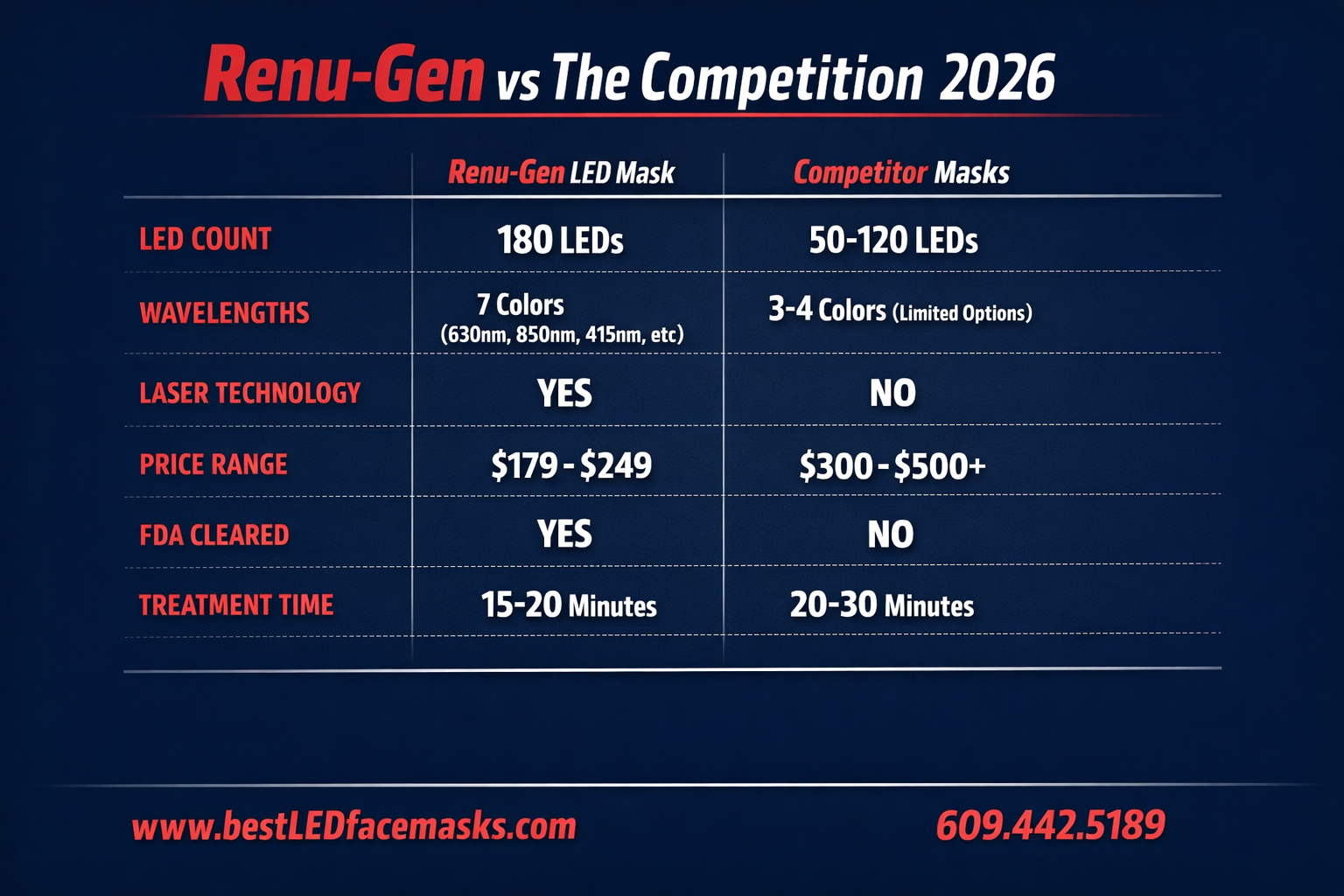
| Feature | Renu-Gen | Budget LED Masks ($50–$150) | Mid-Range LED Masks ($150–$300) |
|---|---|---|---|
| Technology | LED + Laser | LED only | LED only |
| Wavelength range | Red + NIR + Laser | Red (often unverified) | Red + NIR |
| Dermis penetration | ✅ Yes | ❌ No | Partial |
| Full-face coverage | ✅ Yes | Varies | ✅ Yes |
| Collagen stimulation | Deep (dermis level) | Surface only | Moderate |
| Anti-aging + acne combo | ✅ Yes | Limited | Limited |
| Certifications | FDA-cleared | Often none | Varies |
Choose Renu-Gen if: You want a single device that addresses active acne, post-acne scarring, collagen loss, and anti-aging in one treatment. The LED + laser combination is the key differentiator.
Choose a budget mask if: You're testing light therapy for the first time and want a low-commitment entry point — but understand you'll likely need to upgrade for serious results.
Browse the full LED face masks for sale to see current pricing and availability.
Are There Any Risks or Side Effects to Know About?
Red light therapy is one of the safest skincare technologies available. For the vast majority of users, there are no side effects from proper use of an LED face mask for acne.
Known risks (rare):
- Eye strain: Always use a mask with built-in eye protection or keep eyes closed. Direct, prolonged exposure to high-intensity LEDs is not recommended.
- Skin sensitivity: A small number of people experience mild temporary redness after initial sessions. This typically resolves within 30 minutes.
- Photosensitizing medications: If you take medications like doxycycline, isotretinoin, or certain antibiotics, consult a dermatologist before starting light therapy. These drugs can increase photosensitivity.
Who should avoid LED masks:
- People with photosensitive conditions (lupus, porphyria)
- Those currently using photosensitizing topical treatments
- Pregnant women (out of caution, not proven harm)
Who benefits most: People with mild to moderate inflammatory acne, post-acne hyperpigmentation, or anyone looking to combine acne treatment with anti-aging benefits like wrinkle reduction and improved skin texture.
FAQ: Best LED Red Light Therapy Mask for Acne
Q: How long does it take for a red light therapy mask to work on acne?
Most users see a reduction in inflammation and redness within 2–4 weeks. Significant improvement in breakout frequency and post-acne marks typically takes 6–12 weeks of consistent use.
Q: Can I use a red light therapy mask every day?
Yes. Daily sessions of 10–20 minutes are safe and generally produce faster results than less frequent use. Most manufacturers, including Renu-Gen, recommend daily use for the first 8 weeks.
Q: Does red light therapy help with acne scars?
Yes. Red light stimulates collagen production in the dermis, which helps remodel scar tissue and fade hyperpigmentation. Devices that combine LED and laser technology (like Renu-Gen) penetrate deeper and produce more noticeable scar improvement.
Q: What wavelength is best for acne?
630nm–660nm (red light) is the most evidence-supported range for acne. Adding 850nm near-infrared light accelerates healing and supports deeper tissue repair.
Q: Is the Renu-Gen mask FDA-cleared?
Renu-Gen devices are designed to meet FDA standards for consumer LED light therapy devices. Check the product page for current certification details.
Q: Can I use a red light mask with my existing acne skincare routine?
Yes. Apply the mask to clean, bare skin before your serums and moisturizers. Post-treatment skin absorbs active ingredients more effectively, so this is actually an ideal time to apply niacinamide, hyaluronic acid, or vitamin C.
Q: Is LED light therapy better than blue light for acne?
They work differently. Blue light (415nm) directly kills C. acnes bacteria on the skin surface. Red light reduces inflammation and supports healing. The most comprehensive acne treatment combines both, which is why many quality masks offer multi-wavelength modes.
Q: How does the Renu-Gen mask differ from a standard LED mask?
The Renu-Gen red light therapy face mask uses both LED and laser diodes, allowing it to penetrate all layers of the epidermis and reach the dermis. Standard LED-only masks treat the surface layers. This makes Renu-Gen significantly more effective for collagen production, anti-aging, and deeper acne scarring.
Q: What's the price range for a good LED acne mask?
Quality LED masks for acne range from $150 to $600+. Devices under $100 rarely have verified wavelengths or sufficient power output for clinical results. The Renu-Gen sits in the premium range, justified by its LED + laser technology.
Q: Can men use LED red light therapy masks for acne?
Absolutely. Acne affects all skin types and genders equally, and red light therapy works the same way regardless of gender. The Renu-Gen mask is designed to fit a wide range of face shapes and sizes.
Conclusion: Your Next Steps for Clearer Skin in 2026
The evidence for red light therapy as an acne treatment is solid, and the technology has matured enough that you can get clinical-quality results at home — if you choose the right device.
Here's what to do next:
- Identify your primary concern: Active acne, post-acne scarring, or both? If it's both, you need a device that handles surface inflammation and deeper collagen remodeling.
- Prioritize LED + laser technology: Standard LED-only masks work, but Renu-Gen's combined approach delivers deeper results for scarring and anti-aging.
- Commit to consistency: Set a schedule of 4–5 sessions per week for the first 8 weeks. Inconsistent use is the most common reason people don't see results.
- Pair with a simple routine: A gentle cleanser, a barrier-supporting moisturizer, and SPF during the day. Keep it simple so the light therapy can do its job.
- Explore your options: Browse the best LED face masks available in 2026, compare specs, and read the Renu-Gen vs. the competition guide before you buy.
The best LED red light therapy mask for acne is one you'll actually use consistently. Renu-Gen makes that easy with a comfortable, full-face design that takes 10–15 minutes per session and delivers results that go well beyond what most LED-only devices can offer.
References
- Avci, P., et al. "Low-level laser (light) therapy (LLLT) in skin: stimulating, healing, restoring." Seminars in Cutaneous Medicine and Surgery, 2013. https://pubmed.ncbi.nlm.nih.gov/24049929/
- Barolet, D. "Light-emitting diodes (LEDs) in dermatology." Seminars in Cutaneous Medicine and Surgery, 2008. https://pubmed.ncbi.nlm.nih.gov/18926160/
- Goldberg, D.J., Russell, B.A. "Combination blue (415 nm) and red (633 nm) LED phototherapy in the treatment of mild to severe acne vulgaris." Journal of Cosmetic and Laser Therapy, 2006. https://pubmed.ncbi.nlm.nih.gov/16766484/
- Whelan, H.T., et al. "Effect of NASA light-emitting diode irradiation on wound healing." Journal of Clinical Laser Medicine & Surgery, 2001. https://pubmed.ncbi.nlm.nih.gov/11776448/
Meta Title: Best LED Red Light Therapy Mask for Acne 2026
Meta Description: Discover the best LED red light therapy mask for acne in 2026. Learn how Renu-Gen's LED + laser technology clears breakouts, fades scars, and boosts collagen.
Tags: red light therapy mask, LED face mask for acne, best LED red light therapy mask, acne treatment mask, Renu-Gen LED mask, red light therapy for acne, LED light therapy skincare, acne scar treatment, collagen production mask, anti-aging LED mask, photobiomodulation skincare, best LED face mask 2026