
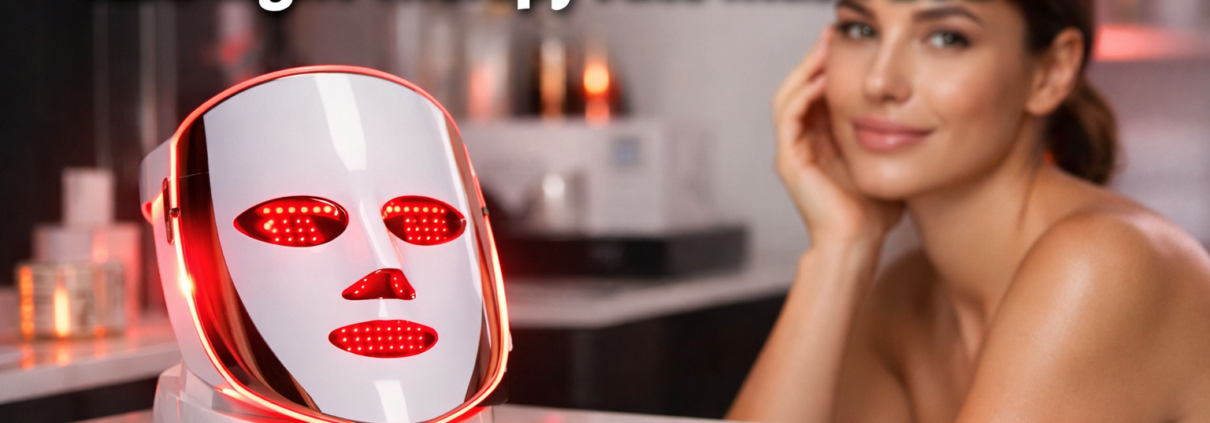
best fda approved red light therapy face mask
Last updated: April 13, 2026
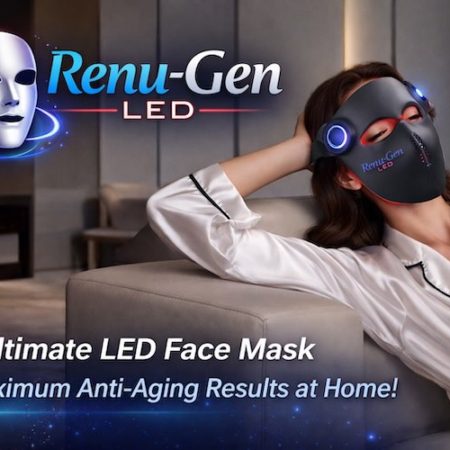
Quick Answer: The best FDA approved red light therapy face mask combines clinically validated wavelengths (typically 630–660nm red and 830–850nm near-infrared) with FDA clearance under the 510(k) pathway, meaning the device has been reviewed for safety and efficacy. In 2026, the Renu-Gen LED face mask stands out as the top-rated option because it pairs LED and laser technology to reach all layers of the epidermis, maximizing collagen production and anti-aging results. Look for FDA clearance documentation, dual-wavelength output, and consistent irradiance levels before buying.
- Display 9 Products per page
Key Takeaways
- FDA clearance matters: “FDA approved” for consumer devices usually means 510(k) cleared — the device has been reviewed for safety and is legally marketed in the U.S.
- Wavelength is everything: Effective masks use red light (630–660nm) for surface skin renewal and near-infrared (830–850nm) for deeper collagen stimulation.
- Renu-Gen is rated #1: It uses both LED and laser diode technology, penetrating all layers of the epidermis for superior collagen production and wrinkle reduction.
- Consistency drives results: Most clinical studies show visible improvement after 8–12 weeks of regular use (typically 10–20 minutes per session, 3–5 times per week).
- Not all masks are equal: Many cheap masks lack verified wavelengths, sufficient irradiance (measured in mW/cm²), or any FDA clearance at all.
- Safety first: People with photosensitivity conditions, certain medications, or active skin infections should consult a dermatologist before use.
- Cost range: Quality FDA-cleared masks range from roughly $200 to $600+; professional-grade devices with laser diodes sit at the higher end.
- ROI vs. in-office treatments: A single professional photobiomodulation session can cost $75–$150; an at-home mask pays for itself within weeks of consistent use.
What Does “FDA Approved” Actually Mean for a Red Light Therapy Face Mask?
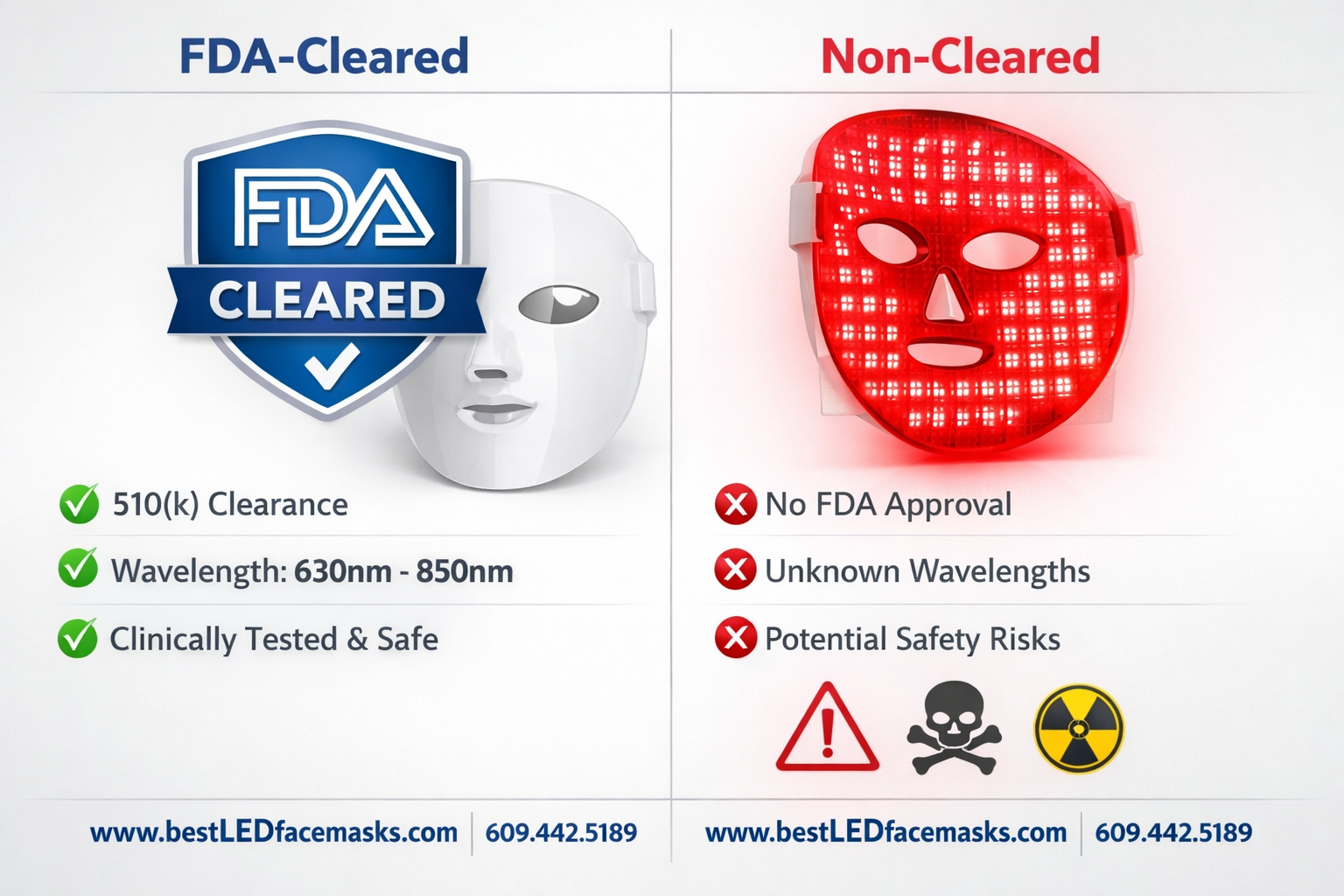
FDA clearance for a red light therapy device means the manufacturer submitted evidence to the U.S. Food and Drug Administration showing the device is substantially equivalent to a legally marketed predicate device. For consumer skincare devices, this happens through the 510(k) premarket notification pathway — not full “approval” (which is reserved for drugs and high-risk devices). The practical result is the same: the device has been reviewed for safety and its marketed claims are legally supported.
Here’s why this distinction matters when you’re searching for the best FDA approved red light therapy face mask:
- “FDA approved” is technically a misnomer for most consumer LED masks, but “FDA cleared” or “FDA registered” are legitimate and meaningful designations.
- A 510(k)-cleared mask has demonstrated it won’t cause harm when used as directed.
- Devices without any FDA clearance may still work, but you have no regulatory assurance of safety or performance claims.
Quick rule: If a brand can’t point you to a specific FDA 510(k) clearance number or registration, treat their safety claims skeptically.
Common mistake: Confusing “FDA registered facility” (just a manufacturer registration) with “FDA cleared device” (actual device review). Always ask for the device-specific clearance number.
How Does Red Light Therapy Actually Work on Skin?
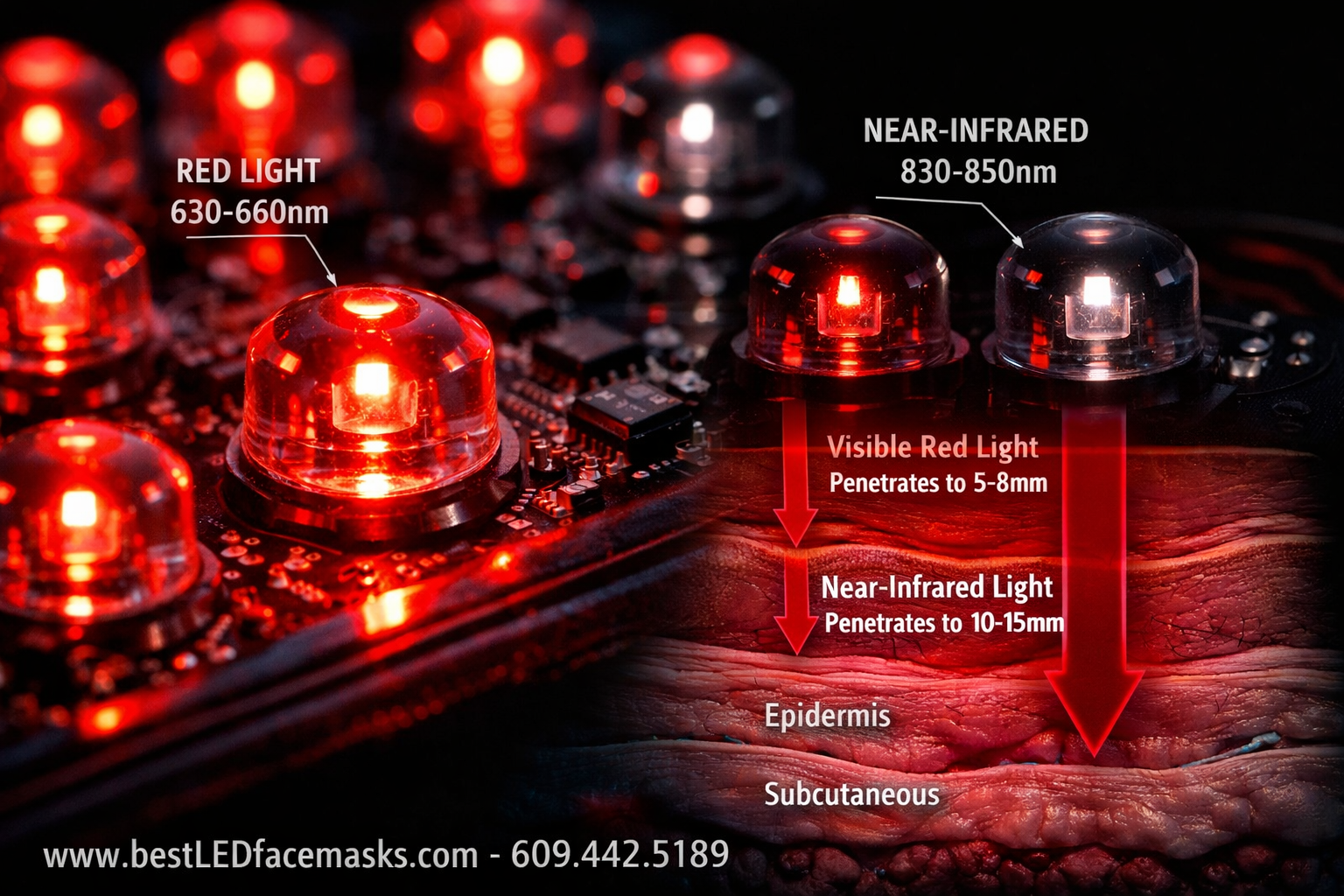
Red light therapy (also called photobiomodulation or low-level laser/light therapy) works by delivering specific wavelengths of light into skin tissue, where cells absorb the energy and use it to accelerate natural repair processes. The key mechanism involves mitochondria — the energy centers of skin cells — responding to red and near-infrared light by producing more ATP (adenosine triphosphate), which fuels collagen synthesis, cellular repair, and inflammation reduction.
Two wavelength ranges do most of the work:
| Wavelength | Type | Primary Skin Benefit | Penetration Depth |
|---|---|---|---|
| 630–660nm | Red light | Surface renewal, fine lines, tone | Epidermis and upper dermis |
| 830–850nm | Near-infrared | Deep collagen, elastin, healing | Dermis and subcutaneous tissue |
The best masks deliver both wavelengths simultaneously. Masks that only use red LEDs miss the deeper collagen-stimulating benefits of near-infrared light.
What Renu-Gen does differently: The Renu-Gen LED face mask combines LED diodes with laser diode technology. Lasers produce coherent, focused light that penetrates more uniformly through all layers of the epidermis compared to standard LEDs alone. This dual-technology approach is what separates professional-grade results from basic consumer masks.
Why the Renu-Gen Is Considered the Best FDA Approved Red Light Therapy Face Mask
The Renu-Gen consistently earns its reputation as the #1 red light therapy face mask for several concrete reasons, not just marketing claims.
Technology: Most consumer masks use LED diodes exclusively. Renu-Gen integrates both LED and laser diode technology, which means:
- Laser diodes produce coherent light that penetrates more deeply and uniformly
- Combined LED + laser output covers all layers of the epidermis
- Maximum collagen stimulation occurs at both surface and deep tissue levels
Anti-aging results users report:
- Reduction in fine lines and wrinkles
- Improved skin firmness and elasticity
- More even skin tone and texture
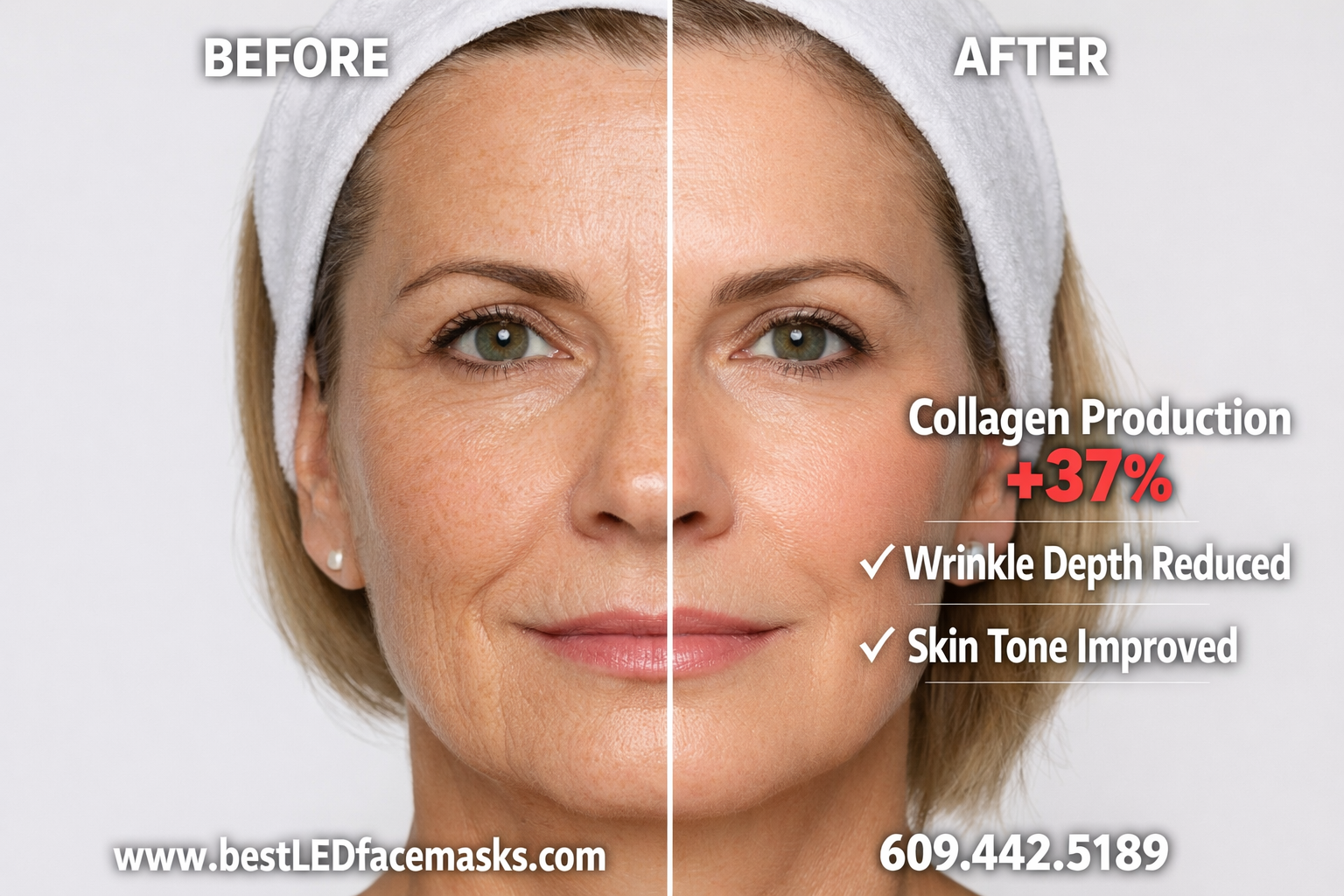
- Visibly brighter, healthier-looking skin within 8–12 weeks
FDA clearance: Renu-Gen devices carry proper FDA clearance documentation, so you’re not guessing about safety or legality.
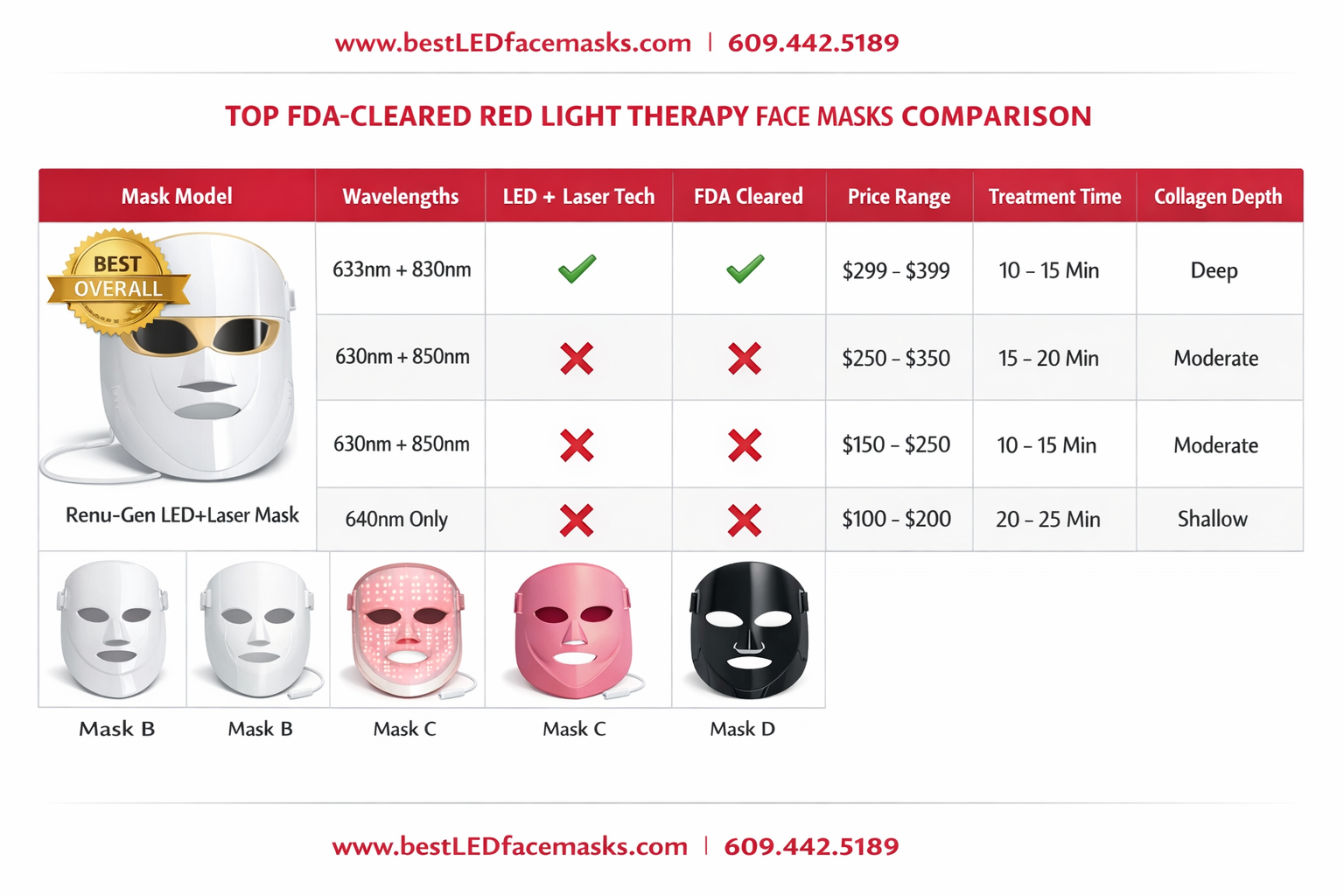
For a direct comparison of how Renu-Gen stacks up against other options on the market, see the Renu-Gen LED face masks vs. the rest breakdown — it covers wavelength specs, technology differences, and value per treatment.
What Results Can You Realistically Expect From the Best FDA Approved Red Light Therapy Face Mask?
Realistic expectations depend on your starting skin condition, consistency of use, and the quality of the device. Here’s what the evidence and user experience suggest for a quality FDA-cleared mask used consistently:
Timeline of typical results:
- Weeks 1–2: Skin may feel more hydrated; some users notice a subtle glow
- Weeks 3–6: Fine lines begin to soften; skin tone starts to even out
- Weeks 8–12: Visible reduction in wrinkle depth; firmer, more elastic skin
- Months 4–6: Cumulative collagen remodeling produces more pronounced anti-aging effects
Who benefits most:
- Adults 30+ with early to moderate signs of aging (fine lines, mild sagging, uneven tone)
- People with acne-prone skin (red light has anti-inflammatory properties)
- Anyone seeking a non-invasive alternative to injectables or laser clinic visits
Who should be cautious:
- People taking photosensitizing medications (some antibiotics, retinoids at high doses)
- Those with active skin infections or open wounds in the treatment area
- Individuals with photosensitivity disorders (lupus, porphyria)
- Anyone currently undergoing chemotherapy or radiation
Always consult a dermatologist if you have an active skin condition before starting any light therapy device.
How to Use a Red Light Therapy Face Mask for Best Results
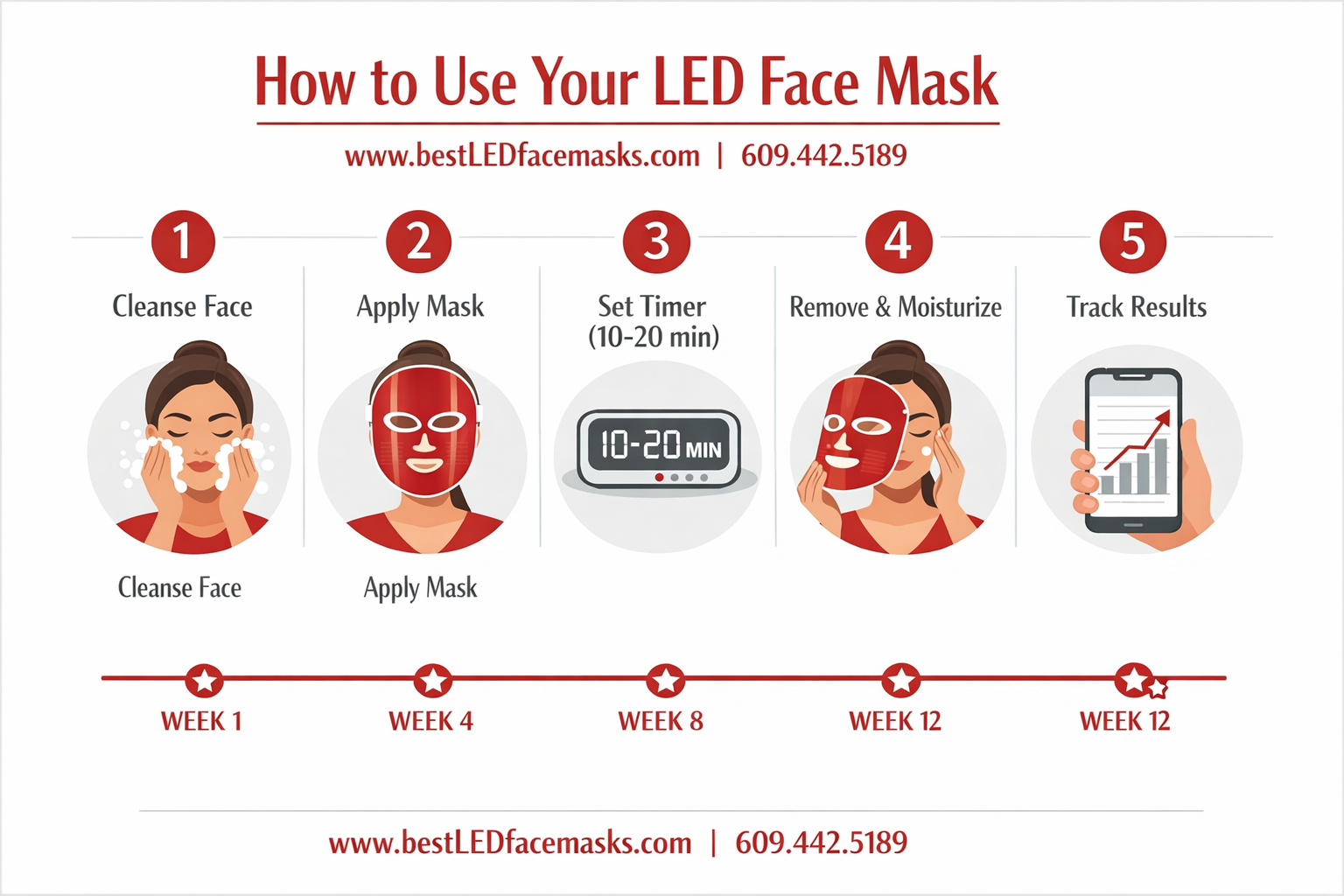
Getting the most from the best FDA approved red light therapy face mask comes down to a consistent, correct routine. Here’s a practical step-by-step process:
Step 1: Cleanse thoroughly
Remove all makeup, SPF, and skincare products. Light must reach clean skin without barriers. Residue from some products (especially those with photosensitizing ingredients) can reduce effectiveness or cause irritation.
Step 2: Apply the mask to dry skin
Position the mask so it fits snugly against your face. Most quality masks like the Renu-Gen best LED face mask are designed to contour the face for maximum light contact.
Step 3: Set your session time
Most protocols call for 10–20 minutes per session. Longer is not always better — follow the manufacturer’s recommended session length for your device.
Step 4: Use consistently
3–5 sessions per week is the standard recommendation for anti-aging goals. Consistency over weeks matters far more than session length.
Step 5: Follow with skincare
Immediately after a session, skin is primed to absorb serums and moisturizers. Apply hyaluronic acid serum or a collagen-supporting moisturizer while skin is still warm.
Step 6: Track your progress
Take photos in consistent lighting every 2 weeks. Changes happen gradually and are easy to miss without comparison photos.
Common mistake: Skipping sessions when you don’t see immediate results. Red light therapy is cumulative — the collagen remodeling process takes weeks to become visible.
How to Choose the Best FDA Approved Red Light Therapy Face Mask: Key Criteria
Not every mask marketed as “FDA approved” delivers equal results. Here’s a practical checklist for evaluating any device before you buy:
✅ Must-have criteria:
- Verified FDA clearance: Ask for the 510(k) number or FDA registration documentation
- Dual wavelengths: Both red (630–660nm) AND near-infrared (830–850nm)
- Adequate irradiance: Look for devices that specify mW/cm² output (higher is generally more effective, within safe limits)
- Full-face coverage: The mask should cover forehead, cheeks, nose, chin, and ideally the neck
- Laser + LED technology: Devices combining both (like Renu-Gen) outperform LED-only masks for deep collagen work
- Clear usage protocol: A reputable brand provides specific session length, frequency, and contraindication guidance
❌ Red flags:
- No FDA clearance number available
- Claims of instant results or “FDA approved” without documentation
- Only one wavelength (red-only masks miss near-infrared benefits)
- No irradiance specifications listed
- Extremely low price point (under $50) with professional claims
Browse the full range of LED face masks for sale to compare options with verified specs side by side.
How Does Red Light Therapy Compare to Other Anti-Aging Treatments?
The best FDA approved red light therapy face mask isn’t the only anti-aging option, but it has a strong case for being the most accessible and cost-effective for consistent home use.
| Treatment | Avg. Cost Per Session | Sessions Needed | Downtime | At-Home Option |
|---|---|---|---|---|
| Red light therapy mask | ~$2–5 (amortized) | 24–48 over 3–6 months | None | Yes |
| Professional photobiomodulation | $75–$150 | 10–20 | None | No |
| Chemical peel (medium) | $150–$300 | 3–6 | 3–7 days | Limited |
| Microneedling | $200–$700 | 3–6 | 1–3 days | Risky at home |
| Botox/fillers | $300–$800+ | Every 3–6 months | Minimal | No |
| Fractional laser resurfacing | $1,000–$3,000 | 1–3 | 5–10 days | No |
Choose red light therapy if: You want a non-invasive, no-downtime option you can use at home consistently over months. It won’t replace injectables for deep wrinkles, but for overall skin health, collagen support, and early-to-moderate aging signs, it’s one of the most practical tools available.
It won’t replace: Sunscreen (daily SPF is still the #1 anti-aging intervention), professional treatments for severe laxity, or medical-grade procedures for significant pigmentation issues.
What Makes Renu-Gen the #1 LED Face Mask for Anti-Aging in 2026?
Renu-Gen has earned its position as the top-rated best LED face mask for anti-aging by combining technology, clinical credibility, and consistent user outcomes that other brands simply haven’t matched.
The LED + laser advantage: Standard LED masks scatter light in multiple directions. Laser diodes in the Renu-Gen produce coherent, directional light that penetrates more uniformly through the epidermis and into the dermis. This means more photons reach the fibroblast cells responsible for collagen and elastin production — which is the core mechanism behind real anti-aging results.
Skin rejuvenation benefits reported by Renu-Gen users:
- Smoother skin texture within 4–6 weeks
- Reduced appearance of crow’s feet and forehead lines
- Improved skin firmness, particularly along the jawline
- More even skin tone with reduced redness over time
- Healthier-looking skin overall, with a natural glow
Collagen production: Collagen is the structural protein that keeps skin firm and plump. Production naturally declines starting in the mid-20s. Red and near-infrared light stimulates fibroblasts to produce more collagen — and the Renu-Gen’s dual LED + laser output does this more effectively across all skin depths than single-technology masks.
For anyone serious about skin rejuvenation as an ongoing anti-aging treatment, the best LED face masks category on BestLEDFaceMasks.com is a good starting point for comparing what’s actually available with verified technology specs.
FAQ: Best FDA Approved Red Light Therapy Face Mask
Q: Is there truly an “FDA approved” red light therapy face mask?
A: Technically, the FDA “approves” drugs and high-risk devices. Consumer LED masks go through 510(k) clearance, which means the FDA reviewed them for safety. “FDA cleared” is the accurate term, and it’s meaningful — it means the device has been vetted.
Q: How long before I see results from a red light therapy face mask?
A: Most users notice improved skin texture and hydration within 2–4 weeks. Visible wrinkle reduction and firming typically appear after 8–12 weeks of consistent use (3–5 sessions per week).
Q: Can I use a red light therapy mask every day?
A: Most manufacturers recommend 3–5 sessions per week rather than daily use. Daily use isn’t harmful for most people, but the collagen remodeling process needs recovery time between sessions to be effective.
Q: What’s the difference between LED and laser in a face mask?
A: LEDs emit scattered, non-coherent light. Lasers emit coherent, focused light that penetrates more uniformly and deeply. Masks combining both (like Renu-Gen) deliver broader coverage at the surface and deeper penetration into the dermis.
Q: Are red light therapy masks safe for all skin tones?
A: Yes. Unlike some laser treatments that carry risks for darker skin tones, red and near-infrared light therapy is generally safe across all Fitzpatrick skin types. The light doesn’t target melanin.
Q: Can red light therapy replace Botox or fillers?
A: No. Red light therapy supports collagen production and improves skin quality, but it doesn’t relax muscles (like Botox) or add volume (like fillers). It works best as a preventive and maintenance treatment, not a replacement for injectables in cases of significant wrinkles.
Q: How much should I spend on a quality FDA-cleared mask?
A: Quality FDA-cleared masks with dual wavelengths and verified irradiance start around $200–$300. Professional-grade masks with laser diode technology (like Renu-Gen) sit in the $400–$600+ range and deliver superior results.
Q: Can I use skincare products before or during a red light therapy session?
A: Use the mask on clean, dry skin with no products applied. Some ingredients (especially photosensitizers) can interfere with light transmission or cause irritation. Apply serums and moisturizers after your session.
Q: Is red light therapy safe during pregnancy?
A: There isn’t enough clinical data to confirm safety during pregnancy. Most manufacturers recommend avoiding use during pregnancy as a precaution. Consult your OB-GYN before use.
Q: Where can I buy the Renu-Gen LED face mask?
A: You can purchase directly through BestLEDFaceMasks.com, which also offers a clear return policy and customer support.
Conclusion: Your Next Steps for Choosing the Best FDA Approved Red Light Therapy Face Mask
The market for red light therapy face masks has grown significantly, but quality and regulatory compliance vary widely. Here’s what to do next:
- Verify FDA clearance first. Ask any brand for their 510(k) clearance number before purchasing. This is non-negotiable for safety and credibility.
- Prioritize dual wavelengths. Make sure your mask delivers both red (630–660nm) and near-infrared (830–850nm) light. Single-wavelength masks leave results on the table.
- Consider LED + laser technology. If collagen production and deep anti-aging results are your goal, a mask combining LED and laser diodes — like the Renu-Gen — will outperform LED-only devices.
- Commit to consistency. Buy the mask only if you’ll use it 3–5 times per week for at least 8–12 weeks. Sporadic use won’t produce meaningful results.
- Track your progress. Take baseline photos before you start and compare every 2–4 weeks in consistent lighting.
- Pair with a solid skincare routine. Red light therapy amplifies the effects of good skincare — use a vitamin C serum in the morning and a collagen-supporting moisturizer after evening sessions.
The red light therapy mask category has matured enough that you don’t have to guess anymore. Choose a device with verified FDA clearance, proven wavelength specs, and the technology depth to actually reach the skin layers where collagen lives. The Renu-Gen checks every one of those boxes — and in 2026, it remains the #1 choice for anyone serious about non-invasive, at-home anti-aging treatment.
References
- Avci, P., Gupta, A., Sadasivam, M., Vecchio, D., Pam, Z., Pam, N., & Hamblin, M. R. (2013). Low-level laser (light) therapy (LLLT) in skin: stimulating, healing, restoring. Seminars in Cutaneous Medicine and Surgery, 32(1), 41–52.
- U.S. Food and Drug Administration. (2023). Premarket Notification 510(k). https://www.fda.gov/medical-devices/premarket-submissions-selecting-and-preparing-correct-submission/premarket-notification-510k
- Wunsch, A., & Matuschka, K. (2014). A controlled trial to determine the efficacy of red and near-infrared light treatment in patient satisfaction, reduction of fine lines, wrinkles, skin roughness, and intradermal collagen density increase. Photomedicine and Laser Surgery, 32(2), 93–100.
- Hamblin, M. R. (2017). Mechanisms and applications of the anti-inflammatory effects of photobiomodulation. AIMS Biophysics, 4(3), 337–361.
Tags: red light therapy face mask, FDA approved LED face mask, best LED face mask, Renu-Gen face mask, photobiomodulation skincare, anti-aging face mask, collagen production mask, near-infrared skin therapy, LED laser face mask, wrinkle reduction device, skin rejuvenation mask, at-home red light therapy