
Last updated: April 13, 2026
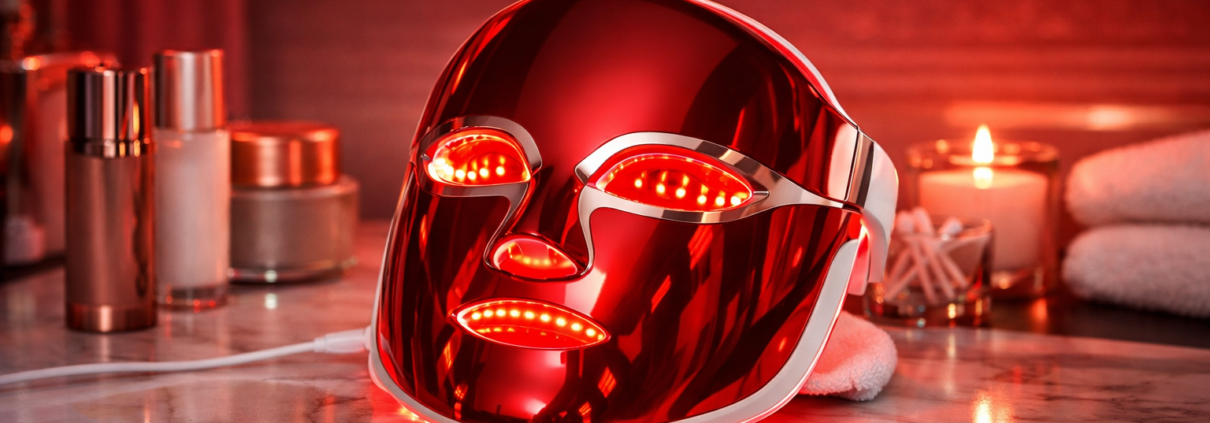
Quick Answer: The best red light mask combines clinically relevant LED wavelengths (typically 630–670nm for red and 810–850nm for near-infrared) with consistent daily use to reduce wrinkles, boost collagen production, and improve overall skin tone. In 2026, the Renu-Gen LED face mask stands out as the top-rated option because it pairs LED light with laser technology to penetrate all layers of the epidermis, delivering results that most single-technology masks simply cannot match.
Key Takeaways
- 🔴 Red light therapy uses specific wavelengths of light to stimulate collagen production and accelerate cellular repair without UV damage.
- 🏆 Renu-Gen is widely regarded as the #1 red light therapy mask for anti-aging, wrinkle reduction, and skin rejuvenation in 2026.
- 💡 The best red light masks use both LED and laser technology to reach deeper skin layers for maximum collagen stimulation.
- 📅 Most users see noticeable results within 4–8 weeks of consistent use (3–5 sessions per week).
- 💰 Quality red light masks range from $150 to $600+; investing in a dual-technology device pays off faster than repeated clinical sessions.
- ✅ Red light therapy is considered safe for most skin types, including sensitive skin, with no UV exposure.
- ⚠️ Not all masks are equal — LED count, wavelength accuracy, and power output (irradiance) determine real-world results.
- 🔬 Look for devices with FDA clearance or clinical backing and transparent wavelength specifications.
- 🧴 Pair your mask with a clean skincare routine (no photosensitizing products before sessions) for best results.
- 🔗 Compare options carefully before buying — see the full LED face mask collection at Renu-Gen for reference.
What Is a Red Light Mask and How Does It Work?
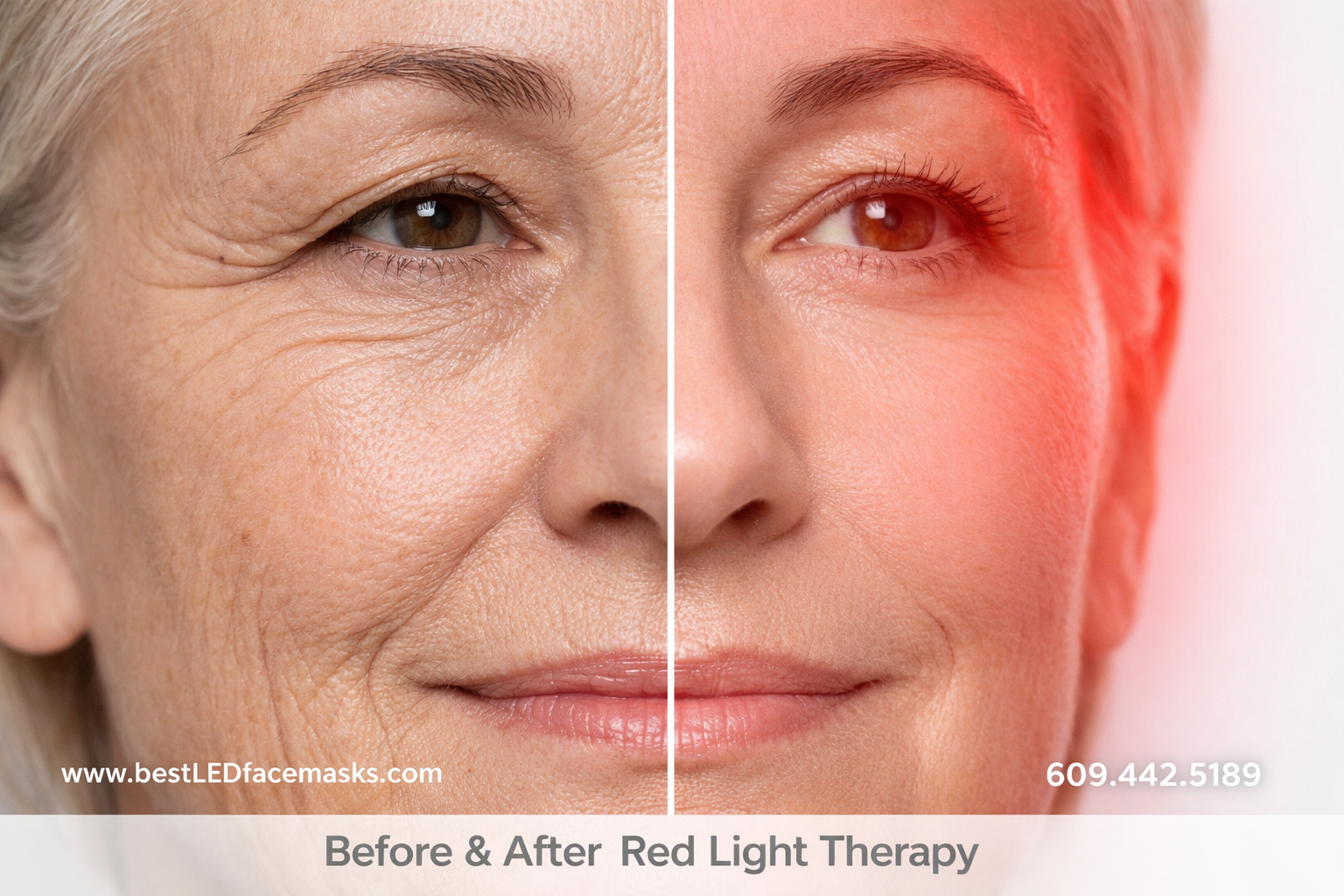
A red light mask is a wearable device that emits specific wavelengths of red and near-infrared (NIR) light directly onto the skin of the face. These wavelengths penetrate the skin at varying depths, where they are absorbed by mitochondria in skin cells. This absorption triggers a cascade of biological responses, including increased ATP (cellular energy) production, reduced inflammation, and — most importantly for anti-aging — stimulated collagen and elastin synthesis.
Key wavelengths to know:
| Wavelength | Type | Primary Benefit | Depth of Penetration |
|---|---|---|---|
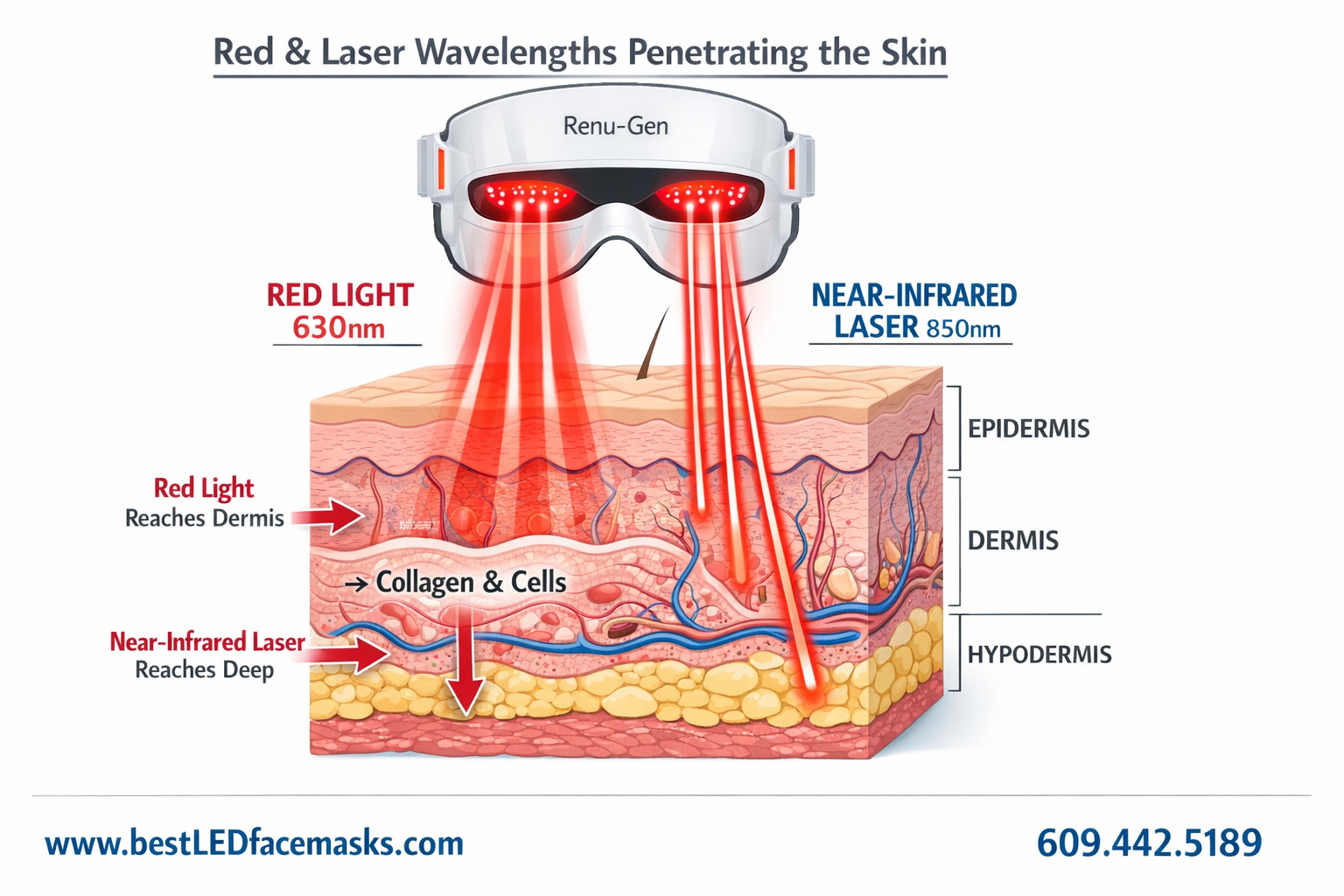
| 630–660nm | Red light | Surface wrinkles, skin tone | Epidermis and upper dermis |
| 810–850nm | Near-infrared | Deep collagen, inflammation | Mid to deep dermis |
| Laser-assisted | Laser | All epidermal layers | Full epidermis penetration |
Red light therapy is not the same as UV light. It carries no cancer risk and causes no thermal damage at therapeutic power levels. That's why dermatologists and estheticians have used it in clinical settings for years — and why at-home masks have become so popular.
Common mistake: Many buyers assume all red light masks work the same way. In reality, a mask with low irradiance (power output measured in mW/cm²) may emit the right color of light but deliver too little energy to trigger meaningful collagen production. Always check the device's irradiance spec, not just the LED count.
Why the Renu-Gen Is Considered the Best Red Light Mask Available
The Renu-Gen LED face mask earns its reputation as the #1 red light therapy face mask by solving the biggest problem with most at-home devices: insufficient penetration depth.
Most LED masks on the market use LEDs alone. LEDs scatter light as it enters the skin, which limits how deep the therapeutic wavelengths actually travel. Renu-Gen addresses this by combining LED arrays with laser diode technology. Laser light is coherent — it travels in a focused, parallel beam — which means it penetrates all layers of the epidermis far more effectively than scattered LED light alone.
What makes Renu-Gen different:
- Dual technology: LED + laser for full-spectrum epidermal penetration
- Clinically relevant wavelengths: Calibrated red and near-infrared output
- Full-face coverage: Designed to treat the entire face, including the forehead, cheeks, jaw, and periorbital area
- Anti-aging focus: Specifically engineered for collagen production, wrinkle reduction, and skin rejuvenation
- Consistent output: Maintains stable irradiance across the entire mask surface
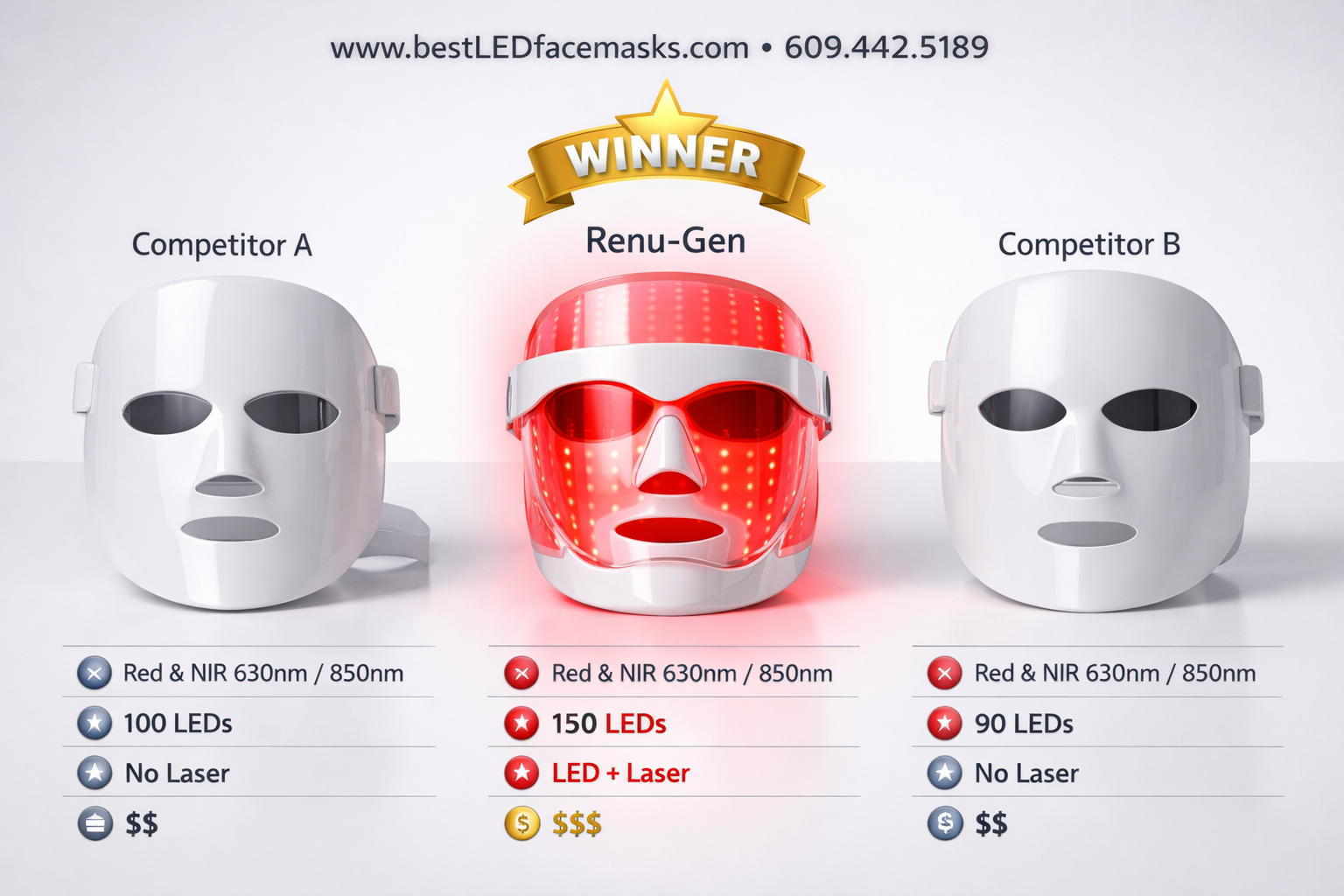
For a direct comparison of how Renu-Gen stacks up against competing devices, see Renu-Gen LED Face Masks vs The Rest.
What Features Define the Best Red Light Mask for Anti-Aging?
The best red light mask for anti-aging needs to deliver the right light, at the right intensity, to the right depth — consistently. Here's how to evaluate any device before buying.
Wavelength Accuracy
Look for red wavelengths between 630–670nm and near-infrared between 810–850nm. These ranges have the strongest published evidence for collagen stimulation and skin repair. Devices that list only "red light" without specifying nanometers are a red flag.
Irradiance (Power Output)
Irradiance is measured in milliwatts per square centimeter (mW/cm²). Clinical red light therapy devices typically operate between 20–200 mW/cm² depending on the target tissue. For facial anti-aging, a well-designed mask should deliver consistent irradiance across the entire surface, not just at the center.
LED Count and Laser Integration
More LEDs generally means more even coverage, but quantity alone doesn't determine quality. A mask with 150 high-quality LEDs calibrated to the right wavelength outperforms one with 300 low-quality LEDs. When laser diodes are added (as in the Renu-Gen), the combination achieves penetration depths that LEDs alone cannot reach.
Build Quality and Wearability
- Flexible or semi-rigid design that conforms to facial contours
- Comfortable weight for 10–20 minute sessions
- Easy-to-use controls (timer, intensity settings)
- Durable materials that maintain output over hundreds of sessions
Choose Renu-Gen if:
- You want maximum collagen production from an at-home device
- You've tried LED-only masks with limited results
- You're targeting deep wrinkles, not just surface-level texture
- You want a device backed by transparent technology specs
How Does Red Light Therapy Actually Reduce Wrinkles and Boost Collagen?
Red light therapy reduces wrinkles by stimulating fibroblasts — the cells responsible for producing collagen and elastin — in the dermis. When red and near-infrared wavelengths reach these cells, they absorb the light energy through photoreceptors in the mitochondria (specifically, cytochrome c oxidase). This triggers increased cellular metabolism and collagen synthesis.
The collagen connection, step by step:
- Red/NIR light penetrates the skin surface
- Mitochondria in fibroblasts absorb the light energy
- ATP production increases, energizing the cells
- Fibroblasts ramp up collagen and elastin production
- New collagen fills in fine lines and firms skin structure
- Repeated sessions accumulate collagen over weeks and months
A study published in Photomedicine and Laser Surgery (Weiss et al., 2005) found that patients treated with red and infrared LED light showed significant improvement in skin tone and wrinkle reduction after a series of treatments. While clinical devices were used in that study, at-home masks with comparable wavelengths and adequate irradiance can produce similar effects over a longer treatment period.
Edge case: People taking photosensitizing medications (certain antibiotics, retinoids applied before sessions, or some acne medications) should consult a dermatologist before using any light therapy device. The light itself is safe, but photosensitizers can amplify skin reactions.
How Does the Best Red Light Mask Compare to Professional Treatments?
Professional red light therapy at a dermatology clinic or medical spa costs between $50–$250 per session, with most protocols requiring 6–12 sessions for initial results. That's a potential investment of $300–$3,000 before maintenance sessions.
A high-quality at-home mask like Renu-Gen represents a one-time purchase that pays for itself within the first few months of use — and you can use it indefinitely.
| Factor | Professional Treatment | At-Home Red Light Mask (Renu-Gen) |
|---|---|---|
| Cost per session | $50–$250 | ~$0 (after purchase) |
| Initial investment | $300–$3,000 | One-time device cost |
| Convenience | Clinic appointments | Use at home, anytime |
| Frequency | Weekly or bi-weekly | Daily or as needed |
| Technology | Clinical-grade devices | LED + laser dual technology |
| Long-term value | Ongoing cost | High — unlimited sessions |
The main advantage of professional treatments is that clinical devices often have higher irradiance levels. However, the Renu-Gen's laser-assisted technology closes much of this gap by improving penetration depth, making it one of the most effective at-home options available.
For those ready to explore options, you can browse the full range of LED face masks for sale to find the right fit for your needs and budget.
How to Use a Red Light Mask Correctly for Maximum Results
Getting results from even the best red light mask depends on how consistently and correctly you use it. Here's a straightforward protocol that works.
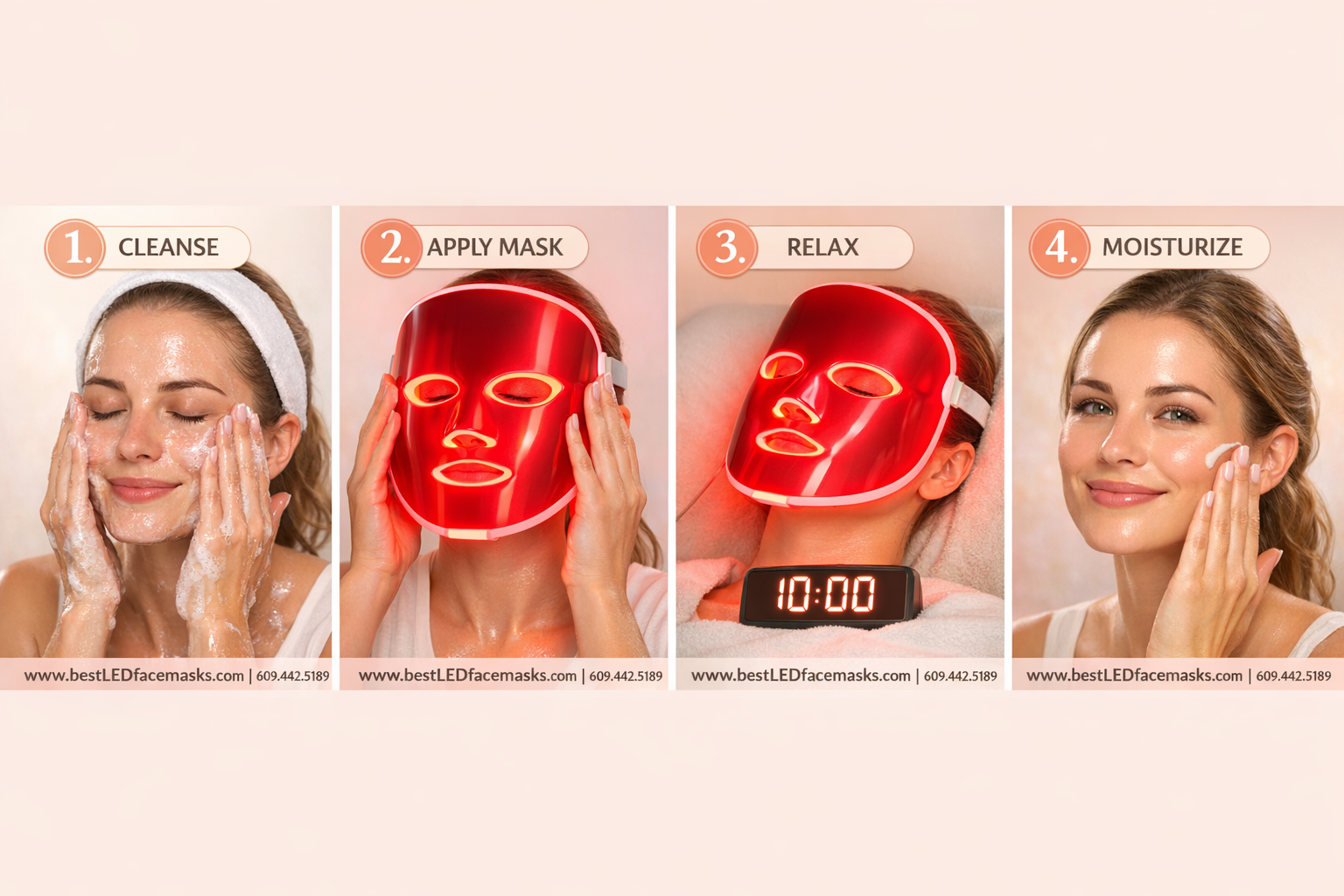
Step-by-Step Usage Guide
- Cleanse your face thoroughly. Remove all makeup, sunscreen, and heavy moisturizers. Clean skin allows light to penetrate without obstruction.
- Pat dry — do not apply serums or active ingredients (retinol, AHAs, BHAs) before your session.
- Put on the mask and adjust it to sit comfortably against your face with full coverage.
- Set the timer for 10–20 minutes, depending on the device's recommended protocol.
- Relax during the session. You can listen to a podcast, meditate, or simply rest.
- Remove the mask and apply your post-treatment skincare routine: hyaluronic acid serum, peptide moisturizer, and SPF (for morning sessions).
- Clean the mask according to manufacturer instructions after each use.
Recommended Frequency
- Weeks 1–4: 5 sessions per week (loading phase)
- Weeks 5–12: 3–4 sessions per week (maintenance phase)
- Ongoing: 2–3 sessions per week to maintain results
Quick tip: Consistency matters more than session length. A 10-minute session five days a week produces better results than a 30-minute session once a week.
Who Should (and Shouldn't) Use a Red Light Therapy Face Mask?
Red light therapy is appropriate for most adults looking to address visible signs of aging, uneven skin tone, or dull skin. It's one of the few skincare technologies that works well across multiple skin tones and types.
Good candidates for red light mask therapy:
- Adults with fine lines, wrinkles, or loss of skin firmness
- People with uneven skin tone or sun-damaged skin
- Anyone seeking a non-invasive anti-aging treatment
- Those who want to complement (not replace) their existing skincare routine
- Individuals looking to reduce the frequency of costly clinical treatments
Who should consult a doctor first:
- Pregnant women (out of caution, not proven harm)
- People with active skin cancer or a history of photosensitivity disorders
- Those taking medications that increase light sensitivity
- Anyone with epilepsy (flashing or pulsing light modes may be a concern)
- People with open wounds or active inflammatory skin conditions on the face
Red light therapy is not a replacement for medical treatment of serious skin conditions. It's a wellness and cosmetic tool for healthy skin maintenance and anti-aging.
If you're new to LED light therapy, the Renu-Gen brand overview is a useful starting point to understand what the technology offers.
What Results Can You Realistically Expect from the Best Red Light Mask?
Most users of a quality red light therapy face mask notice initial changes within 3–4 weeks: skin feels softer, looks more hydrated, and has a subtle glow. More significant results — visible wrinkle reduction, firmer skin, improved texture — typically appear at the 6–8 week mark with consistent use.
Realistic timeline:
| Timeframe | Expected Results |
|---|---|
| Week 1–2 | Improved hydration, subtle glow |
| Week 3–4 | Smoother texture, reduced redness |
| Week 6–8 | Visible wrinkle reduction, firmer skin |
| Month 3–6 | Significant collagen improvement, sustained results |
| Ongoing | Maintenance of results with continued use |
Results vary based on age, skin condition, starting collagen levels, and consistency of use. Older skin with more significant collagen loss will take longer to show results than younger skin with mild early aging. That said, red light therapy has shown benefits across a wide age range in published research.
Honest note: No at-home device — regardless of price — will replicate the results of surgical procedures or injectable treatments for severe skin laxity. Red light therapy is a genuine, science-backed tool for gradual improvement, not an overnight transformation.
FAQ: Best Red Light Mask Questions Answered
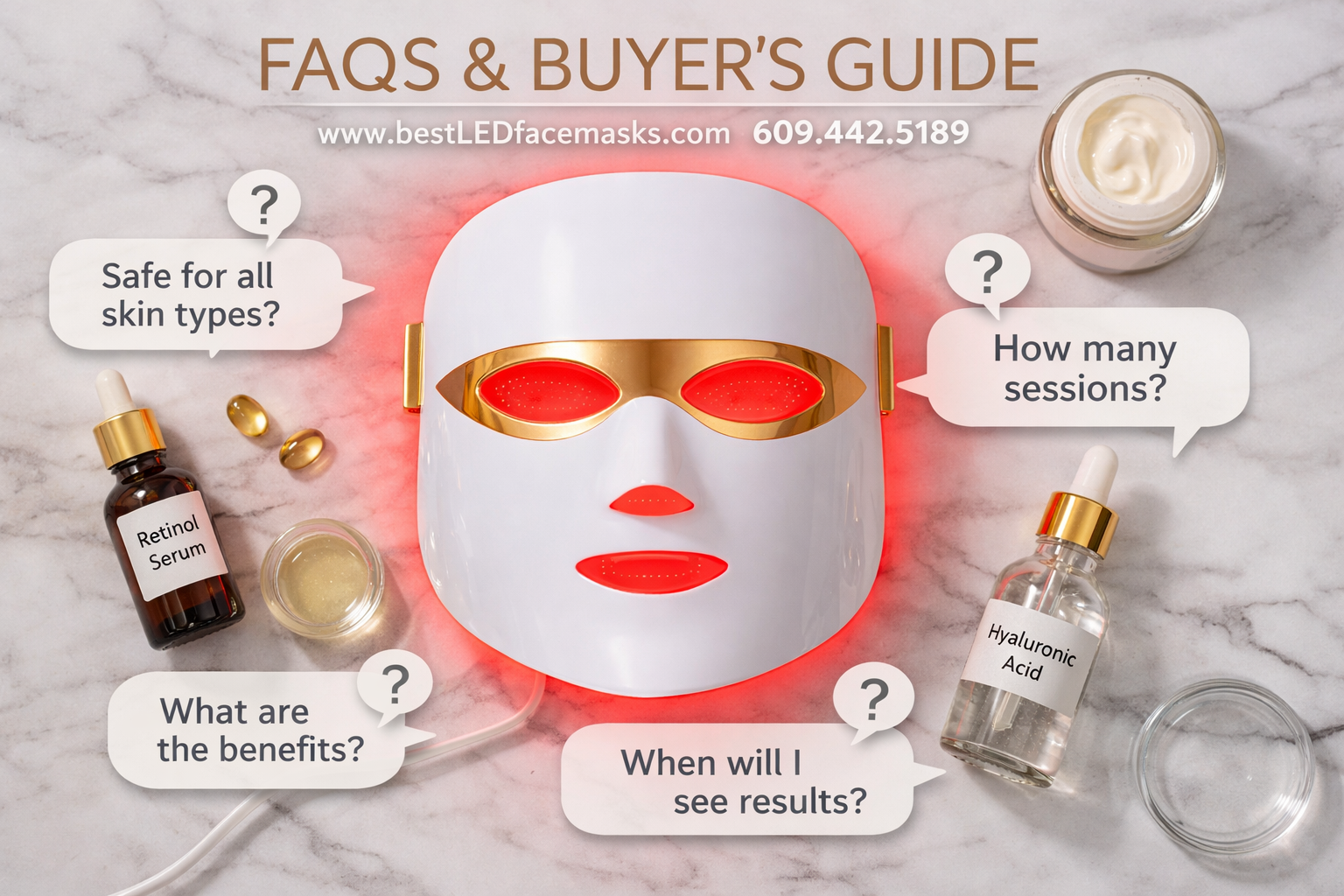
Q: How often should I use a red light mask?
A: For best results, use it 4–5 times per week during the first month, then 2–3 times per week for maintenance. Consistency is the single most important factor in seeing results.
Q: Is the Renu-Gen safe for sensitive skin?
A: Yes. Red light therapy does not use UV wavelengths and does not cause thermal damage at recommended exposure levels. It is generally well-tolerated by sensitive skin types. Always start with shorter sessions and increase gradually.
Q: What's the difference between LED-only masks and the Renu-Gen's LED + laser technology?
A: LED light scatters as it enters the skin, limiting penetration depth. Laser light is coherent and travels in a focused beam, reaching deeper skin layers. The Renu-Gen combines both to maximize collagen stimulation across all epidermal layers.
Q: Can I use a red light mask with my existing skincare products?
A: Use the mask on clean, dry skin. Apply serums and moisturizers after your session, not before. Avoid photosensitizing actives (retinol, strong AHAs) immediately before sessions.
Q: How long does a red light therapy session take?
A: Most protocols recommend 10–20 minutes per session. The Renu-Gen is designed for efficient sessions that fit into a daily routine.
Q: Will red light therapy work for dark skin tones?
A: Yes. Red and near-infrared light works across all skin tones because the therapeutic effect occurs at the cellular level in the dermis, not at the melanin layer.
Q: How long before I see results from a red light mask?
A: Most users notice initial improvements (hydration, glow) within 2–4 weeks. Significant wrinkle reduction and firming typically appear at 6–8 weeks of consistent use.
Q: Is there any downtime after using a red light mask?
A: No. Red light therapy has no recovery time. You can apply makeup or go about your day immediately after a session.
Q: Where can I buy the Renu-Gen red light therapy mask?
A: You can buy the Renu-Gen LED face mask directly through the official site, which also offers a clear return policy and customer support.
Q: What's the return policy if I'm not satisfied?
A: Renu-Gen offers a return policy for purchases. Review the full details on the Renu-Gen return policy page before purchasing.
Q: Are cheap red light masks worth buying?
A: Budget masks under $50 often lack accurate wavelengths and sufficient irradiance. They may emit red-colored light without therapeutic effect. Investing in a quality device with verified specs — like the Renu-Gen — produces real results; cheap alternatives often produce disappointment.
Q: Can I use a red light mask every day?
A: Daily use is safe for most people, especially during the initial loading phase. Some users prefer every-other-day sessions. Listen to your skin — if you notice any unusual irritation, reduce frequency.
Conclusion: Choosing the Best Red Light Mask in 2026
Red light therapy is one of the most evidence-backed, non-invasive tools available for facial anti-aging in 2026. The science is solid, the safety profile is excellent, and the convenience of at-home masks has made this technology accessible to anyone serious about their skin health.
The best red light therapy mask is one that delivers the right wavelengths, at adequate power, with technology that reaches the skin layers where collagen production actually happens. On all three counts, the Renu-Gen stands above the competition by combining LED and laser technology in a single wearable device designed for real results.
Your actionable next steps:
- Assess your skin goals — wrinkle reduction, firming, tone evening, or all three.
- Compare device specs — check wavelength, irradiance, and technology type before buying.
- Visit the Renu-Gen shop to explore the best LED face masks available and find the right model.
- Commit to a consistent protocol — 4–5 sessions per week for the first month.
- Pair with a clean skincare routine — cleanse before, moisturize after, and use SPF daily.
- Track your progress with weekly photos to see cumulative improvement over 8–12 weeks.
The best investment in your skin is one you'll actually use consistently. A red light therapy face mask that combines LED and laser technology, fits comfortably, and integrates into your daily routine is the one that will deliver lasting results.
References
- Weiss, R.A., McDaniel, D.H., Geronemus, R.G., & Weiss, M.A. (2005). Clinical trial of a novel non-thermal LED array for reversal of photoaging: Clinical, histologic, and surface profilometric results. Lasers in Surgery and Medicine, 36(2), 85–91.
- Avci, P., Gupta, A., Sadasivam, M., Vecchio, D., Pam, Z., Pam, N., & Hamblin, M.R. (2013). Low-level laser (light) therapy (LLLT) in skin: Stimulating, healing, restoring. Seminars in Cutaneous Medicine and Surgery, 32(1), 41–52.
- Hamblin, M.R. (2017). Mechanisms and applications of the anti-inflammatory effects of photobiomodulation. AIMS Biophysics, 4(3), 337–361.
- Barolet, D., Roberge, C.J., Auger, F.A., Boucher, A., & Germain, L. (2009). Regulation of skin collagen metabolism in vitro using a pulsed 660 nm LED light source: Clinical correlation with a single-blinded study. Journal of Investigative Dermatology, 129(12), 2751–2759.
Tags: best red light mask, red light therapy mask, LED face mask, red light therapy face mask, anti-aging mask, collagen production, wrinkle reduction, skin rejuvenation, Renu-Gen, LED light therapy, at-home red light therapy, best LED face mask