
Last updated: April 13, 2026
Quick Answer: Infrared face masks deliver near-infrared and red light wavelengths directly to skin tissue, stimulating collagen production, reducing fine lines, improving circulation, and accelerating cellular repair — all without UV exposure or downtime. The best devices, like the Renu-Gen LED face mask, combine LED and laser technology to reach every layer of the skin for measurable anti-aging results.
Key Takeaways
- Infrared face mask benefits include collagen stimulation, wrinkle reduction, improved skin tone, faster healing, and reduced inflammation.
- Near-infrared light (700–1100 nm) penetrates deeper than visible red light, reaching the dermis where collagen and elastin are produced.
- Consistent use (typically 3–5 sessions per week) produces noticeable results within 4–12 weeks for most skin types.
- Devices that combine both LED and laser technology — like the Renu-Gen — deliver superior penetration across all epidermal layers.
- Infrared therapy is non-invasive, painless, and safe for most skin tones and types.
- At-home infrared masks have closed the gap with professional clinic treatments, making this therapy accessible and cost-effective in 2026.
- Not all masks are equal: wavelength accuracy, power density (irradiance), and coverage area determine real-world results.
- People with photosensitive conditions, certain medications, or active skin infections should consult a dermatologist before use.
What Are Infrared Face Masks and How Do They Work?
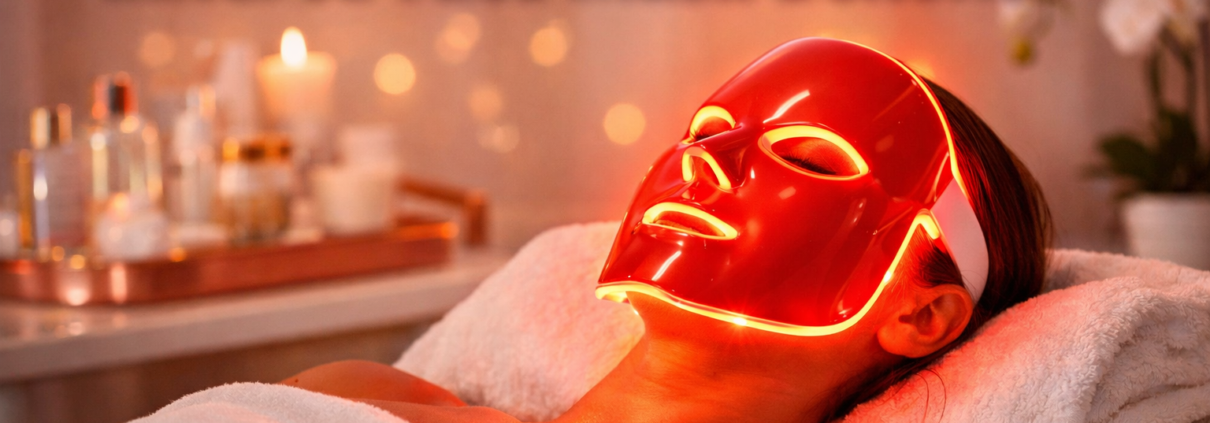
Infrared face masks are wearable light therapy devices that emit specific wavelengths of red and near-infrared light onto facial skin. Unlike UV light, which damages DNA, infrared wavelengths are absorbed by skin cells and converted into cellular energy that drives repair and regeneration.
Here's the basic mechanism:
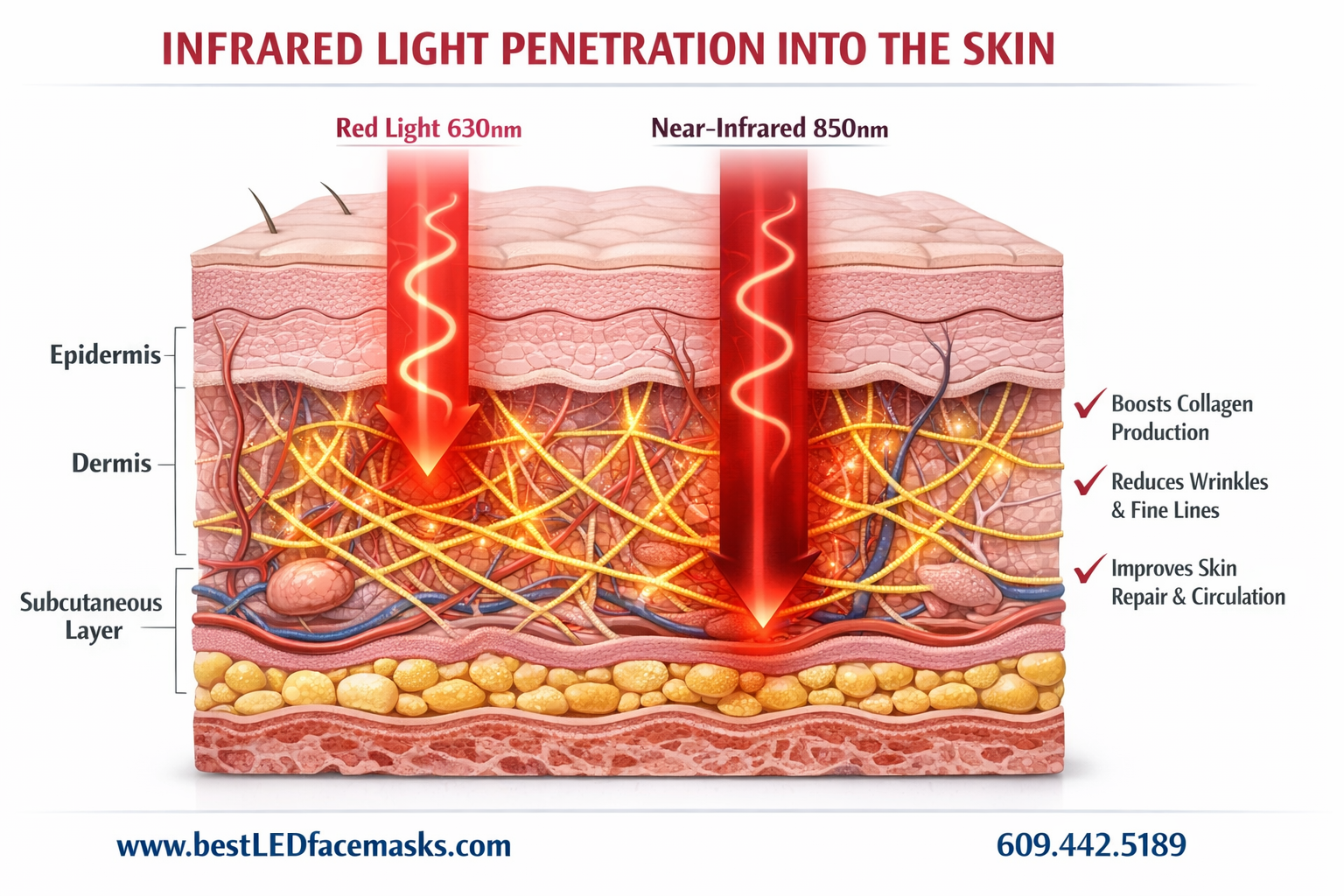
- Light photons from the mask are absorbed by mitochondria inside skin cells — specifically by a protein called cytochrome c oxidase.
- This absorption boosts ATP production (cellular energy), which accelerates the skin's natural repair processes.
- Increased energy output triggers fibroblast activity, the cells responsible for producing collagen and elastin.
- Over repeated sessions, the skin builds more structural protein, leading to firmer, smoother, and more even-toned skin.
Wavelength matters a lot. Red light (630–660 nm) works primarily at the surface layers of the skin, making it effective for texture, tone, and mild inflammation. Near-infrared light (810–850 nm and above) penetrates deeper into the dermis and subcutaneous tissue, where it drives more significant collagen remodeling and circulation improvements.
The most advanced masks, including the Renu-Gen LED face mask, use both LED arrays and low-level laser diodes to cover the full therapeutic spectrum — ensuring light reaches every layer of the epidermis, not just the surface.
What Are the Core Infrared Face Mask Benefits for Skin?
Infrared face mask benefits span several interconnected skin health outcomes, from structural changes like collagen density to surface-level improvements in tone and texture. Here's a breakdown of what consistent use actually does:
🔴 Collagen and Elastin Production
Collagen is the protein that keeps skin firm and resilient. After age 25, the body produces roughly 1% less collagen per year (according to dermatological consensus). Infrared therapy directly stimulates fibroblasts to produce more collagen and elastin, counteracting this natural decline.
Result: Firmer skin, reduced sagging, and improved elasticity over 8–12 weeks of regular use.
🔴 Wrinkle and Fine Line Reduction
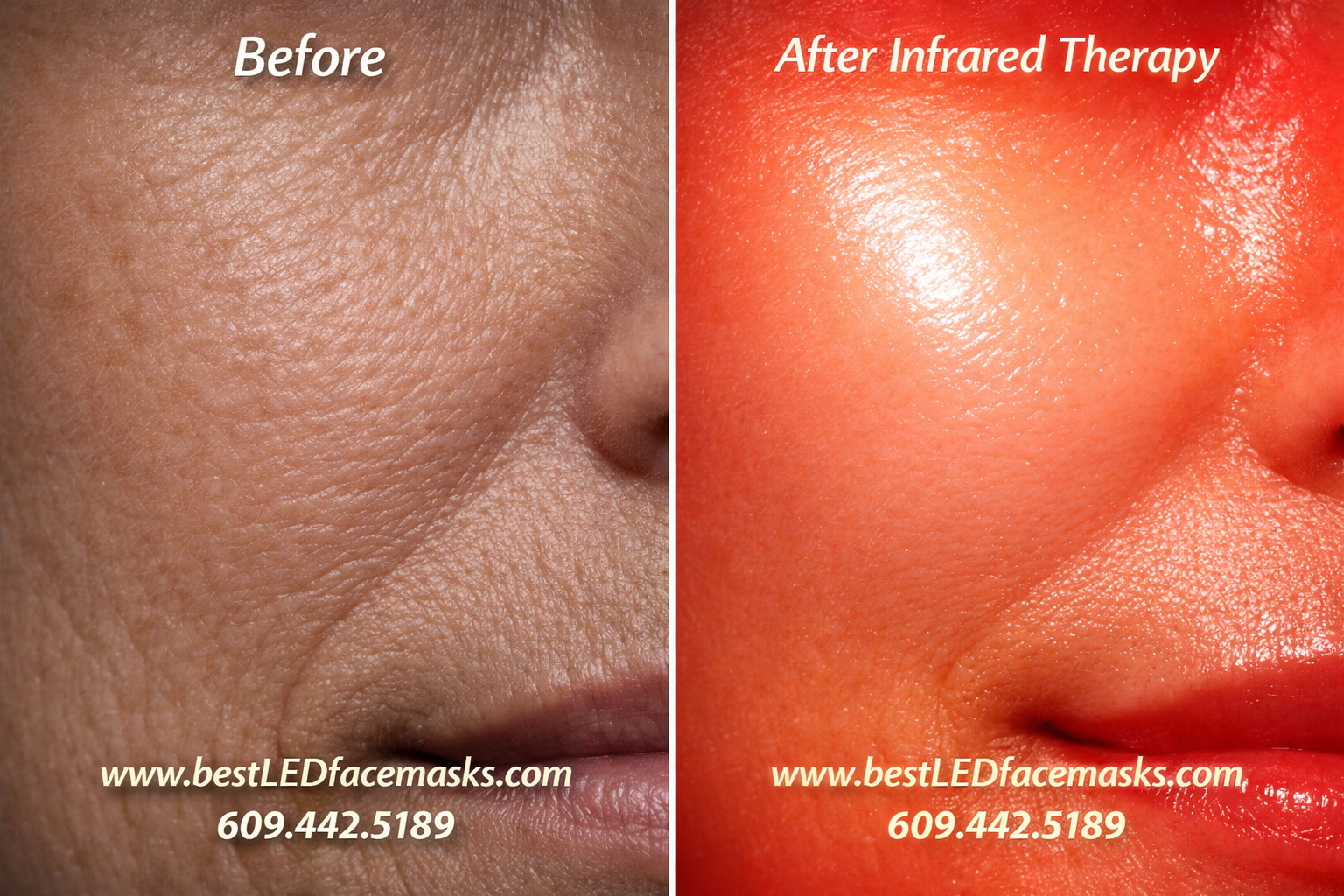
By rebuilding collagen in the dermis, infrared light physically fills in fine lines from the inside out. This is different from topical retinoids, which work by accelerating surface cell turnover. Infrared therapy works at a structural level.
🔴 Improved Circulation and Skin Tone
Near-infrared wavelengths dilate blood vessels and improve microcirculation in facial tissue. Better blood flow means more oxygen and nutrients delivered to skin cells, resulting in a healthier, more even complexion.
🔴 Reduced Inflammation and Redness
Red light therapy has well-documented anti-inflammatory effects. For people with rosacea, post-acne redness, or general skin sensitivity, regular infrared mask sessions can calm reactive skin over time.
🔴 Accelerated Wound Healing and Cell Turnover
Infrared light speeds up the skin's natural repair cycle. This makes it useful after cosmetic procedures (with medical clearance), for fading hyperpigmentation, and for general skin renewal.
| Benefit | Wavelength Range | Typical Timeline |
|---|---|---|
| Collagen production | 630–850 nm | 8–12 weeks |
| Wrinkle reduction | 630–660 nm | 6–10 weeks |
| Inflammation reduction | 630–680 nm | 2–4 weeks |
| Improved circulation | 810–850 nm | 4–8 weeks |
| Cell repair/healing | 700–1000 nm | 2–6 weeks |
How Do Infrared Masks Compare to Other Anti-Aging Treatments?
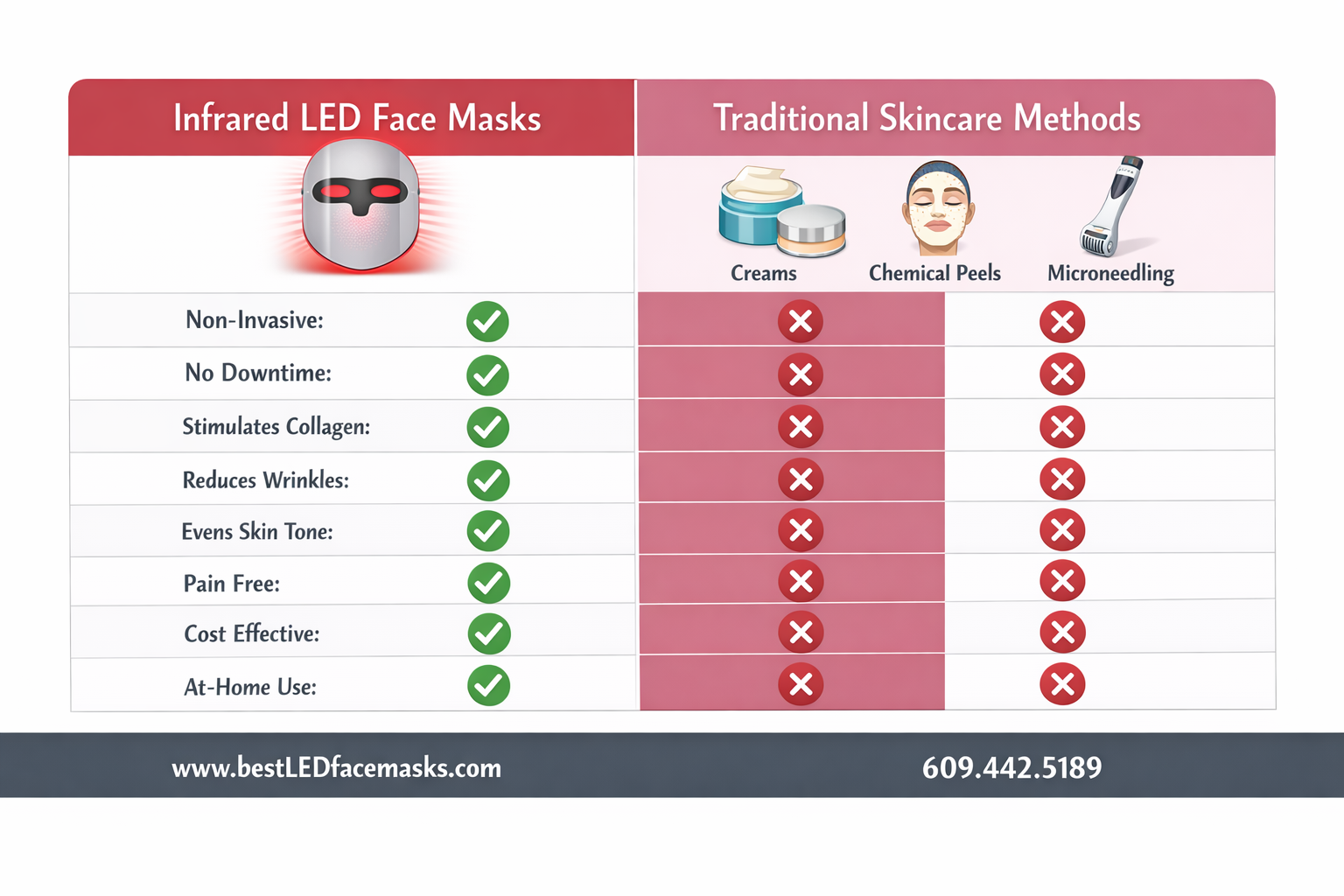
Infrared face masks sit in a unique position: more effective than most topicals, less invasive than clinical procedures, and far more convenient than either.
Choose infrared masks if you want a consistent, low-risk at-home treatment with cumulative results. Choose clinical options (laser resurfacing, injectables) if you need faster or more dramatic correction for deep wrinkles or significant volume loss.
Here's how the options stack up:
| Treatment | Invasiveness | Downtime | Cost (per session) | Collagen Stimulation |
|---|---|---|---|---|
| Infrared LED mask | None | None | Low (device cost amortized) | Moderate–High |
| Retinol/retinoids | None | Mild irritation | Low | Moderate |
| Chemical peel | Low–Medium | 1–7 days | $150–$300 | Moderate |
| Microneedling | Medium | 2–5 days | $200–$700 | High |
| Fractional laser | High | 5–14 days | $500–$2,000 | Very High |
| Botox/fillers | Low | Minimal | $300–$800 | None (volume only) |
Common mistake: Many people use infrared masks as a replacement for sunscreen and basic skincare. They work best as an addition to a solid routine — cleansing, moisturizing, SPF — not a substitute.
For a detailed comparison of how leading devices perform, see the Renu-Gen LED face masks vs the rest breakdown.
Why the Renu-Gen Is Considered the Best Infrared LED Face Mask for Anti-Aging
Not all infrared face masks deliver the same results. The difference comes down to three technical factors: wavelength accuracy, power density (irradiance in mW/cm²), and coverage area.
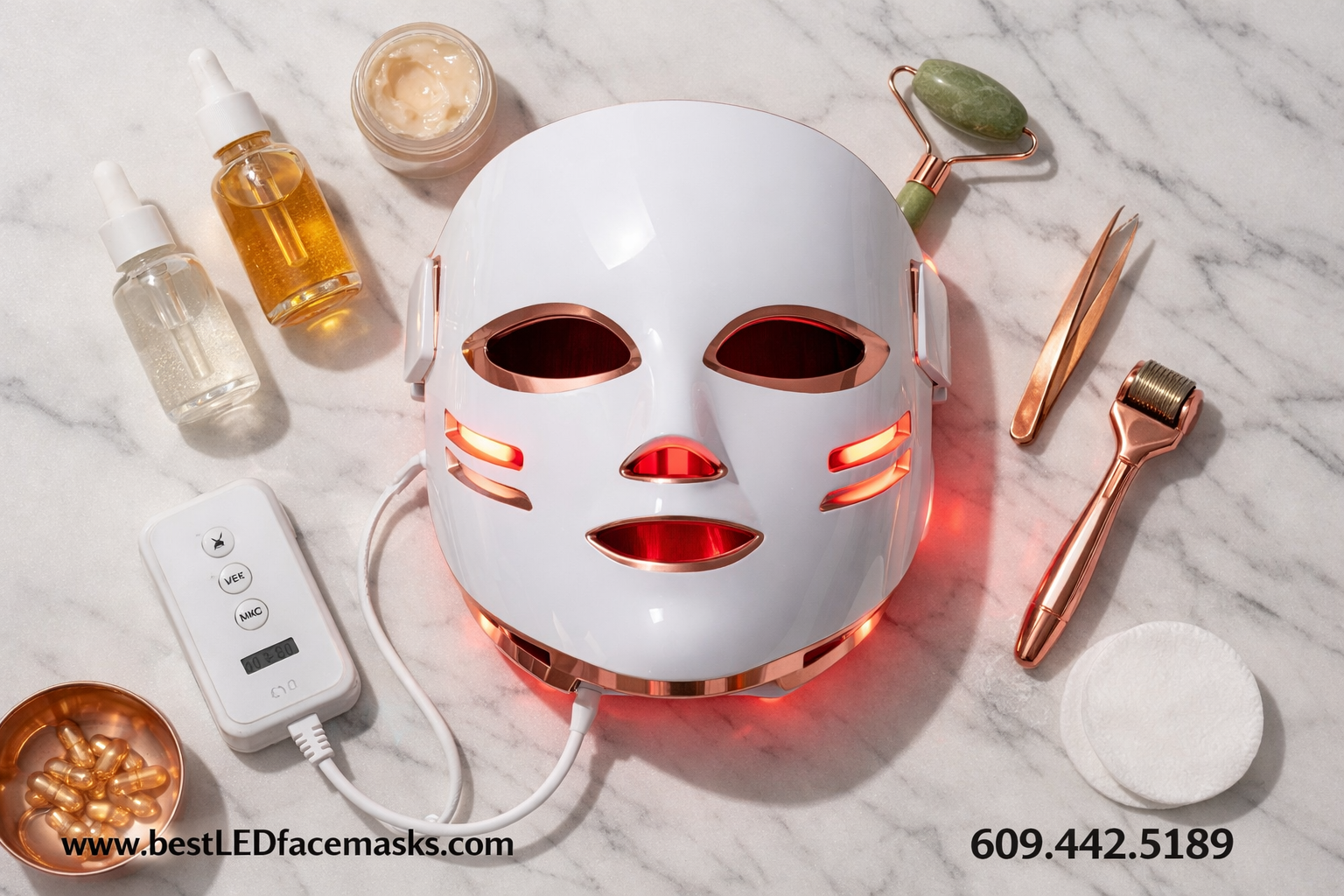
The Renu-Gen LED face mask stands out because it combines both LED and low-level laser diode technology in a single wearable device. Most consumer masks use LEDs alone. Lasers, even at low levels, produce coherent light that penetrates tissue more precisely and deeply than LEDs at the same wavelength.
What this means in practice:
- Deeper collagen stimulation — laser diodes reach the full dermis, not just the upper epidermal layers
- More uniform coverage — the mask is engineered to treat the entire face, including the jaw, temples, and under-eye area
- Faster results — higher effective irradiance means fewer sessions needed to see measurable improvement
- Dual-action therapy — red LED wavelengths handle surface texture and tone while near-infrared laser diodes drive deep structural remodeling
This combination makes the Renu-Gen the most effective at-home option for people serious about anti-aging, wrinkle reduction, and long-term skin rejuvenation. You can explore the full range of LED face masks to find the right fit for your skin goals.
What Does the Research Say About Infrared Face Mask Benefits?
The evidence base for red and near-infrared light therapy on skin is solid and growing. Here are key findings from peer-reviewed research:
- A study published in Photomedicine and Laser Surgery (Wunsch & Matuschka, 2014) found that participants using red and near-infrared LED therapy showed significant improvements in skin complexion, skin feeling, and collagen density as measured by ultrasonography, compared to a control group.
- Research in the Journal of Clinical and Aesthetic Dermatology has documented red light therapy's effectiveness for reducing wrinkle depth and improving skin tone in clinical settings.
- Multiple studies confirm that wavelengths between 630 nm and 850 nm are the most therapeutically active for skin tissue, with near-infrared showing the deepest penetration.
Pull quote: "Photobiomodulation therapy using red and near-infrared wavelengths has demonstrated consistent evidence for collagen stimulation and anti-inflammatory effects in controlled clinical trials." — Summarized from peer-reviewed photomedicine literature.
Important caveat: Most high-quality studies use clinical-grade devices. At-home masks vary widely in power output. A mask that lists "red light" as a feature but uses low irradiance LEDs may produce minimal results. Always check the device's irradiance specifications before purchasing.
Who Should (and Shouldn't) Use an Infrared Face Mask?
Infrared face masks are appropriate for most adults looking to address signs of aging, uneven skin tone, or mild inflammatory skin conditions. They are not suitable for everyone, and a few contraindications apply.
Good candidates:
- Adults 25+ concerned about early or established signs of aging
- People with dull, uneven, or sun-damaged skin
- Those seeking a non-invasive complement to their existing skincare routine
- Anyone recovering from minor cosmetic procedures (with physician clearance)
- People with mild rosacea or chronic skin redness
Use with caution or avoid:
- Photosensitive individuals — those taking medications like tetracyclines, retinoids, or certain antibiotics that increase light sensitivity
- Active skin infections — cold sores, open wounds, or active acne cysts in the treatment area
- History of skin cancer — consult a dermatologist before use
- Pregnancy — limited safety data; medical advice recommended
- Epilepsy — flashing or pulsing light modes may be a trigger for some individuals
Edge case: People with very dark skin tones (Fitzpatrick V–VI) can safely use infrared therapy, but should choose devices with accurate wavelength output to avoid surface heat buildup from lower-quality LEDs.
Browse LED face masks for sale to compare options suited to different skin types and needs.
How to Use an Infrared Face Mask for Best Results
Getting the most from infrared face mask benefits requires consistency and correct technique. Here's a straightforward protocol:
Step-by-step routine:
- Cleanse your face thoroughly — remove all makeup, SPF, and skincare products. Light must reach bare skin to work.
- Apply the mask according to manufacturer instructions. Ensure it sits flush against your face for even coverage.
- Set the timer — most sessions run 10–20 minutes. Start with 10 minutes if you're new to light therapy.
- Relax — you can lie down, sit back, or listen to something. The mask does the work.
- Remove and apply serums — post-session skin is primed for absorption. A hyaluronic acid or peptide serum applied immediately after maximizes benefit.
- Frequency — 3 to 5 sessions per week for the first 8–12 weeks, then 1–2 sessions per week for maintenance.
Common mistakes to avoid:
- Applying the mask over moisturizer or serum (blocks light penetration)
- Skipping sessions inconsistently — cumulative effect requires regularity
- Expecting overnight results — infrared therapy is a long-game treatment
- Using a mask with inadequate irradiance and expecting clinical-grade outcomes
How to Choose the Right Infrared LED Face Mask in 2026
The single most important factor when choosing an infrared face mask is verified wavelength output and irradiance (power density), not price or brand recognition alone.
Here's what to look for:
- Wavelengths: Look for 630–660 nm (red) and 810–850 nm (near-infrared) — these are the most studied and effective ranges.
- Irradiance: Higher mW/cm² means more photons delivered per session. Devices under 10 mW/cm² at the skin surface produce minimal results.
- LED + Laser combination: Masks that incorporate both technologies, like the Renu-Gen, deliver superior depth of penetration.
- Full-face coverage: Avoid masks that only treat the cheeks or forehead — the jaw, temples, and under-eye areas matter for complete anti-aging results.
- Build quality and safety certification: Look for FDA-cleared or CE-marked devices.
- Ease of use: Hands-free wearable designs allow you to use the mask consistently without disrupting your schedule.
For a curated selection, the best LED face masks collection is a good starting point. You can also explore top-rated LED face mask options filtered by feature set and use case.
FAQ: Infrared Face Mask Benefits
Q: How long does it take to see results from an infrared face mask?
Most users notice improved skin texture and tone within 4–6 weeks of consistent use (3–5 sessions per week). Significant wrinkle reduction and collagen remodeling typically take 8–12 weeks.
Q: Can I use an infrared face mask every day?
Daily use is generally safe, but most protocols recommend 3–5 sessions per week. Daily use won't speed up results dramatically — skin needs time between sessions to complete the repair cycle.
Q: Is infrared light therapy the same as red light therapy?
They overlap. Red light therapy typically refers to 630–660 nm wavelengths. Infrared therapy includes near-infrared (700–1100 nm). The best masks use both, which is why the terms are often used interchangeably in consumer contexts.
Q: Are at-home infrared face masks as effective as clinic treatments?
High-quality at-home devices like the Renu-Gen close the gap significantly, especially for maintenance and preventive anti-aging. Clinical devices still have higher irradiance for acute treatment, but consistent at-home use over months can match or exceed the cumulative benefit of infrequent clinic visits.
Q: Can infrared masks help with acne?
Red light (not infrared) has documented anti-inflammatory effects that can reduce acne-related redness and speed healing. Near-infrared is less directly targeted at acne but supports overall skin health. Some masks combine red, near-infrared, and blue light for a broader acne-targeting approach.
Q: Do infrared face masks have side effects?
Side effects are rare and mild. Some users experience temporary redness or warmth immediately after use, which resolves within minutes. People with photosensitivity or those on certain medications should consult a doctor first.
Q: What's the difference between LED and laser in a face mask?
LEDs emit non-coherent light that spreads over a wider area. Lasers emit coherent, focused light that penetrates more precisely and deeply at the same wavelength. Combining both — as in the Renu-Gen — delivers broader surface coverage and deeper tissue penetration simultaneously.
Q: Is infrared light safe for the eyes?
Most masks include eye protection or have shields built in. Never look directly at infrared or red light sources. Always follow the manufacturer's eye safety guidelines.
Q: Can I use skincare products with my infrared mask?
Apply the mask to clean, bare skin. After your session, apply serums and moisturizers — post-treatment skin absorbs actives more effectively.
Q: How much does an infrared face mask cost?
Quality at-home devices range from $200 to $600+. The Renu-Gen sits in the premium tier but amortizes to a very low per-session cost compared to clinic treatments. Check the shop for current pricing.
Conclusion: Are Infrared Face Mask Benefits Worth It?
The short answer is yes — for most people who use a quality device consistently.
Infrared face masks offer a scientifically supported, non-invasive path to better skin. The core benefits — collagen stimulation, wrinkle reduction, improved circulation, and reduced inflammation — are backed by clinical research and increasingly accessible through advanced at-home devices.
The key is choosing the right mask. A device with accurate wavelengths, adequate irradiance, and full-face coverage will produce real results. The Renu-Gen, which combines LED and laser technology to penetrate all layers of the epidermis, represents the current standard for at-home infrared anti-aging therapy.
Actionable next steps:
- Assess your skin goals — are you targeting wrinkles, tone, redness, or overall rejuvenation? This guides which wavelengths to prioritize.
- Research device specs — don't buy based on price alone. Check wavelength output and irradiance data.
- Start a consistent protocol — 3–5 sessions per week for 8–12 weeks before evaluating results.
- Pair with a solid skincare routine — infrared therapy amplifies results when combined with hydration, SPF, and quality actives.
- Explore your options at bestledfacemasks.com for the full range of red light therapy mask options and find the right fit for your skin.
If you're ready to invest in your skin's long-term health, a red light therapy face mask from Renu-Gen is one of the most evidence-based choices you can make in 2026.
References
- Wunsch, A., & Matuschka, K. (2014). A controlled trial to determine the efficacy of red and near-infrared light treatment in patient satisfaction, reduction of fine lines, wrinkles, skin roughness, and intradermal collagen density increase. Photomedicine and Laser Surgery, 32(2), 93–100.
- Avci, P., Gupta, A., Sadasivam, M., Vecchio, D., Pam, Z., Pam, N., & Hamblin, M. R. (2013). Low-level laser (light) therapy (LLLT) in skin: stimulating, healing, restoring. Seminars in Cutaneous Medicine and Surgery, 32(1), 41–52.
- Barolet, D., Roberge, C. J., Auger, F. A., Boucher, A., & Germain, L. (2009). Regulation of skin collagen metabolism in vitro using a pulsed 660 nm LED light source: clinical correlation with a single-blinded study. Journal of Investigative Dermatology, 129(12), 2751–2759.
- Hamblin, M. R. (2017). Mechanisms and applications of the anti-inflammatory effects of photobiomodulation. AIMS Biophysics, 4(3), 337–361.
Tags: infrared face mask benefits, red light therapy mask, LED face mask, anti-aging skincare, collagen production, near-infrared therapy, wrinkle reduction, skin rejuvenation, photobiomodulation, Renu-Gen, best LED face mask, infrared light therapy