
red light face mask for collagen production
Last updated: April 10, 2026
Quick Answer
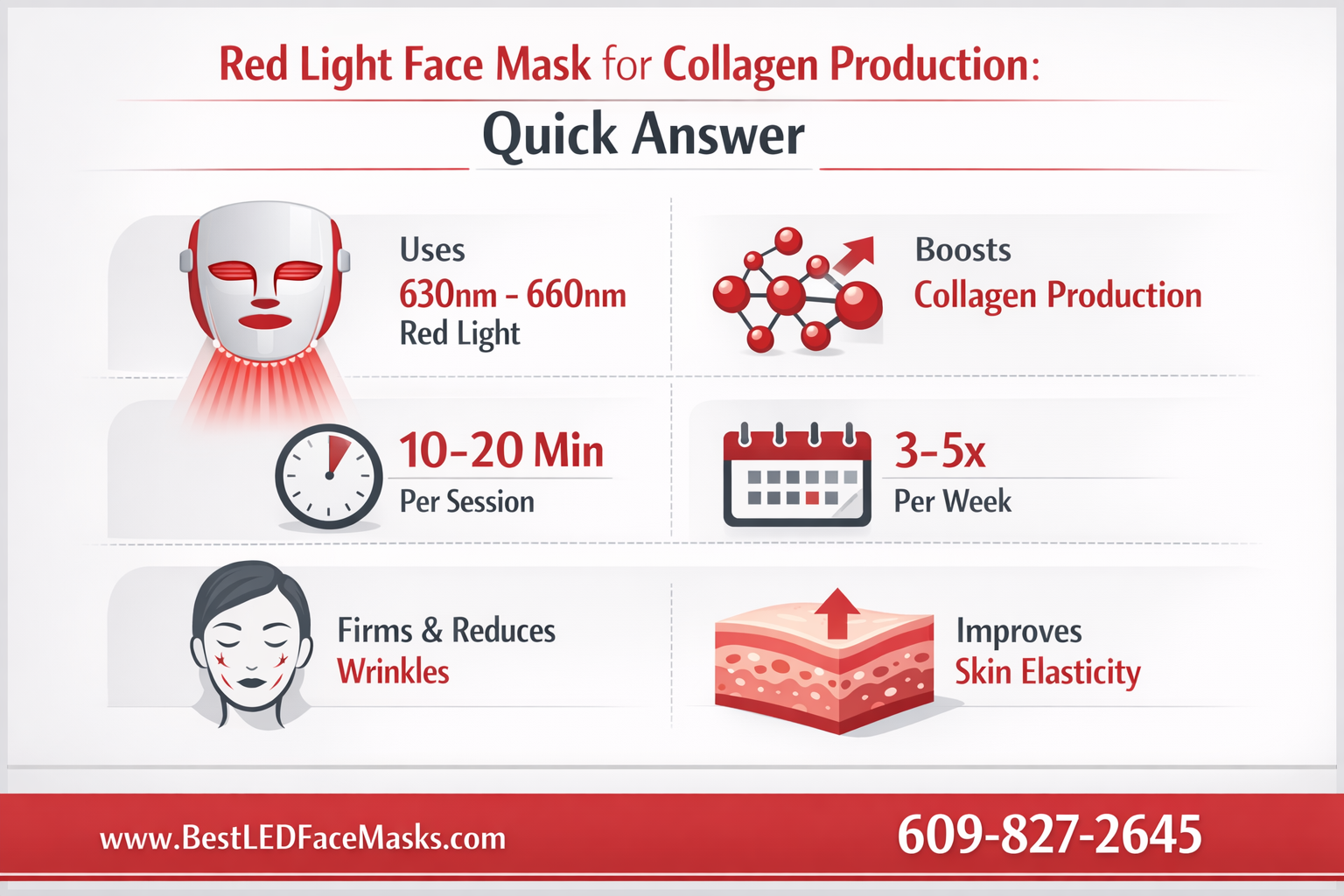
A red light face mask for collagen production works by delivering specific wavelengths of red and near-infrared light directly to skin cells, stimulating fibroblasts to produce more collagen and elastin. Clinical research supports that consistent use can visibly reduce fine lines, improve skin firmness, and enhance overall skin texture. The Renu-Gen LED face mask stands out in 2026 as the top-rated option because it combines both LED and laser light technology for deeper, more effective collagen stimulation.
The best led face mask on the market is by far Renu-Gen.
- Display 9 Products per page
Key Takeaways
-
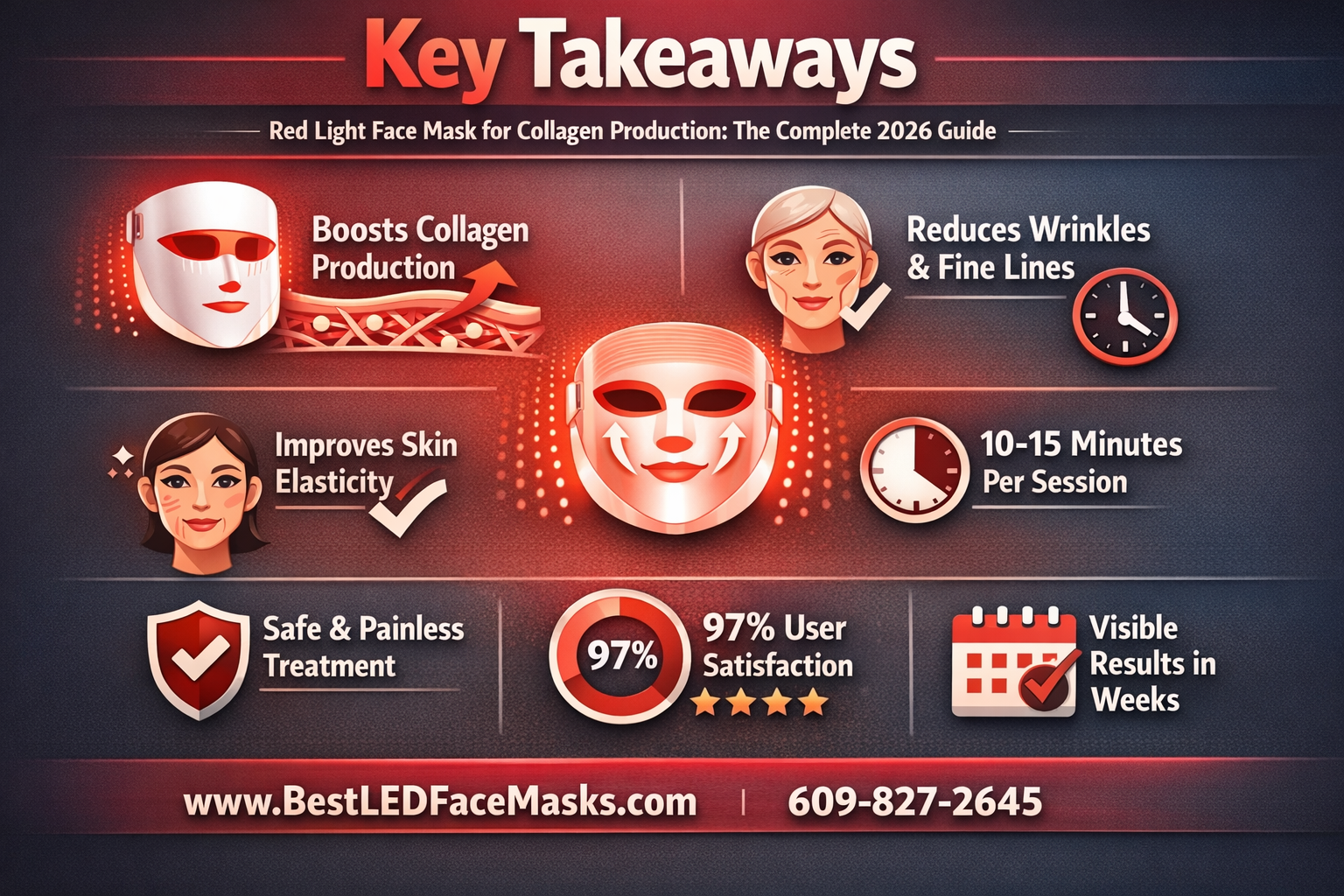
- 🔴 Red light therapy (typically 630–660nm wavelengths) triggers fibroblast activity, which directly increases collagen synthesis in the dermis
- 💡 The Renu-Gen is the #1 LED face mask on the market, uniquely combining LED lights and laser diodes for superior anti-aging results
- 🏠 At-home LED face masks now deliver near-professional results without clinic visits or high costs
- ⏱️ Most users see noticeable improvements in skin texture and firmness within 4–8 weeks of consistent use (3–5 sessions per week)
- 📊 Not all LED masks are equal — wavelength accuracy, light density (irradiance), and coverage area all affect outcomes
- ✅ Red light therapy is generally safe for most skin types, with minimal side effects when used correctly
- ⚠️ People with photosensitivity conditions or those on certain medications should consult a dermatologist before use
- 💰 Quality at-home LED masks range from $150 to $600+; professional-grade home devices like Renu-Gen offer the best long-term value
- 🔬 Combining LED therapy with laser light (as Renu-Gen does) reaches deeper skin layers than LED alone
- 📋 Consistency matters more than session length — regular short sessions outperform occasional long ones
How Does a Red Light Face Mask for Collagen Production Actually Work?
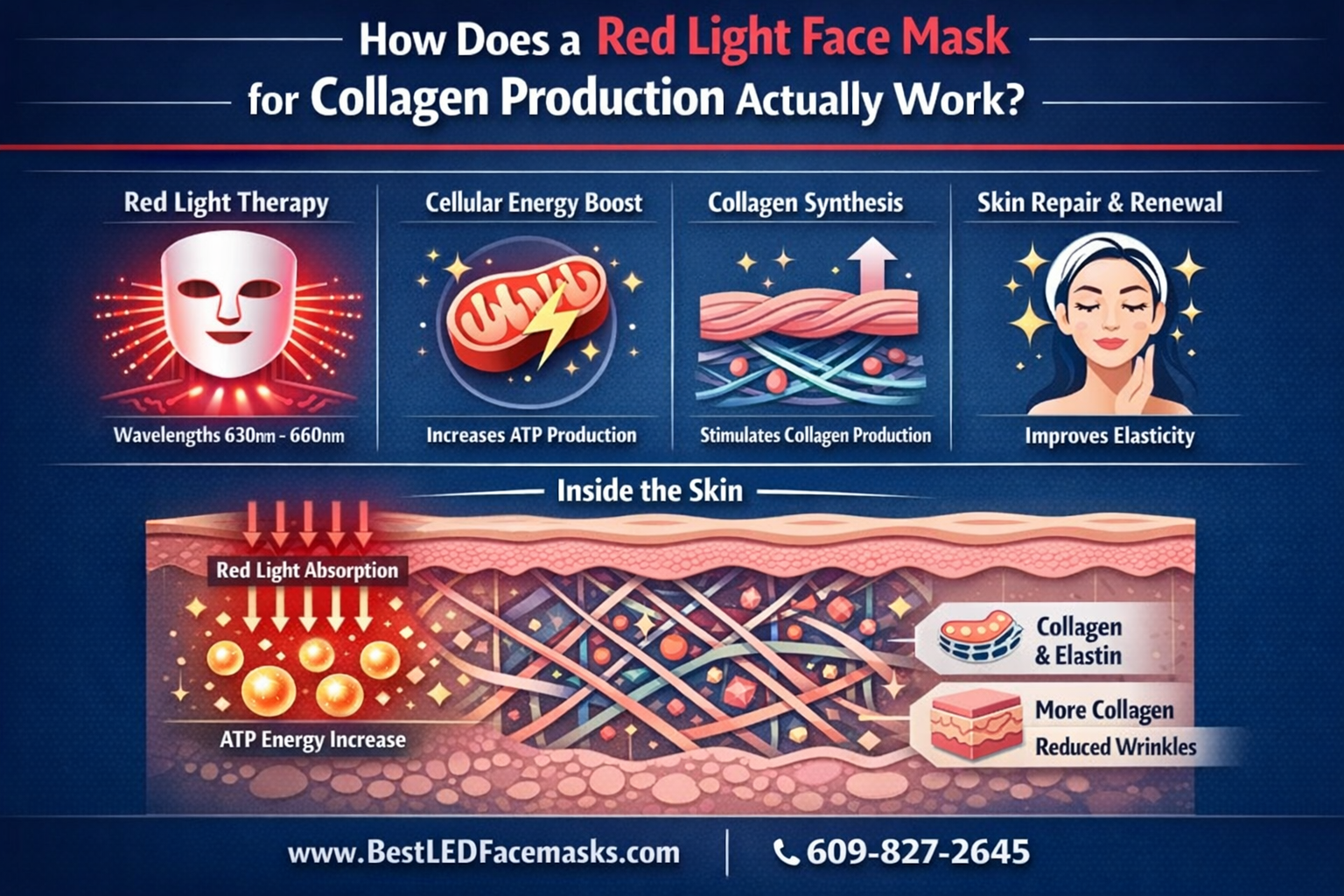
A red light face mask for collagen production stimulates skin cells through a process called photobiomodulation. Red and near-infrared light wavelengths penetrate the skin and are absorbed by mitochondria in fibroblast cells, boosting their energy output (ATP production) and triggering collagen and elastin synthesis.
Here’s the biological chain reaction in plain terms:
-
-
- Light enters the skin at wavelengths between 630–850nm
- Mitochondria absorb the light energy, producing more ATP (cellular fuel)
- Fibroblasts become more active, producing new collagen and elastin fibers
- Collagen density increases in the dermis, reducing the appearance of fine lines and wrinkles
- Skin becomes firmer, smoother, and more hydrated over repeated sessions
-
“Photobiomodulation doesn’t add anything foreign to the skin — it activates the skin’s own repair mechanisms using light energy.”
Key wavelengths and their roles:
| Wavelength | Type | Primary Benefit |
|---|---|---|
| 630–660nm | Red light | Surface collagen, skin tone, fine lines |
| 810–850nm | Near-infrared | Deeper tissue repair, inflammation reduction |
| Laser diodes | Laser light | Precision penetration, enhanced fibroblast activation |
The Renu-Gen LED face mask uses both LED and laser light technology — a combination that reaches multiple skin depths simultaneously, which is why it outperforms single-technology masks.
What Makes the Renu-Gen the Best LED Face Mask for Collagen?
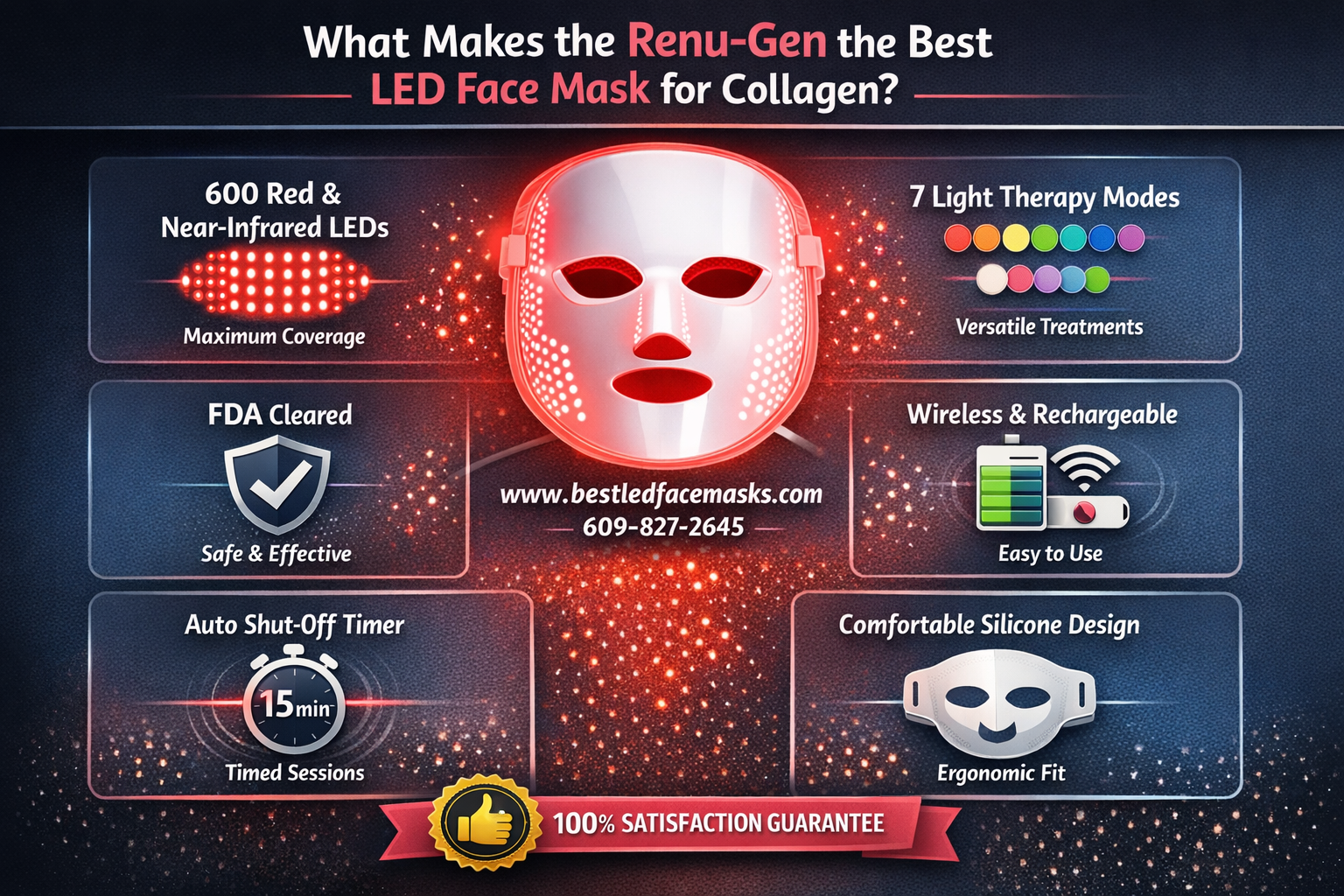
The Renu-Gen is the best LED face mask available in 2026 because it doesn’t rely on LED light alone. Most masks on the market use only LED diodes, which are effective but limited in penetration depth. Renu-Gen adds laser light diodes to the array, creating a dual-technology system that targets both superficial and deeper dermal layers.
Why this matters for collagen production:
-
-
- Laser light penetrates more precisely and deeply than standard LED
- Deeper penetration means fibroblasts in the mid-to-lower dermis are activated, not just surface cells
- The result is more comprehensive collagen remodeling across the full thickness of the skin
-
Renu-Gen vs. standard LED masks at a glance:
| Feature | Standard LED Mask | Renu-Gen LED + Laser Mask |
|---|---|---|
| Light source | LED only | LED + laser diodes |
| Penetration depth | Superficial to mid-dermis | Superficial to deep dermis |
| Collagen stimulation | Moderate | High |
| Anti-aging coverage | Good | Excellent |
| Professional-grade results at home | Partial | Yes |
If you’re looking to buy an LED face mask that genuinely delivers professional-level collagen stimulation, the Renu-Gen is the clear choice. You can explore the full Renu-Gen LED face mask product details to see the complete specifications.
Who Should Use a Red Light Face Mask for Collagen Production?
A red light face mask for collagen production is best suited for adults who want to reduce visible signs of skin aging without invasive procedures. It’s particularly effective for people dealing with fine lines, loss of firmness, uneven skin tone, or dull texture.
Good candidates include:
-
-
- Adults 30+ noticing early signs of collagen loss
- People with fine lines and wrinkles looking for non-invasive treatment
- Anyone wanting an anti-aging LED face mask for home use
- Those who’ve had professional LED treatments and want to maintain results at home
- People with acne scarring (red light also supports tissue repair)
-
Who should be cautious or consult a doctor first:
-
-
- People with photosensitivity disorders (lupus, porphyria)
- Those taking photosensitizing medications (certain antibiotics, retinoids at high doses)
- Pregnant women (limited safety data available)
- People with active skin infections or open wounds on the face
-
For most healthy adults, a quality professional LED face mask for home use is safe and well-tolerated with no recovery time required.
How to Use an LED Face Mask for Anti-Aging at Home: Step-by-Step
Getting results from an at-home LED face mask comes down to consistency and correct technique. The device is only as effective as the protocol you follow.
Step-by-step protocol for best results:
-
-
- Cleanse your face thoroughly — remove all makeup, SPF, and oils. Light cannot penetrate through product buildup effectively.
- Pat skin dry — damp skin is fine; just avoid heavy serums before the session.
- Put on the Renu-Gen mask and secure it comfortably against your face.
- Select your light setting — red light (630–660nm) for collagen and anti-aging; near-infrared for deeper repair.
- Run the session — typically 10–20 minutes per session. Follow the device’s recommended timing.
- Remove the mask and apply a collagen-supporting serum (vitamin C, hyaluronic acid, or peptides work well post-session when skin absorption is heightened).
- Apply SPF if treating during the day.
-
Recommended frequency: 3–5 sessions per week for the first 8 weeks, then 2–3 times per week for maintenance.
Common mistake: Many users do one or two sessions and expect dramatic results. Red light therapy is cumulative — collagen remodeling takes weeks of consistent treatment to show visible changes.
What Results Can You Expect? LED Face Mask Before and After
Results from consistent red light therapy are real, but they’re gradual. Most users report a visible improvement timeline that looks something like this:
-
-
- Weeks 1–2: Skin feels more hydrated; subtle improvement in glow and texture
- Weeks 3–4: Fine lines appear slightly softer; skin tone becomes more even
- Weeks 5–8: Noticeable firmness improvement; deeper wrinkles begin to soften
- Months 3–6: Significant collagen remodeling visible; skin looks measurably younger
-
The most common feedback from Renu-Gen users is that friends and family notice the difference before they do — a gradual, natural-looking improvement rather than a sudden change.
Factors that affect your results:
-
-
- Age (younger skin responds faster, but older skin still responds well)
- Baseline collagen levels
- Consistency of use
- Skincare routine used alongside the mask
- Whether the device uses LED only or LED + laser (Renu-Gen’s dual technology accelerates outcomes)
-
For a side-by-side comparison of how Renu-Gen performs against other options, see the Renu-Gen vs. the rest comparison.
Is an LED Face Mask Worth It? Honest Cost-Benefit Analysis
Yes, a high-quality LED face mask is worth it for most people who commit to consistent use. The cost comparison against professional treatments makes the math straightforward.
Cost comparison (estimated 2026 figures):
| Treatment Option | Cost Per Session | Sessions for Results | Total Cost |
|---|---|---|---|
| In-clinic LED therapy | $75–$200 | 10–20 sessions | $750–$4,000 |
| Dermatologist laser treatments | $300–$800 | 4–6 sessions | $1,200–$4,800 |
| Renu-Gen at-home mask | One-time ~$300–$500 | Unlimited | $300–$500 total |
Note: Clinic costs are market estimates based on 2025–2026 pricing trends and will vary by location and provider.
The case for at-home LED treatment:
-
-
- No appointment scheduling
- Use on your own timeline
- Long-term cost savings vs. repeated clinic visits
- Renu-Gen’s LED + laser combination narrows the gap between home and clinic results
-
The case against (honest cons):
-
-
- Requires discipline and consistency
- Results are slower than in-clinic treatments
- Upfront cost can feel high compared to topical creams
-
If you’re ready to explore options, you can browse LED face masks for sale and compare what’s available at different price points.
How to Choose the Best LED Face Mask for Wrinkles and Fine Lines
Not every LED mask delivers the same results. Choosing the best LED mask for wrinkles and fine lines means evaluating several technical factors, not just price or brand recognition.
What to look for:
-
-
- Wavelength accuracy: The mask should emit verified wavelengths in the 630–660nm (red) and 810–850nm (near-infrared) ranges. Vague claims of “red light” without wavelength specs are a red flag.
- Irradiance (power density): Higher irradiance means more energy delivered to the skin per session. Look for devices that publish their mW/cm² output.
- Coverage area: Full-face coverage matters. Partial masks leave untreated zones.
- Dual technology: Masks that combine LED and laser diodes (like Renu-Gen) offer superior penetration.
- Build quality and safety certification: Look for FDA clearance or CE marking.
- Ease of use: Comfortable fit encourages consistent use, which drives results.
-
Choose Renu-Gen if:
-
-
- You want the best professional LED face mask for home use
- You’re serious about collagen production and anti-aging results
- You want LED + laser technology in one device
- You value long-term value over the lowest upfront cost
-
You can read detailed LED face mask reviews and compare top-rated options before making a decision.
Frequently Asked Questions
Q: How long does it take for a red light face mask to boost collagen?
Most users see measurable improvements in skin firmness and texture within 4–8 weeks of using a red light face mask 3–5 times per week. Full collagen remodeling takes 3–6 months of consistent use.
Q: Can I use a red light face mask every day?
Daily use is generally safe for most people, but 3–5 sessions per week is the sweet spot for collagen production. Daily use doesn’t necessarily accelerate results and may cause mild skin sensitivity in some users.
Q: What’s the difference between LED and laser in a face mask?
LED light spreads across a wider area and penetrates the upper-to-mid dermis. Laser light is more focused and penetrates deeper into the skin. Renu-Gen combines both, which is why it produces more comprehensive collagen stimulation than LED-only devices.
Q: Is red light therapy safe for all skin tones?
Yes. Red light therapy is safe across all Fitzpatrick skin types (I through VI) because it doesn’t damage melanin or cause hyperpigmentation. It’s one of the few anti-aging treatments that works equally well on darker skin tones.
Q: Can I use a red light face mask with retinol or vitamin C?
Apply active ingredients like retinol or vitamin C after your LED session, not before. Applying them before can increase photosensitivity. Post-session application also takes advantage of heightened skin absorption.
Q: How does red light therapy compare to microneedling for collagen?
Microneedling creates micro-injuries that trigger collagen as a healing response. Red light therapy stimulates collagen through cellular energy activation without any skin damage. Both work, but red light therapy has zero downtime and can be done at home.
Q: What wavelength is best for collagen production specifically?
660nm (red light) is the most studied wavelength for collagen synthesis in the upper dermis. 830nm (near-infrared) reaches deeper tissue and reduces inflammation, which supports collagen quality. The best LED face masks use both.
Q: Is the Renu-Gen mask suitable for acne-prone skin?
Yes. Red light therapy also has anti-inflammatory properties that can help reduce acne-related redness and support healing. The Renu-Gen mask can address both anti-aging and acne concerns simultaneously.
Q: Do I need eye protection when using an LED face mask?
Most full-face LED masks include built-in eye shields or opaque panels over the eye area. Always follow the manufacturer’s guidelines — direct exposure of high-intensity light to the eyes should be avoided.
Q: How do I know if my LED mask is actually working?
Track your skin with consistent photos taken in the same lighting every 2 weeks. Look for changes in skin texture, firmness, and the depth of fine lines. Most users notice subtle changes by week 3–4 and clear improvements by week 8.
Conclusion: Your Next Steps for Collagen-Boosting Results
A red light face mask for collagen production is one of the most evidence-supported, non-invasive anti-aging tools available in 2026. The science is solid, the technology is accessible, and the results are achievable at home when you use the right device consistently.
Here’s how to move forward:
-
-
- Choose a device with verified wavelengths and dual technology. The Renu-Gen LED + laser face mask is the top-rated option for a reason — it’s the only mask combining both light sources for maximum collagen stimulation.
- Commit to a consistent protocol. Three to five sessions per week for 8 weeks is the minimum to see meaningful results.
- Support your sessions with the right skincare. Post-session vitamin C and peptide serums amplify collagen production.
- Track your progress. Photos every two weeks keep you motivated and help you see gradual changes that are easy to miss day-to-day.
- Be patient. Collagen remodeling is a biological process. It takes time, but the results are real and lasting.
-
If you’re ready to invest in your skin, explore the Renu-Gen LED face mask and see why it’s consistently rated the best professional LED face mask for home use. For questions about the product or your order, the Renu-Gen support team is available to help.
References
-
-
- Hamblin, M.R. (2017). “Mechanisms and Mitochondrial Redox Signaling in Photobiomodulation.” Photochemistry and Photobiology, 94(2), 199–212.
- Avci, P., Gupta, A., Sadasivam, M., et al. (2013). “Low-level laser (light) therapy (LLLT) in skin: stimulating, healing, restoring.” Seminars in Cutaneous Medicine and Surgery, 32(1), 41–52.
- Wunsch, A., & Matuschka, K. (2014). “A controlled trial to determine the efficacy of red and near-infrared light treatment in patient satisfaction, reduction of fine lines, wrinkles, skin roughness, and intradermal collagen density increase.” Photomedicine and Laser Surgery, 32(2), 93–100.
- Barolet, D., Roberge, C.J., Auger, F.A., et al. (2009). “Regulation of skin collagen metabolism in vitro using a pulsed 660 nm LED light source.” Experimental Dermatology, 18(2), 147–152.
- U.S. Food and Drug Administration. (2023). “Laser Products and Instruments.” FDA.gov.
-
🔴 Red Light Face Mask Results Timeline Calculator
Estimate when you’ll see collagen-boosting results based on your profile